

.svg)
.svg)
India’s GCC ecosystem has grown into one of the largest and most strategically important in the world. NASSCOM’s 2025 industry coverage places India at 1,760+ GCCs as of FY2024, generating USD 64.6 billion+ in revenue and employing over 1.9 million professionals.
This India GCC list covers major global capability centres in India by city, sector, and function, with a brief analysis of hiring and expansion trends. It gives a clearer view of where GCCs are concentrated and why hubs such as Bengaluru, Hyderabad, Chennai, Pune, Delhi NCR, and Mumbai continue to attract global investment.
Key Takeaways
- India hosts over 1,700 GCCs employing 1.9+ million professionals, with concentration across six major cities shaping capability clusters.
- Bengaluru, Hyderabad, Chennai, Pune, Delhi NCR, and Mumbai each specialise in distinct functions, from product engineering to finance and healthcare.
- GCC revenue is projected to grow from $64.6 billion to $105 billion by 2030, with contribution nearing 2% of India’s GDP.
- Nearly 20% of GCCs now hold strategic authority, with global leadership roles expected to scale from 6,500 to 30,000 by 2030.
- Expansion is shifting toward AI, cybersecurity, and ER&D roles, while Tier-II cities emerge as cost-driven alternatives for scaling operations.
India GCC List: Quick Reference Table (2026)
Global enterprises have established GCCs across India’s major cities, with each location reflecting distinct industry and capability strengths. Here is a quick view:
What is GCC in India?
A Global Capability Centre (GCC) in India is a captive offshore unit set up by an enterprise to deliver strategic, high-value business functions, not just cost-driven support. Unlike traditional outsourcing models, GCCs operate as an extension of the parent organisation, owning outcomes across technology, product development, analytics, finance, and operations.
Today, GCCs in India function as centres of excellence, handling end-to-end product ownership, advanced R&D, enterprise platforms, cybersecurity, and data engineering. Their scale, maturity, and integration into global decision-making are what distinguish modern Indian GCCs from earlier offshore delivery models.
Importance of GCCs in India’s Economic Growth
GCCs now contribute directly to India’s GDP, exports, and high-value employment across multiple sectors.
Their impact is visible in revenue scale, workforce expansion, and increasing global ownership of critical business functions.
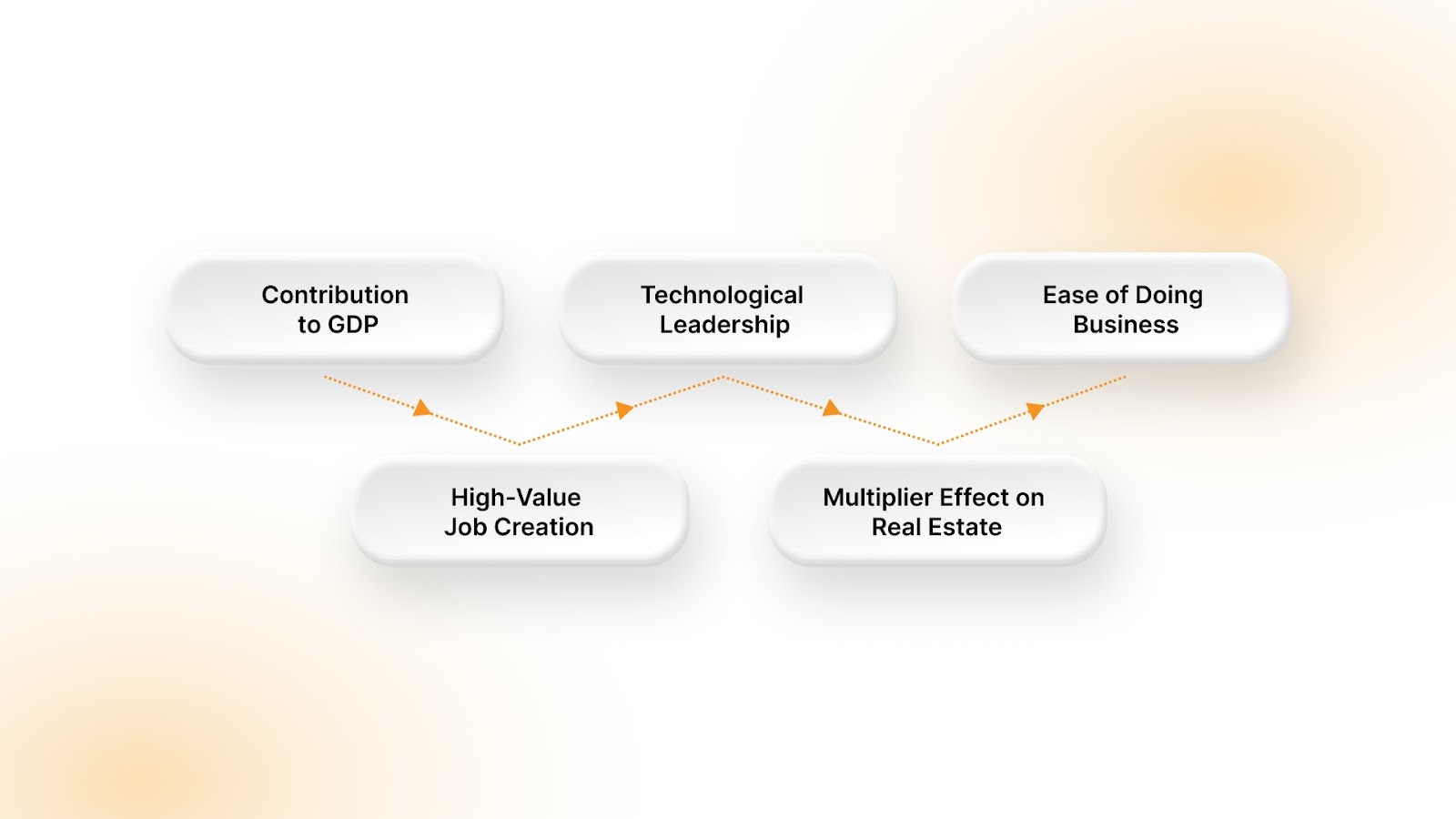
Breaking this down shows how GCCs are shaping economic output, employment patterns, and long-term investment flows.
Key Economic Contributions of GCCs:
- Contribution to GDP and Revenue Growth: The GCC sector is projected to contribute nearly 2% of GDP by 2030, with revenue growing from $64.6 billion to $105 billion.
- Employment Scale and High-Value Job Creation: GCCs employ around 2 million professionals today, expected to reach 2.8 million, with leadership roles expanding significantly across global functions.
- Innovation and Technological Leadership: ER&D centres are growing faster than the sector, with widespread AI adoption and contributions to advanced semiconductor and engineering innovation.
- Multiplier Effect on Real Estate and Regional Growth: GCC expansion drives office leasing demand and accelerates development of Tier-II cities, supporting broader regional economic growth.
- Policy Support and Ease of Doing Business: Government reforms, including Safe Harbour changes and tax incentives, are reducing compliance risks and strengthening India’s position for GCC investments.
To succeed in this environment, companies require a partner capable of executing specialied hiring quickly, which is why we offer comprehensive staffing services tailored to the speed of GCC expansion.
Also Read: How GCC Works: A Strategic Guide for Indian Enterprises

Leading Global Companies and the India GCC List
India’s GCC ecosystem is defined by the concentration of global enterprises building core products and platforms locally.
Top Sectors Represented in the India GCC List
The concentration of GCCs reflects India’s strength across various knowledge-intensive industries.
These companies require precision hiring for high-stakes roles, where the wrong fit can halt global projects. Utilising Permanent Recruitment services is key for securing the specialied, full-time talent needed for these critical GCC positions.
The intense competition within these sectors underscores the importance of a fast, accurate hiring engine to maintain operational momentum.
6 Major GCC Hubs: Where Talent Concentrates
The growth of GCCs is unevenly distributed, with specific cities emerging as specialised talent ecosystems. Understanding this geography is vital for any company planning expansion or specialised hiring.
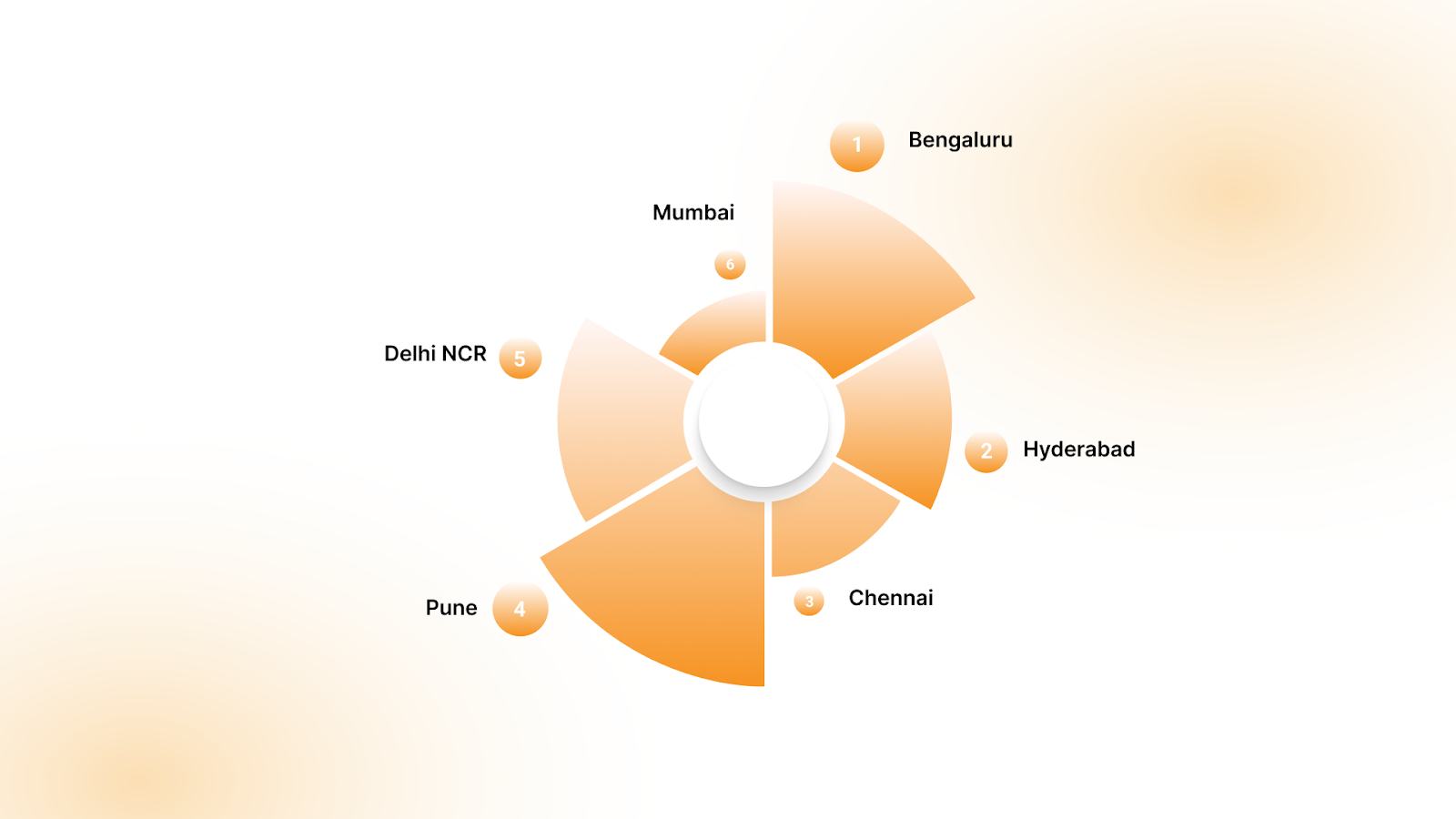
GCC Distribution Across India’s Key Cities (2026)
GCC presence in India is concentrated across a few key cities, each shaped by specific industries, talent depth, and operational focus. Looking at this distribution highlights how location choices align with capability requirements rather than just scale or availability.
*Source: ETGCCWorld.com
1. Bengaluru
Bengaluru, often called the Silicon Valley of India, remains the largest hub for technology and product-centric GCCs. Bengaluru attracts global enterprises building product, cloud, and AI capabilities due to its unmatched engineering talent depth.
Top GCC Companies in Bengaluru
- Microsoft: Microsoft’s Bengaluru centre builds core Azure infrastructure, enterprise cloud services, and AI capabilities used across global products.
- JPMorgan Chase: JPMorgan’s Bengaluru hub drives global banking platforms, fraud detection systems, and large-scale financial data infrastructure operations.
- Cisco: Cisco’s Bengaluru teams lead development of enterprise networking systems, cybersecurity frameworks, and cloud-native infrastructure solutions globally.
- Intel: Intel’s Bengaluru centre focuses on chip design, processor validation, and next-generation semiconductor engineering critical to global hardware innovation.
- SAP: SAP Labs in Bengaluru builds enterprise ERP systems, cloud platforms, and business intelligence tools used across global enterprise customers.
2. Hyderabad
Hyderabad has emerged as a preferred destination for global enterprises building large-scale GCCs with clearly defined mandates. The city attracts investments focused on enterprise platforms, healthcare innovation, and global operations supported by strong infrastructure and policy support.
Top GCC Companies in Hyderabad
- Novartis: Novartis operates one of its largest global capability centres in Hyderabad, focused on drug development analytics and clinical data platforms.
- Sanofi: Sanofi’s Hyderabad GCC drives digital health initiatives, AI-led research platforms, and global medical operations across multiple therapeutic areas.
- Eli Lilly: Eli Lilly’s Hyderabad centre builds automation systems and advanced analytics platforms supporting global pharmaceutical research and development pipelines.
- Bristol Myers Squibb: BMS established its Hyderabad GCC to strengthen clinical trial analytics, regulatory data management, and global drug development workflows.
- PepsiCo: PepsiCo’s Hyderabad GCC leads global supply chain analytics, digital transformation initiatives, and enterprise data platforms for consumer operations.
- Franklin Templeton: Franklin Templeton operates large investment management platforms and analytics systems from Hyderabad, supporting global asset management operations.
- FactSet: FactSet’s Hyderabad centre develops financial data platforms, analytics tools, and research systems used by investment professionals globally.
Also read: ET GCC Growth Summit 2026: Key Highlights, Updates, and What to Expect
3. Chennai
Chennai attracts GCCs that require deep engineering expertise, manufacturing alignment, and long-term process stability across global operations. The city’s talent base supports automotive, industrial, and BFSI functions where precision, compliance, and domain knowledge are critical.
Top GCC Companies in Chennai
- Ford: Ford’s Chennai GCC has historically supported global engineering, product development, and connected vehicle platforms across multiple international markets.
- Renault Nissan Technology & Business Centre India (RNTBCI): RNTBCI in Chennai drives end-to-end automotive engineering, digital platforms, and business services supporting Renault and Nissan globally.
- Caterpillar: Caterpillar’s Chennai centre develops heavy equipment engineering systems, simulation platforms, and digital solutions for global construction machinery operations.
- Komatsu: Komatsu operates engineering and manufacturing support functions from Chennai, focusing on construction equipment systems and industrial automation platforms.
- Barclays: Barclays’ Chennai centre develops banking platforms, risk systems, and operational processes supporting global financial services delivery.
- Pfizer: Pfizer’s Chennai GCC supports clinical data management, regulatory processes, and digital systems tied to global pharmaceutical operations.
The varied focus of these cities means a one-size-fits-all hiring approach will not work. GCCs must adapt their IT Staffing strategies based on local talent availability.
Suggested Read: GCC Growth in India: Key Drivers and Talent Impact
4. Pune
Pune attracts GCCs that combine core engineering expertise with digital capabilities across automotive, industrial, and enterprise platforms. The city’s ecosystem supports long-term product development, simulations, and platform modernisation backed by strong academic and industrial clusters.
Top GCC Companies in Pune
- Mercedes-Benz Research and Development India (MBRDI): MBRDI in Pune drives automotive software, connected car platforms, and advanced engineering systems supporting Mercedes-Benz’s global vehicle innovation roadmap.
- Volkswagen IT Services India: Volkswagen’s Pune centre develops enterprise IT platforms, digital manufacturing systems, and data-driven solutions supporting global automotive operations.
- Bosch: Bosch operates one of its largest engineering centres in Pune, focusing on automotive electronics, embedded systems, and industrial technology platforms.
- Tata Technologies (global engineering hub model): Tata Technologies in Pune delivers engineering design, product lifecycle management, and digital transformation services for global automotive and aerospace clients.
- Siemens Digital Industries Software: Siemens’ Pune GCC builds industrial automation software, simulation tools, and digital twin platforms used across global manufacturing industries.
- Emerson: Emerson’s Pune centre develops industrial automation systems, control technologies, and digital solutions for global energy and manufacturing sectors.
- Deutsche Bank: Deutsche Bank’s Pune GCC builds trading systems, financial analytics platforms, and enterprise banking infrastructure supporting global operations.
5. Delhi NCR
Delhi NCR attracts GCCs that manage large-scale enterprise operations, consulting workflows, and compliance-driven global business functions. The region offers a diverse talent pool suited for analytics, risk management, and cross-regional coordination across complex enterprise environments.
Top GCC Companies in Delhi NCR
- American Express: American Express operates a large Gurgaon centre managing global customer servicing platforms, risk systems, and enterprise payment operations.
- McKinsey & Company: McKinsey’s Gurgaon knowledge centre supports global consulting teams with advanced analytics, research, and problem-solving across industries.
- Boston Consulting Group (BCG): BCG’s Delhi NCR GCC delivers analytics, research, and digital consulting support for global strategy and transformation engagements.
- Gartner: Gartner’s Gurgaon centre provides research, advisory insights, and data-driven analysis supporting global enterprise technology decision-makers.
- United Airlines: United Airlines’ Gurgaon GCC manages digital platforms, customer operations systems, and analytics supporting global aviation services.
- EXL Service: EXL operates major analytics and operations centres in Gurgaon, supporting insurance, banking, and healthcare clients globally.
- Genpact: Genpact’s Gurgaon operations focus on business process management, finance transformation, and analytics solutions for global enterprises.
Also read: GCC Recruitment in 2026: The Shift to AI-Led Hiring
6. Mumbai
Mumbai attracts GCCs that operate close to financial markets, focusing on high-stakes analytics, risk systems, and capital-intensive operations. The city’s ecosystem supports roles requiring financial expertise, regulatory alignment, and proximity to leadership-driven decision-making environments.
Top GCC Companies in Mumbai
- Morgan Stanley: Morgan Stanley’s Mumbai centre supports trading platforms, risk analytics, and investment management systems used across global financial markets.
- Nomura: Nomura’s Mumbai GCC develops trading systems, financial analytics platforms, and research capabilities supporting global investment banking operations.
- BlackRock: BlackRock’s Mumbai centre contributes to Aladdin platform development, risk analytics, and portfolio management systems used by global institutional clients.
- HSBC (Global Banking & Markets functions): HSBC’s Mumbai operations focus on capital markets technology, financial analytics, and global trading support systems.
- BNP Paribas: BNP Paribas’ Mumbai centre manages trading support platforms, risk systems, and analytics for global investment banking activities.
- CRISIL (S&P Global company): CRISIL’s Mumbai operations deliver credit analytics, risk assessment platforms, and financial research supporting global rating and advisory services.
- Morningstar: Morningstar’s Mumbai centre builds investment research tools, data platforms, and analytics systems used by global asset management firms.
Emerging GCC Hubs in India (2026–2027): Where Expansion Is Actually Heading
Recent GCC expansions show where global enterprises are investing now, rather than relying on legacy presence across saturated hubs. These new setups reveal shifts in capability focus, hiring demand, and how companies are rethinking India as a strategic base.
Recent GCC Expansions and New Entrants
- Cohere Health (Hyderabad): Cohere Health launched its Hyderabad GCC to build clinical intelligence platforms focused on improving healthcare decision-making through AI-driven insights. The centre supports global payer systems, enabling faster authorisation workflows and data-led care coordination across healthcare networks.
- MKS Instruments (Bengaluru): MKS opened advanced engineering labs in Bengaluru focused on photonics and semiconductor systems critical to global manufacturing innovation.
- ArcelorMittal (Pune and Hyderabad): ArcelorMittal established GCCs across Pune and Hyderabad to drive analytics, industrial platforms, and global steel operations digitisation.
- Smartsheet (Bengaluru expansion): Smartsheet expanded its Bengaluru GCC to accelerate AI-led product development and enterprise collaboration platform capabilities globally.
- Revolut (India expansion): Revolut is scaling its India GCC to build payments infrastructure, fraud detection systems, and real-time financial processing platforms. The expansion reflects its push to support global fintech operations with stronger backend engineering and compliance-driven systems.
- Sanofi (Hyderabad expansion): Sanofi is expanding its Hyderabad GCC significantly, focusing on AI, data innovation, and global R&D operations across healthcare platforms.
- CMA CGM (Chennai): CMA CGM established an AI-focused R&D hub in Chennai to optimise logistics networks and improve global shipping operations through data-driven systems. The centre supports trade digitisation efforts, strengthening supply chain visibility and operational efficiency across international shipping routes.
Emerging Tier-II GCC Hubs
- Collabera (Vadodara – Tier 2 expansion): Collabera launched a GCC in Vadodara, signaling a shift toward Tier 2 cities for cost-efficient and scalable talent access.
- Dexian (Chennai expansion): Dexian expanded its Chennai GCC to focus on cloud engineering, cybersecurity, and AI platforms supporting global enterprise clients.
- Zoom, T-Mobile, Southwest Airlines (Planned GCC entries): These companies are actively exploring India GCC setups, indicating continued inflow of new global entrants into the ecosystem.
- Bosch (Coimbatore): Bosch continues expanding its engineering presence in Coimbatore, supporting automotive and industrial technology development across global operations.
- IBM (Kochi): IBM has strengthened its technology and consulting operations in Kochi, supporting enterprise platforms and digital transformation initiatives globally.
- eInfochips (Ahmedabad): eInfochips is expanding embedded systems and semiconductor engineering capabilities from Ahmedabad, supporting global product development programs.
- Genpact (Jaipur): Genpact continues scaling its operations in Jaipur, supporting analytics, finance processes, and enterprise workflow management for global clients.
- Impetus Technologies (Indore): Impetus is expanding its data engineering and cloud capabilities in Indore, supporting global analytics and platform development initiatives.
GCC Industry Trends & Insights 2026
India’s GCC ecosystem is entering a phase where scale is no longer the differentiator, but strategic ownership is.
Recent data shows a clear shift toward high-value functions, policy support, and deeper integration into global business decision-making.
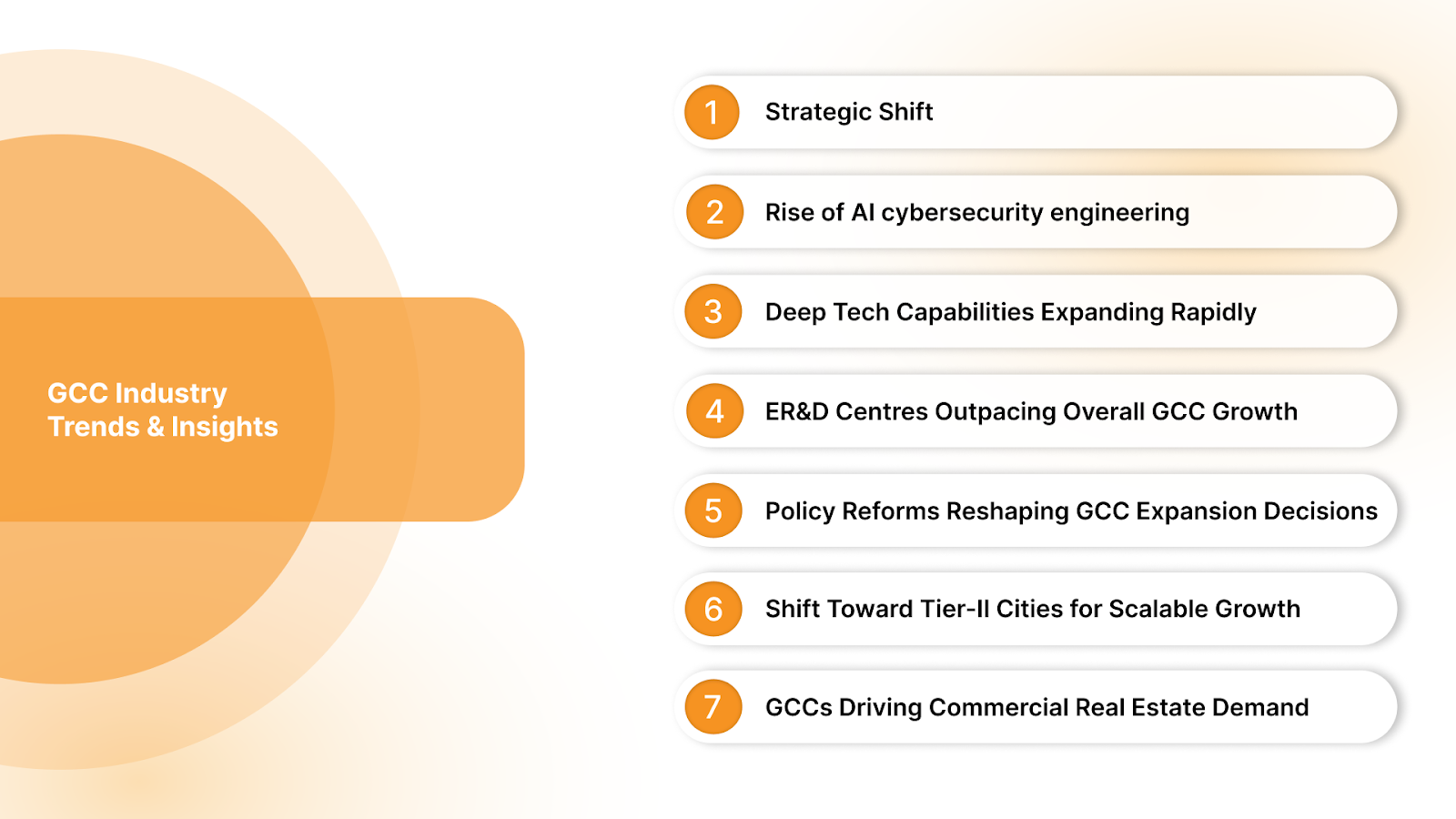
These trends highlight how GCCs are evolving structurally, influencing not just operations, but long-term enterprise strategy.
Key Trends Shaping GCCs in 2026
- Strategic Shift: From Execution Units to Global Nerve Centres
- Nearly 20% of GCCs now hold strategic decision-making authority, compared to just 5% a decade earlier.
- India also hosts over 6,500 global leadership roles, expected to reach 30,000 by 2030 as centres move toward full product ownership.
- Rise of AI, Cybersecurity, and Advanced Engineering Functions
- GCCs are increasingly responsible for AI-enabled platforms, enterprise cybersecurity systems, and advanced engineering initiatives across global operations.
- This shift marks a clear move away from support roles toward ownership of high-impact, business-critical technology functions.
- Semiconductor and Deep Tech Capabilities Expanding Rapidly
- India accounts for nearly 7% of global semiconductor GCCs and employs around 20% of the world’s chip design workforce.
- Engineers in these centres are now contributing to advanced 2nm chip design, signalling deeper participation in global innovation pipelines.
- ER&D Centres Outpacing Overall GCC Growth
- Engineering Research and Development centres are growing 1.3 times faster than the broader GCC ecosystem across industries.
- This growth reflects increasing demand for product development, simulation systems, and next-generation engineering capabilities.
- Policy Reforms Reshaping GCC Expansion Decisions
- The Union Budget 2026–27 expanded safe harbour thresholds from ₹300 crore to ₹2,000 crore, reducing tax-related uncertainties.
- Tax incentives for cloud and AI services, along with regulatory simplification, are making India more attractive for long-term GCC investments.
- Shift Toward Tier-II Cities for Scalable Growth
- While major hubs remain dominant, companies are increasingly exploring Tier-II cities to manage costs and access untapped talent pools.
- Improved infrastructure and state-level incentives are accelerating this shift, especially for large-scale and cost-sensitive operations.
- GCCs Driving Commercial Real Estate Demand
- GCCs are expected to account for 40–50% of Grade A office space demand across India’s top seven cities in 2026.
- This reflects their expanding footprint and long-term commitment to building large, integrated capability centres across key markets.
India GCC Outlook: 2030 Projections
Forward-looking indicators show how GCCs in India are expected to scale across workforce, revenue, and global capability ownership.
These projections highlight the direction of growth and the increasing role of India in global enterprise operations.
- India is projected to host 2,100–2,400 GCCs by 2030, reflecting continued expansion across industries and cities.
- The GCC workforce is expected to grow to 2.8–2.9 million professionals, driven by demand for high-value technology and engineering roles.
- GCC revenue is projected to reach USD 105 billion by 2030, reinforcing India’s position as a key global delivery hub.
Strategic Functions and Advanced Skills Driving GCC Growth
The roles being filled within the India GCC list reflect the shift towards strategic responsibilities, demanding complex, future-ready skill sets.
High-Value Functional Domains
GCCs are recruiting heavily for specific, niche skills required to drive innovation.
- Data Science and AI/ML: Centres are dedicated to building and training AI models, developing predictive analytics, and supporting data governance across global operations.
- Cyber Security: As threats grow, GCCs serve as global security operations centres (SOCs), managing enterprise-wide cyber defence and compliance.
- Cloud Architecture and DevOps: They oversee the migration and management of the parent company's entire global infrastructure to the cloud, demanding niche, experienced talent.
The Challenge of Niche Talent Acquisition
Hiring for these specific skills poses a significant challenge for internal HR teams, especially when competing against other MNCs for top-tier talent.
- Demand-Supply Gap: There is a persistent shortage of highly experienced professionals in niche areas like advanced data science and specialised cloud platforms.
- Executive Leadership: Locating and securing leadership roles for these centres often requires discreet, strategic outreach.
As GCCs expand into high-value functional domains and take on greater strategic ownership, the hiring challenge becomes far more complex than simply filling open roles. Success now depends on securing specialised talent, leadership capability, and scale-ready workforce solutions that align with business growth. This is where an experienced recruitment partner becomes critical, helping GCCs close niche talent shortages while building teams with the speed and precision the market demands.

V3 Staffing Solutions: Your Agile GCC Recruitment Partner
Hiring for Global Capability Centres across India’s major tech hubs is about speed, precision, and access to scarce, high-impact skills. As GCCs scale into advanced engineering, data, and platform ownership roles, traditional hiring approaches struggle to keep pace with demand and competition.
V3 Staffing focuses on closing that gap between demand and execution, having already placed over 10,000 specialists across 300+ clients. Hiring cycles are typically closed within 10 days, which keeps teams moving instead of waiting on talent pipelines.
Our Specialised Services for GCCs:
We offer a complete suite of workforce solutions designed to meet the speed and scale required by mid-to-large enterprises operating across India.
- Permanent Recruitment: We identify and secure high-impact, full-time professionals for mid-to-senior level roles in Engineering, BFSI, and IT. Our domain-experienced recruiters ensure precision in the role-to-talent match, reducing early attrition risks for your core teams.
- Temporary Staffing: For project-based needs, seasonal demand, or interim cover, our flexible and fully compliant contractual staffing model allows you to scale your workforce quickly across tech and non-tech functions.
- Recruitment Process Outsourcing (R P O): We manage the entire recruitment function for you, setting a scalable, dedicated hiring unit within your organisation. This SLA-driven approach significantly cuts down your time-to-hire and operational costs during large-scale expansion.
- IT Staffing Solutions: End-to-end IT staffing across emerging and niche technologies, enabling GCCs to build high-performing tech teams at scale with speed and domain accuracy.
- Executive Search: For leadership positions (CXO, VP, Director) that require discretion and strategic sourcing, we deploy targeted headhunting and competency-based evaluation to secure the top talent who will lead your GCC's future strategy.
- Global Hiring: V3 Staffing supports hiring across India, the United States, LATAM, and the UAE, combining global reach with local market expertise.
By aligning our services with your strategic goals, we help you overcome demand-supply gaps and build a resilient talent pipeline.
Conclusion
The 2026 India GCC list confirms India’s status as the indispensable hub for global enterprise capability. The shift to high-value roles in IT, BFSI, and Engineering, concentrated in key cities, presents both immense opportunity and intense competition for specialised talent.
For organisations building and scaling GCCs, securing the right professionals, from experienced engineers to strategic CXO leaders, has become the single most critical factor in determining long-term success.
V3 Staffing stands as your dedicated partner, providing agile and accurate recruitment solutions across India's core talent hubs. We help you overcome supply-demand gaps and scale your operations with speed and confidence.
Contact us for specialised GCC hiring guidance today.