
.svg)
.svg)
Hiring in 2026 looks very different from just a few years ago. Recruitment is no longer only about filling open roles; it has become a key driver of business growth. As organisations expand across India, the United States, and the UAE, the need to secure specialised talent quickly and reliably is more pressing than ever. Traditional hiring methods often fall short, leading to longer hiring cycles, inconsistent candidate quality, and increased operational risk.
At the same time, recruitment is becoming smarter and more structured. According to the Society for Human Resource Management, over 51% of organisations now use AI in recruitment, with most reporting improved efficiency and faster hiring outcomes. Technologies such as AI-powered sourcing, predictive analytics, and advanced assessments are helping organisations hire faster while enhancing the quality of their workforce.
For Talent Acquisition Heads, HR Directors, and GCC leaders, the real challenge is not understanding these modern recruitment techniques, but executing them effectively at scale. This article explores the most impactful recruitment techniques shaping hiring in 2026 and how organisations can use them to build resilient, high-performing teams with confidence.
Key Takeaways:
- Recruitment techniques are the methods organisations use to attract, evaluate, and hire talent, and in 2026 they are focused on speed, scalability, and quality of hire.
- Skills-based hiring and data-driven decisions are improving accuracy, reducing bias, and strengthening workforce planning.
- AI, automation, and digital tools are transforming hiring by accelerating sourcing, screening, and candidate engagement.
- Global and hybrid hiring models are expanding access to diverse talent across regions and markets. Combining modern recruitment techniques with the right recruitment partner enables faster, more consistent, and high-quality hiring outcomes.
What Are Recruitment Techniques?
Recruitment techniques are the different methods organisations use to find, attract, and hire the right candidates for open roles. These techniques include both traditional approaches such as job portals, campus hiring, walk-in interviews, and employee referrals, as well as modern methods like AI-driven hiring and data-based sourcing.
In simple terms, recruitment techniques help companies connect with potential employees and select the best fit for their business needs.
Some of the most widely used recruitment techniques include:
- Job Portals: Posting roles on platforms like LinkedIn, Naukri, or Indeed to reach active job seekers.
- Campus Hiring: Recruiting graduates directly from colleges for entry-level roles.
- Walk-in Interviews: Conducting same-day interviews without prior scheduling, often for bulk hiring.
- Employee Referrals: Leveraging employees’ networks to find trusted candidates.
These techniques support several key stages of the hiring process, including:
- Screening applications: Reviewing CVs and cover letters to identify candidates whose skills and experience match the role requirements.
- Assessing organisational fit: Evaluating whether candidates align with the company’s culture, values, and long-term business goals.
- Managing candidate communication: Maintaining clear and timely interactions with candidates throughout the hiring journey to ensure a professional and consistent experience.
The choice of recruitment approaches depends on hiring needs, industry, and scale. When used effectively, they improve hiring quality, speed, and overall business outcomes.
How Modern Recruitment Techniques Are Transforming Recruitment
Modern recruitment techniques are no longer just about improving efficiency; they are helping organisations approach hiring in a more structured and strategic way. By using AI, automation, and data insights, businesses can streamline recruitment processes, make informed decisions, and create a more consistent experience for both candidates and hiring teams.
Key shifts driven by these techniques include:
- Faster hiring and reduced costs: Automated screening, AI-assisted shortlisting, and simplified workflows help organisations fill roles more quickly while lowering administrative effort.
- Improved candidate experience: Personalised communication, chatbot support, and clear updates throughout the hiring process strengthen employer reputation and increase offer acceptance rates.
- Wider access to talent: Virtual interviews and online assessments enable organisations to reach candidates across regions, including Tier II cities and international markets.
- Data-informed decision-making: Analytics replace subjective assessments, leading to better role alignment and lower attrition.
- Stronger focus on diversity and skills: Structured evaluations minimise bias, prioritise capabilities over credentials, and support long-term workforce planning.
Together, these shifts position recruitment as a critical contributor to organisational growth and resilience in 2026.
Having established their strategic importance, it is now time to explore the specific recruitment methods enabling this transformation.
Top 10 Recruitment Techniques for 2026
To stay competitive, organisations must adopt innovative methods that address today’s complex hiring challenges from niche skill shortages to high attrition and evolving candidate expectations.
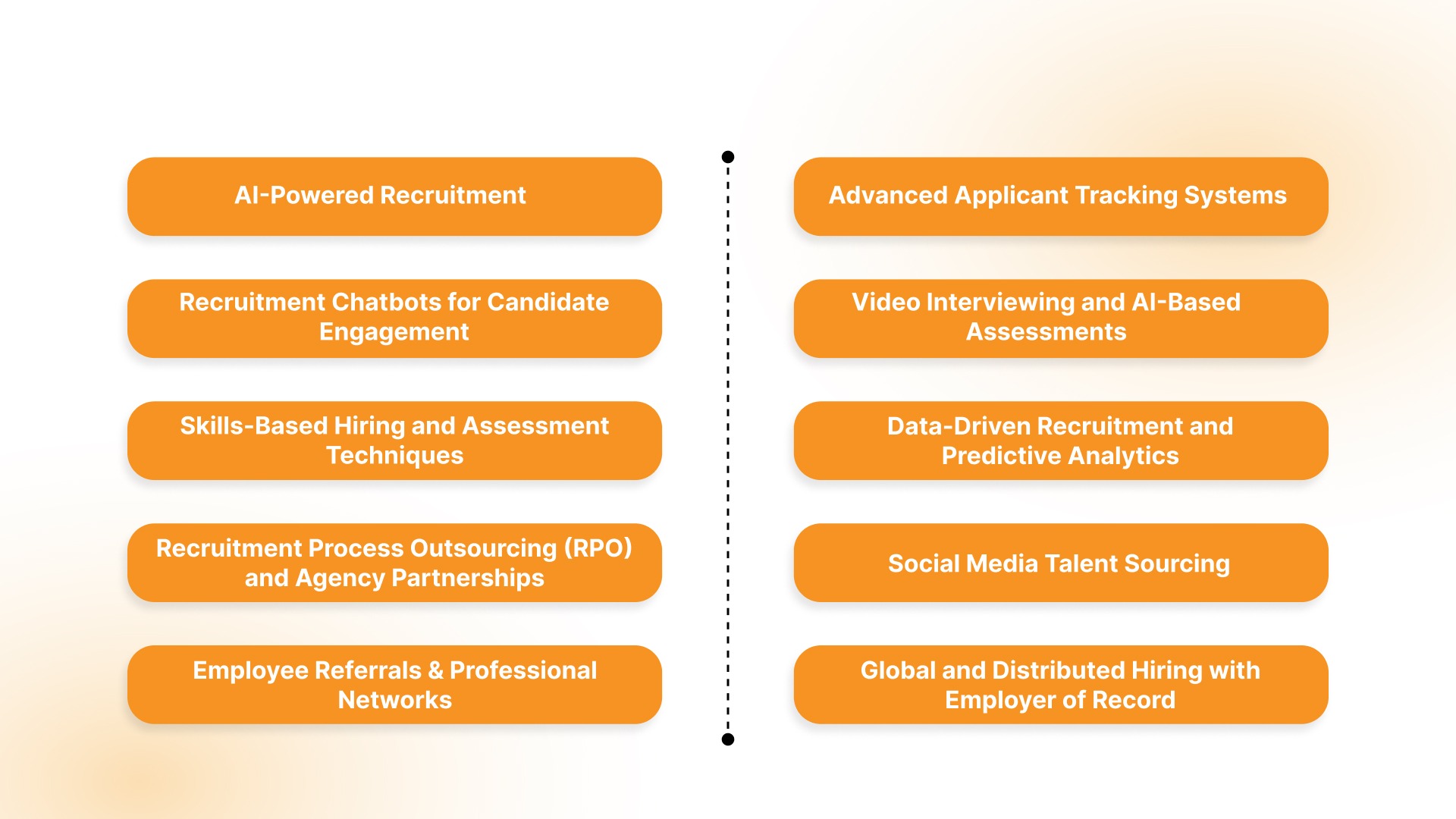
Below are the 10 most effective recruitment approaches shaping talent acquisition in 2026.
1. AI-Powered Recruitment
Artificial Intelligence (AI) is now integral to modern recruitment, helping organisations automate routine tasks and make more informed hiring decisions. Industry insights suggest that organisations using AI in recruitment can improve quality of hire by up to 50%, while significantly reducing manual screening effort.
Key Applications:
- Resume Screening: Rapidly analyses CVs to shortlist candidates based on predefined skills and experience.
- Job Matching: Aligns candidate profiles with job requirements to improve role fit.
- Predictive Analytics: Uses historical data to assess potential performance and retention.
Benefits:
- Efficiency: Reduces time-to-hire and administrative workload.
- Reduced Unconscious Bias: Applies consistent evaluation criteria.
- Improved Diversity: Expands access to a broader and more inclusive talent pool.
Additionally, organisations using AI sourcing tools report up to 75% more qualified candidates per role, strengthening talent pipelines and improving hiring outcomes. When implemented effectively, AI supports faster and more consistent hiring outcomes.
2. Advanced Applicant Tracking Systems (ATS)
Advanced Applicant Tracking Systems (ATS) form the operational backbone of scalable recruitment. These platforms centralise candidate data, streamline workflows, and provide insights that support consistent and data-informed hiring decisions.
Key Applications:
- Workflow Automation: Automates CV parsing, interview scheduling, and candidate follow-ups.
- Candidate Scoring: Ranks applicants using rule-based and AI-assisted criteria.
- Centralised Data Management: Consolidates recruitment activities within a single system.
Benefits:
- Improved Recruiter Productivity: Enables teams to focus on strategic hiring initiatives.
- Consistent Hiring Processes: Standardises evaluation and communication across roles and geographies.
- Data-Driven Decisions: Provides real-time insights to enhance recruitment performance.
A well-implemented ATS ensures efficiency, transparency, and control throughout the hiring lifecycle.
3. Recruitment Chatbots for Candidate Engagement
AI-powered recruitment chatbots enhance candidate engagement by providing instant and personalised communication throughout the hiring journey. Acting as virtual assistants, they streamline early-stage interactions and maintain consistent candidate communication.
Key Applications:
- Initial Candidate Interaction: Guides applicants through the application process on career pages or job portals.
- FAQ Automation: Responds to common queries related to roles, eligibility, and company culture.
- Interview Scheduling: Integrates with calendar systems to schedule and manage interviews.
- Candidate Nurturing: Sends timely updates and reminders to maintain engagement.
Benefits:
- Enhanced Candidate Experience: Provides immediate and consistent communication.
- Operational Efficiency: Reduces recruiter workload by automating repetitive tasks.
- Accelerated Hiring Timelines: Speeds up early-stage recruitment processes.
When deployed thoughtfully, chatbots create a responsive and efficient hiring experience.
4. Video Interviewing and AI-Based Assessments
Video interviewing, combined with AI-based assessments, enables organisations to evaluate candidates efficiently regardless of location. This approach supports structured and objective evaluation while accelerating the hiring process.
Key Applications:
- Live Video Interviews: Real-time interactions that mirror traditional interviews with greater scheduling flexibility.
- Asynchronous Interviews: Allows candidates to record responses at their convenience.
- AI-Powered Assessments: Analyses behavioural and cognitive indicators to support objective evaluation.
- Automated Shortlisting: Ranks candidates using structured scoring models.
Benefits:
- Wider Talent Reach: Provides access to national and global talent pools.
- Faster Hiring Cycles: Reduces coordination time and speeds up decision-making.
- Improved Objectivity: Ensures consistent and unbiased candidate assessment.
This technique is particularly valuable for organisations seeking scalable and geographically flexible hiring.
5. Skills-Based Hiring and Assessment Techniques
Skills-based hiring focuses on what candidates can do rather than relying solely on academic qualifications or job titles. By assessing real-world capabilities, organisations can identify talent that is better aligned with role requirements and long-term business needs.
Key Applications:
- Hackathons and Skill Challenges: Simulate real job tasks to evaluate practical abilities.
- Online Assessment Platforms: Deliver role-specific tests and situational judgement exercises.
- Gamified Evaluations: Measure cognitive and behavioural attributes in an engaging format.
Benefits:
- Higher Quality of Hire: Ensures candidates possess the capabilities needed for success.
- Reduced Attrition: Improves retention through stronger role alignment.
- Merit-Based Selection: Promotes fairness and inclusivity in hiring decisions.
By prioritising capability over credentials, organisations can build resilient and high-performing teams.
6. Data-Driven Recruitment and Predictive Analytics
Data-driven recruitment uses analytics to guide hiring decisions and support effective workforce planning. By analysing historical and real-time data, organisations gain clearer insights into talent needs and recruitment performance.
Key Applications:
- Hiring Trend Analysis: Identifies the most effective sourcing channels.
- Predictive Modelling: Forecasts candidate success, tenure, and organisational fit.
- Attrition Insights: Detects early indicators of disengagement or turnover risk.
- Performance Dashboards: Provides real-time visibility into recruitment metrics.
Benefits:
- Evidence-Based Decision-Making: Replaces intuition with measurable insights.
- Improved Quality of Hire: Enhances alignment between talent and business needs.
- Strategic Workforce Planning: Supports long-term forecasting and resource allocation.
7. Recruitment Process Outsourcing (RPO) and Agency Partnerships
Recruitment Process Outsourcing (RPO) and specialised agency partnerships enable organisations to scale hiring efficiently while maintaining consistency and quality. These models provide access to extensive talent networks and structured delivery frameworks.
Key Applications:
- End-to-End Recruitment Management: Covers the full hiring lifecycle, from sourcing to onboarding.
- Project-Based Hiring: Supports rapid scaling during expansion or transformation.
- Executive and Niche Hiring: Enables confidential sourcing of specialised or leadership talent.
- Market Intelligence: Offers insights into talent availability, compensation, and hiring trends.
Benefits:
- Scalable Hiring: Supports growth without increasing internal HR capacity.
- Consistent Delivery: Ensures predictable timelines and quality standards.
- Access to Specialised Expertise: Leverages industry-specific knowledge and networks.
Partnering with an experienced provider such as V3 Staffing enhances execution and reduces hiring risk.
8. Social Media Talent Sourcing
Social media has become a vital recruitment channel, allowing organisations to connect with both active and passive candidates while strengthening employer brand visibility. Research indicates that 84%–92% of organisations use social media for recruitment, highlighting its importance in reaching both active and passive talent.
Key Applications:
- Platform-Specific Campaigns: Tailored recruitment content for platforms such as LinkedIn and Instagram.
- Targeted Advertising: Reaches niche talent segments based on skills, interests, and location.
- Employer Branding: Showcases organisational culture through employee stories and insights.
- Community Engagement: Builds long-term relationships with potential candidates.
Benefits:
- Access to Passive Talent: Engages professionals who may not be actively job searching.
- Enhanced Employer Brand: Strengthens organisational credibility and visibility.
- Expanded Talent Reach: Connects with diverse and global candidate pools.
Social media sourcing supports organisations in remaining competitive in a candidate-driven market.
9. Employee Referrals and Professional Networks
Employee referrals and professional networks provide access to trusted, pre-qualified talent, making them particularly effective for specialised and business-critical roles. These channels often lead to faster hiring and stronger cultural alignment.
According to iCIMS, referred employees remain with organisations for an average of 38 months, compared to 22 months for non-referred hires, highlighting their positive impact on retention.
Key Applications:
- Structured Referral Programmes: Encourage employees to recommend qualified candidates.
- Industry Associations: Engage talent through professional bodies and certification networks.
- Networking Events: Build relationships with experienced professionals.
- Alumni and Internal Networks: Leverage existing organisational connections.
Benefits:
- Faster Hiring: Reduces sourcing and screening time.
- Stronger Cultural Fit: Enhances alignment with organisational values.
- Improved Retention: Supports long-term employee stability.
- Access to Specialised Talent: Particularly valuable for niche or regulated roles.
These methods are most effective when combined with broader recruitment strategies to maintain diversity and inclusivity.
10. Global and Distributed Hiring with Employer of Record (EOR)
Global and distributed hiring allows organisations to access international talent without the complexities of establishing local legal entities. Employer of Record (EOR) services manage compliance, payroll, and employment regulations, enabling seamless cross-border expansion.
Key Applications:
- International Talent Acquisition: Hiring employees across multiple countries.
- Compliance and Payroll Management: Ensuring adherence to local labour laws.
- Remote Workforce Enablement: Supporting distributed teams across geographies.
- Market Entry Support: Accelerating expansion into new regions.
Benefits:
- Access to Global Talent Pools: Expands the range of available skills and expertise.
- Faster Market Entry: Enables rapid scaling in new geographies.
- Reduced Compliance Risk: Ensures adherence to local employment regulations.
- Operational Efficiency: Simplifies administrative and legal processes.
Through global hiring and EOR solutions, organisations can build agile and future-ready workforces.
Adopting modern recruitment techniques helps organisations address complex hiring needs with greater speed and consistency. By combining technology with proven sourcing strategies, businesses can achieve more predictable and high-quality hiring outcomes.
V3 Staffing supports this effort with scalable, domain-specific talent solutions across India, the United States, and the UAE, helping organisations build strong teams from specialised technology roles to CXO leadership positions.

To fully appreciate their impact, it is helpful to compare these approaches with the conventional recruitment methods they are replacing.
Traditional vs Modern Recruitment Techniques:
While traditional recruitment methods continue to serve specific hiring needs, they often lack the speed, scalability, and data-driven insights required by enterprise organisations. Modern job recruitment methods address these gaps by enabling more structured, predictable, and efficient hiring outcomes:
Traditional approaches such as job boards or walk-in interviews may still be relevant in specific scenarios. However, organisations seeking predictable and scalable hiring outcomes increasingly rely on modern recruitment approaches to support long-term workforce growth.
Recognising these differences raises an important question: when should organisations adopt modern recruitment techniques?
When Should Organisations Adopt These Recruitment Techniques?
Modern recruitment approaches are most effective in situations where organisations need to scale hiring quickly and efficiently. They are particularly valuable in the following scenarios:
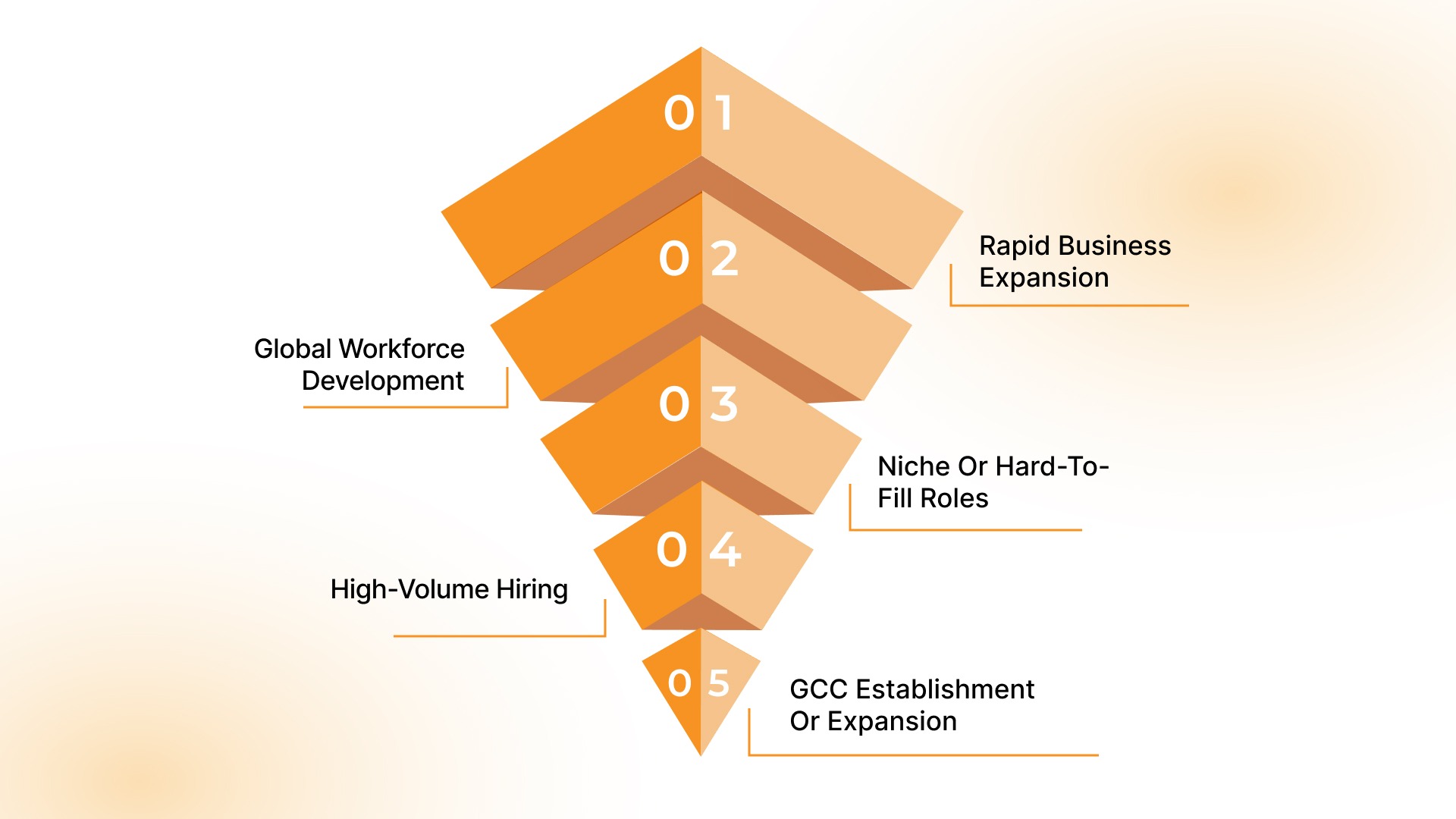
- Rapid Business Expansion: When teams need to grow quickly to support organisational growth.
- Global Workforce Development: When hiring across multiple geographies, including India, the United States, and the UAE.
- Niche or Hard-to-Fill Roles: When specialised skills or leadership talent are required.
- High-Volume Hiring: When internal teams lack the capacity to manage recruitment demand.
- GCC Establishment or Expansion: When setting up or scaling Global Capability Centres.
Successfully implementing these techniques requires structured execution and domain expertise. V3 Staffing supports organisations in achieving consistent and measurable hiring outcomes through tailored talent solutions.
How V3 Staffing Supports Modern Recruitment Techniques
V3 Staffing helps organisations implement modern recruitment methods through structured and scalable hiring solutions. As a strategic workforce partner, we support enterprises across major Indian business hubs, including Hyderabad, Bengaluru, Chennai, Pune, Delhi NCR, and Mumbai, enabling them to address complex talent needs with confidence.
Our services include Permanent Recruitment, IT Staffing, RPO, Executive Search, and Temporary Staffing. These solutions are designed to align with current hiring practices such as AI-assisted shortlisting, skills-based evaluation, and personalised candidate engagement.
Why partner with us:
- End-to-End Recruitment Support: We manage the complete hiring lifecycle, from role definition and sourcing to interview coordination and onboarding, ensuring timely and efficient delivery.
- Skills-Aligned Hiring: Our domain-specific recruiters focus on candidate capability and role fit, supporting long-term retention.
- Scalable Delivery Models: Through RPO and project-based hiring, we enable organisations to scale teams across geographies using technology-enabled workflows.
- Offer-to-Join Management: Structured candidate engagement and follow-ups improve offer acceptance and joining ratios in competitive markets.
- Access to Tier-II Talent: Dedicated sourcing channels extend reach beyond metro cities, supporting diversity and long-term workforce planning.
In the age of modern recruitment approaches where speed, precision, and candidate experience define hiring success, V3 Staffing helps businesses to stay ahead through structured delivery, sector expertise, and outcome-focused recruitment strategies.
Conclusion
Adopting modern recruitment techniques in 2026 is essential for organisations seeking faster, more reliable, and high-quality hiring outcomes. These approaches improve speed, accuracy, and candidate experience, enabling businesses to build resilient and high-performing teams in an increasingly competitive talent market.
V3 Staffing supports this effort through tailored hiring models, domain-led sourcing, and SLA-driven execution across permanent, technology, contract, and leadership roles. Whether organisations are scaling operations, entering new markets, or strengthening retention, V3 ensures consistent and effective implementation of the right recruitment methods.
If your organisation is looking to modernise its recruitment strategy and scale hiring with confidence, contact us to explore a tailored workforce solution.