

.svg)
.svg)
India is becoming the world's premier destination for Global Capability Centres (GCCs). With over 1,700 GCCs already established and generating approximately US$64.6 billion in revenue in 2024, it's clear that companies are doubling down on expansion in hubs such as Bengaluru, Hyderabad, Chennai, Pune, Delhi NCR, and Mumbai.
So, what does it mean to expand GCC in India today? As global businesses shift from cost centres to full-scale innovation hubs, India is offering talent depth, infrastructure maturity, and regional flexibility to support that transition.
This blog will guide decision-makers through the key trends and opportunities you need to know. By the end, you'll understand how to choose the right delivery hubs and set up your GCC to meet both current demands and future growth.
At A Glance:
- India's GCC market is booming – With 1,700+ centres and projected revenues of US$110 billion by 2030, India is the top destination for GCC expansion.
- Access to world-class talent – India's vast talent pool across IT, BFSI, and engineering sectors makes it the ideal location to find skilled professionals for your GCC.
- Cost-efficiency drives growth – India offers operational costs compared to Western markets, helping businesses scale without sacrificing quality.
- Emerging cities offer new opportunities – Tier-II cities like Pune and Kochi provide lower costs and untapped talent, making them ideal for expanding your GCC footprint.
- Strategic partnerships streamline success – Partnering with experts like V3 Staffing ensures seamless recruitment, compliance, and scalable staffing solutions for your GCC expansion.
What Makes India Strategic for GCC Setup and Scale?
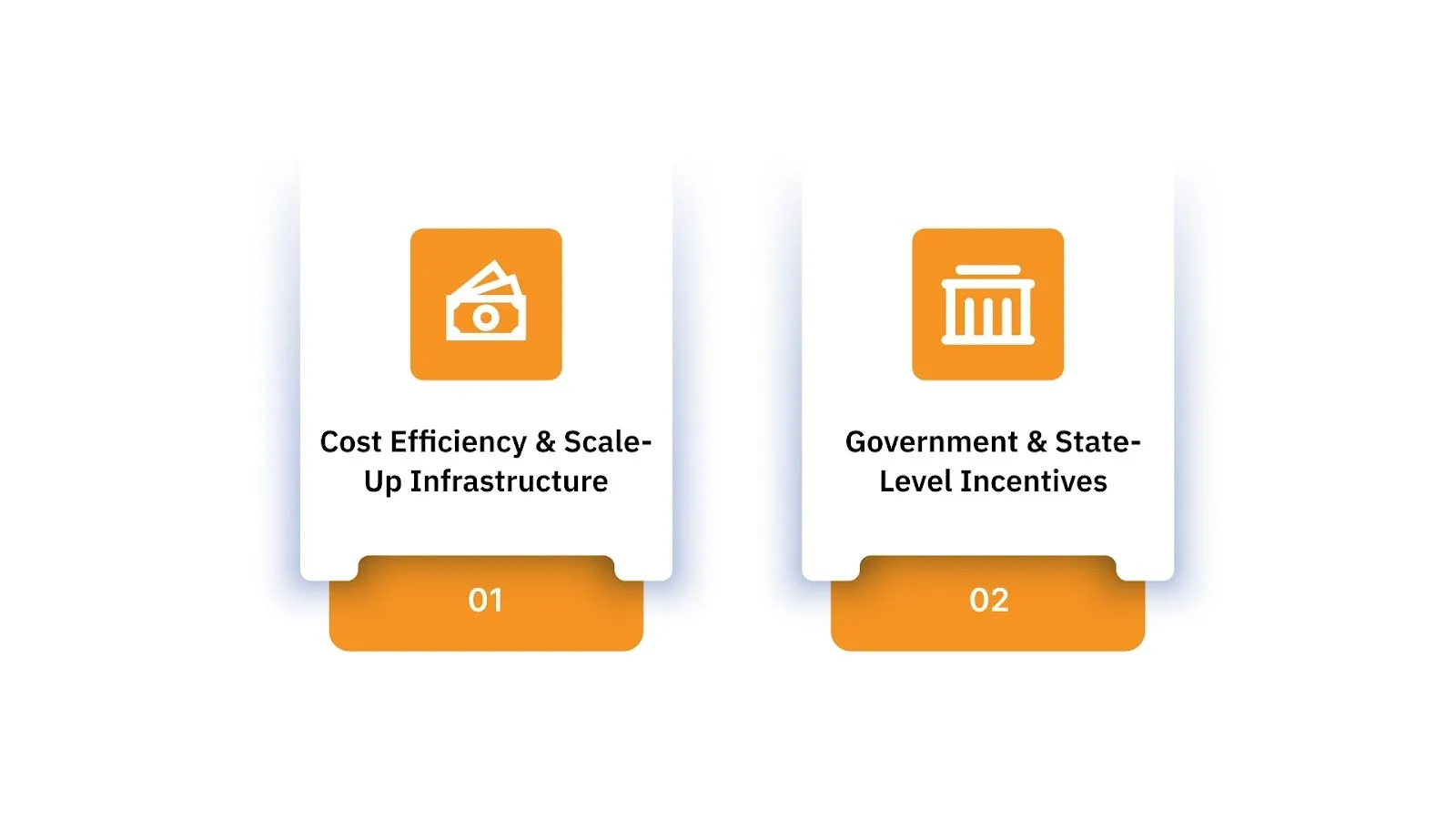
India continues to lead the GCC expansion race due to its unbeatable combination of a vast, skilled talent pool, cost-effective infrastructure, and government support.
India is home to a workforce of over 600 million people, with a high concentration of IT professionals, engineers, data scientists, financial experts, and customer service teams.
India's GCCs can source specialised talent across sectors such as IT, BFSI, and engineering. Hubs like Bengaluru, Pune, and Hyderabad are particularly renowned for their solid tech and digital capabilities.
- Deep Skill Density and Evolving Talent Capabilities
India offers more than size; it provides depth. The country's workforce includes strong clusters of digital, engineering, cybersecurity, finance, automation, and analytics talent that GCCs need to scale higher-value work.
More importantly, talent is no longer limited to delivery roles. There is a steady rise in leaders who can run global programmes, product functions, and end-to-end business operations from India.
- Cost Advantage Paired With Operational Maturity
India’s cost profile remains attractive, but what makes expansion compelling today is the value delivered per unit of cost. The country's commercial infrastructure has also matured.
Modern tech parks, reliable connectivity, and access to global-standard facilities allow GCCs to scale quickly in Tier-I hubs while exploring Tier-II cities for cost-balanced growth.
- Strong Policy Support and Ease of Setting Up
Central and state governments continue to push GCC growth with policies aimed at simplifying operations, supporting digital innovation, and improving ease of doing business.
States like Karnataka, Telangana, and Maharashtra have taken the lead by offering transparent setup processes, talent-focused policies, and faster regulatory clearances.
- A Ready Ecosystem for Scale and Innovation
India now has a complete GCC ecosystem:
- Highly developed vendor networks.
- Strong leadership talent familiar with global operating models.
- Mature recruitment and staffing partners who understand the demands of scaling complex functions.
- Universities and training institutions are producing candidates aligned with global skill needs.
This ecosystem reduces setup friction, shortens ramp-up time, and supports GCCs as they shift from execution to innovation-driven work.
India's capability ecosystem offers depth, diversity, and scale - but identifying the right talent requires precision. With V3 Staffing's specialised recruitment solutions, you can build high-performance GCC teams across Bengaluru, Hyderabad, Mumbai, and Delhi NCR with speed and accuracy.
Emerging Trends in GCC Expansion in India (2025 and Beyond)
.png)
Several trends of 2025 for GCCs in India are emerging that will shape how businesses build and expand their operations in the country. Companies looking to establish or grow their GCCs must be aware of these shifts to remain competitive, attract top talent, and deliver on evolving business goals.
Here are some of the most prominent trends to watch for in 2025 and beyond.
1. Shift from Cost Centre to Innovation Hub
While GCCs initially started as cost-saving hubs focused on back-office functions like finance and customer service, today's expanding GCCs are transforming into innovation-driven centres. Companies are increasingly using their Indian GCCs to drive product development, R&D, AI innovation, cloud solutions, and even global strategy.
2. Geo-Diversification – Beyond Tier-I Cities
While Tier-I cities continue to dominate as GCC hotspots, a growing trend is the geo-diversification of these centres into Tier-II cities. Cities like Chennai, Pune, and Kochi are emerging as new favourites for GCC expansion due to their lower operating costs, access to fresh talent pools, and availability of modern infrastructure.
3. Hybrid Work, Talent Mobility & Global Delivery Models
The rise of hybrid work models and global delivery networks has reshaped the way GCCs operate. As companies expand their operations in India, they are increasingly adopting a "follow-the-sun" model, where teams in India collaborate with counterparts worldwide, enabling 24-hour work cycles.
4. Strategic Partnerships and Ecosystem Integration
Another trend gaining momentum is the emphasis on strategic partnerships with local staffing firms, recruitment agencies, and HR tech providers. Organisations are utilising these partnerships to ease their hiring processes, access talent more effectively, and ensure that their GCC operations are well-positioned for long-term success.
5. Leadership Maturity and the Rise of India-Based Global Roles
A growing number of senior leadership positions for global functions are being based in India. These leaders now drive global roadmaps, transformation programmes, and multi-region delivery, strengthening India's position as a strategic GCC headquarters location.
Companies like V3 Staffing offer crucial support for GCCs by providing tailored staffing solutions, helping them navigate regional talent pools, ensuring compliance, and delivering candidates who are ready to contribute immediately.
Strategic Opportunities Companies Gain When Expanding Their GCC in India
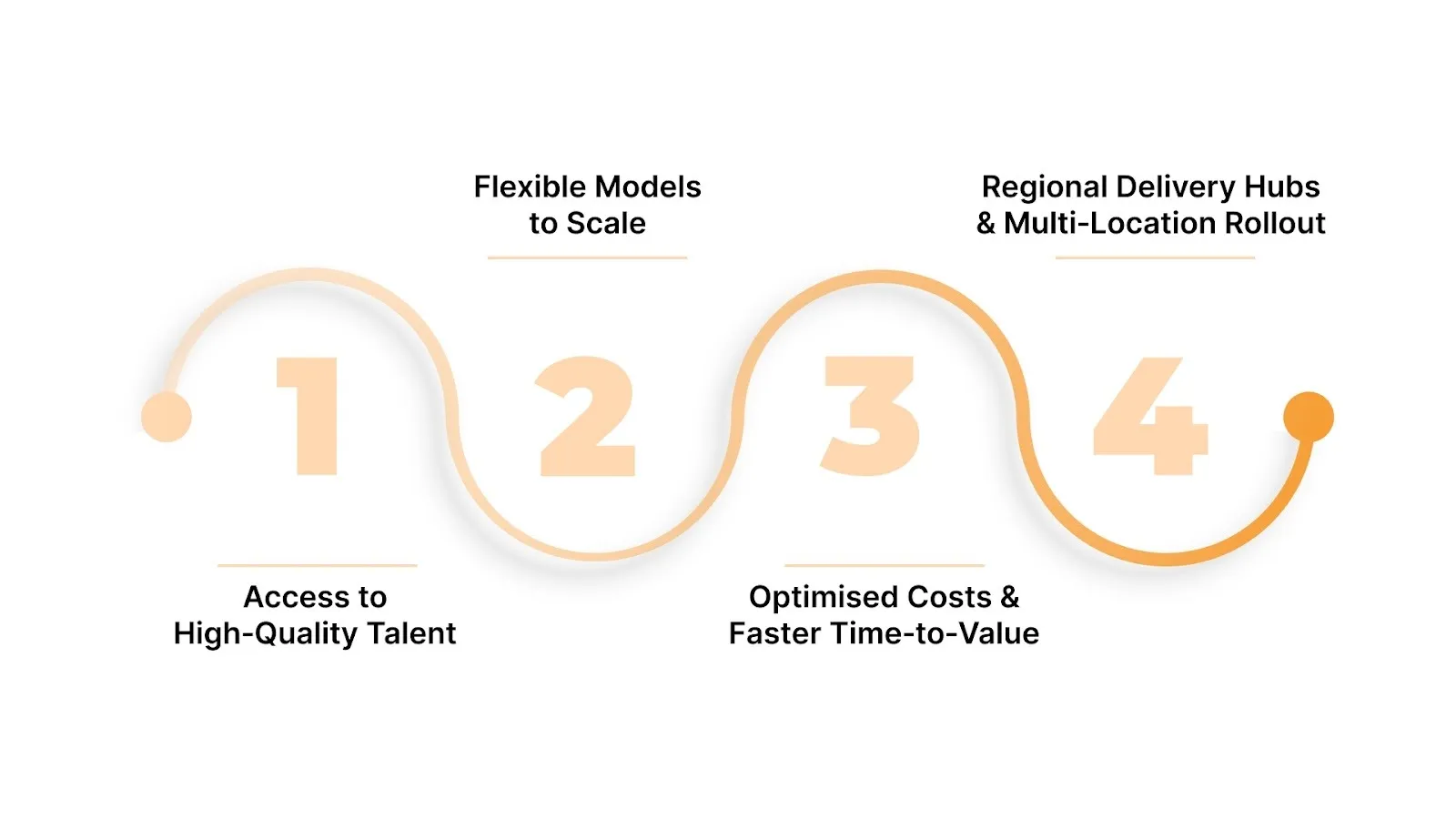
Expanding your GCC in India isn't just about setting up offices; it's about capitalising on measurable advantages that shape how you hire, scale, and deliver.
The opportunities below link directly to the needs of organisations looking to grow in central hubs and beyond:
1. Access to High‑Quality Talent
India's GCC ecosystem already supports around 1,700 centres and employs approximately 1.9 million professionals.
- For organisations expanding their GCC presence, this means immediate access to well-educated and domain-specific pools.
- These pools can include cloud engineers in Bengaluru, finance analysts in the Delhi NCR region, or manufacturing specialists in Pune.
The depth of talent enables you to fill roles more quickly and alleviate the burden on local hiring teams.
2. Flexible Models to Scale
Setting up a GCC often requires different staffing models across phases, including core full-time teams and project/contract specialists.
- India is well placed for this blend. GCCs report that workforce cost per FTE rose from ₹12.5 lakh in 2019 to ₹20.3 lakh in 2022, reflecting more dynamic hiring models.
- This flexibility enables firms to ramp up in key hubs (e.g., Chennai for shared services, Mumbai for BFSI operations) without committing to large fixed headcounts ahead of demand.
3.Optimised Costs and Faster Time‑to‑Value
By 2030, India's GCC industry is projected to be worth up to $ 110 billion.
- Operationally, this means you benefit from economies of scale, a large existing ecosystem and infrastructure already optimised for GCCs.
- Reduced cost + faster delivery = faster return on your investment. For a TA or HR Director, that translates into hitting hiring targets sooner and with better budget control.
4. Regional Delivery Hubs and Multi‑Location Rollout
India is no longer just one city. While Bengaluru and Mumbai remain strong, hubs like Hyderabad, Pune, and Chennai are rising fast. Reports indicate that by 2030, India may host over 2,400 GCCs.
What does this mean for you?
- You can deploy a hub in Hyderabad for innovation roles, use Delhi NCR for finance and shared services, and Pune for engineering - all within the same country.
- That geographic spread reduces risk, addresses time‑zone challenges, and taps into diverse talent pools.
5. Accelerated Digital Transformation Capability
India's talent and vendor ecosystem allows GCCs to rapidly scale advanced digital functions such as AI, DevOps, cloud modernisation, and cybersecurity.
- This accelerates transformation efforts without relying heavily on offshore markets where digital talent is scarce. Companies expanding GCCs in India gain immediate access to teams capable of driving global technology roadmaps.
Also Read: How GCC Works: A Strategic Guide for Indian Enterprises

While the opportunities are vast, expanding a GCC isn't without its challenges. Let's examine the key hurdles businesses face and explore practical ways to overcome them.
Critical Barriers to GCC Expansion in India and How to Mitigate Them

While India presents numerous opportunities for GCCs, organisations must consider and address distinct challenges when expanding their operations. These challenges range from talent retention to infrastructure issues, but with the right strategies, they can be mitigated.
Understanding and planning for these obstacles is crucial for companies aiming for sustainable growth in India's competitive market.
1. Talent Retention & Quality of Hire:
Talent attrition remains one of the top challenges faced by organisations in India. As competition for skilled professionals intensifies, maintaining talent quality and reducing turnover requires proactive measures.
How to mitigate?
- Companies expanding their GCCs need to offer competitive compensation, clear career progression, and a strong work culture to retain top talent.
- Additionally, utilising hybrid or remote working models can help enhance employee satisfaction and mitigate burnout.
2. Location Saturation & Cost Escalation
Tier-I cities are popular choices for setting up GCCs due to their well-established infrastructure and proximity to large talent pools. However, these cities are becoming saturated, with rising real estate costs, labour shortages, and increasing competition from both domestic and global firms.
How to mitigate?
- This escalation is pushing companies to explore Tier-II cities such as Pune, Kochi, and Chandigarh, which offer more affordable real estate, less competition, and untapped talent.
- By shifting focus to these emerging cities, businesses can manage costs more effectively while still accessing skilled professionals.
3. Governance, Compliance & Operational Scalability
India's legal framework is evolving to support businesses better, but staying compliant with GDPR, data protection laws, and local labour regulations requires diligence. Additionally, managing operations across multiple locations and maintaining consistent service delivery can be challenging.
How to mitigate?
- Partnering with a trusted recruitment agency like V3 Staffing helps avoid these risks by providing expertise in figuring out the compliance scenarios and managing operations at scale.
- V3 can assist in maintaining process consistency, ensuring timely hires, and adhering to regulatory standards while expanding GCCs across India.
Also Read: GCC Outsourcing vs Traditional Outsourcing Explained

How V3 Staffing Can Support Your GCC Expansion in India?
V3 Staffing's India-first delivery model, extensive regional expertise, and industry-specific knowledge position us as the ideal partner to support your GCC expansion.
With delivery hubs in Bengaluru, Hyderabad, Chennai, Pune, Delhi NCR, and Mumbai, we provide in-depth local expertise and strategic recruitment insights that will support your GCC at every step of the expansion.
V3 Staffing also offers a comprehensive suite of recruitment services, such as:
- Permanent Recruitment: Building long-term, stable teams across critical functions.
- Temporary & Contract Staffing: Flexibly scaling your workforce to meet project needs, seasonal fluctuations, or interim requirements.
- IT Staffing: Securing top tech talent in high-demand areas such as cloud, DevOps, AI, cybersecurity, and software development.
- RPO: Managing your entire recruitment function end-to-end, from sourcing to onboarding, ensuring a streamlined process across locations.
- Executive Search: Identifying and placing senior leadership to drive strategy and growth in your GCC.
Additionally, we specialise in sectors like IT, BFSI, Engineering, and Shared Services. We understand the specific skills, experience, and cultural nuances required to fill roles in these industries, ensuring your hires are the best fit for your GCC's needs.
Conclusion
To expand CC in India, you must aim for unparalleled opportunities, including access to top-tier talent and reduced operational costs. Businesses that understand the region's dynamic talent pools, use government incentives, and adapt to emerging trends will be best positioned for success.
V3 Staffing stands ready to support your expansion with its deep regional expertise, flexible staffing models, and end-to-end recruitment solutions. Our industry-focused approach ensures that your GCC has the right talent, at the right time, driving sustainable growth and innovation.
Contact us today to discuss how V3 Staffing can help accelerate your GCC's expansion in India's key hubs, ensuring a seamless and effective growth strategy.