

.svg)
.svg)
Bangalore has evolved from a technology centre into one of the world's most preferred destinations for Global Capability Centres (GCCs). Over the past decade, these centres have expanded beyond support-focused roles, driving innovation, research, advanced analytics, and end-to-end product ownership.
Bengaluru now anchors 48% of global mid-market GCC engineering talent and houses 50%of India's AI and machine-learning talent, which explains why global firms keep expanding here. As a result, companies across technology, BFSI, engineering, and retail are actively building GCCs in Bangalore to support global operations.
Understanding which companies are already operating here and what functions they own is what separates a clear expansion decision from a slow one. This guide maps the top 50+ GCC companies currently operating in Bangalore, the sectors leading growth, and what the next wave of expansion looks like in 2026.
Key Takeaways
- Bengaluru already operates at unmatched GCC scale, with 875 centres and 35% of India’s GCC workforce, making it the default base for global capability expansion.
- The shift is clearly toward ownership, where companies like Walmart, Goldman Sachs, and Intel run systems for pricing, trading, and chip design directly from Bengaluru.
- AI is being built into core platforms here, with SAP, Amazon, and fintech firms using Bengaluru teams to develop models that power global enterprise and customer systems.
- Sector depth is a defining advantage, where firms like AstraZeneca, Qualcomm, Target, and Airbus operate across healthcare, semiconductors, retail, and engineering within one ecosystem.
- Scaling success depends on execution discipline, as even large players like Tesco, Wells Fargo, and Unilever must navigate infrastructure and space constraints while expanding operations.
What Are Global Capability Centres (GCCs)?
Global Capability Centres (GCCs) are offshore units established by multinational companies to manage critical business functions and global operations. These centres handle areas such as engineering, technology, finance, analytics, and customer operations with direct alignment to headquarters. Over time, GCCs have evolved from support-focused roles into strategic hubs that drive innovation, product development, and enterprise decision-making.
Bengaluru’s GCC Footprint In 2026
Bengaluru’s GCC base is large enough to shape hiring, office demand, and expansion planning across Karnataka. Here are the numbers that matter most when reading the market.
- 875+ GCCs: Bengaluru alone hosts over 875 Global Capability Centres as of 2025, according to the FICCI-ANAROCK report, making it home to nearly 50% of India's total GCC base.
- 35% of India’s GCC workforce: The same government page says Karnataka accounts for 35% of the country’s GCC workforce, which explains why Bengaluru keeps absorbing strategic functions.
- 64% share of southern GCC office leasing in Q1 CY25: Bengaluru led southern-city GCC office leasing in the first quarter of 2025.
- 2.1 million+ digitally skilled talent pool: Karnataka’s IT ecosystem page lists more than 2.1 million digitally skilled professionals, which is a major reason GCCs keep clustering in the city.
- Industry-Academia Adoption Program: Under the State Budget 2026–27, the government launched the Super 100 initiative to bridge the skill gap between global enterprise requirements and local graduates.
The scale is one part of the story, but the real insight comes from which companies are operating here and what they are responsible for.
Also read: AI Digital Hiring GCC India: A Hiring Strategy Guide
The Top Biggest GCC Companies In Bangalore
These are not just large employers in Bengaluru but centres where global companies place critical functions and long-term mandates. Their scale reflects sustained investment in engineering, finance, product, and operational leadership rather than short-term expansion decisions.

The following organizations represent the core of Bengaluru’s GCC ecosystem, driving global strategy across multiple sectors:
Cloud and Internet Platform GCCs
Global technology firms use Bengaluru to build and operate core cloud platforms, large-scale distributed systems, and product engineering pipelines.
1. Microsoft (India Development centre)
Microsoft’s Bengaluru GCC is one of its largest outside the United States, supporting engineering across Azure, AI, and enterprise products. Teams here contribute to global product development across cloud infrastructure and developer platforms. The centre plays a significant role in expanding Microsoft’s cloud and AI capabilities.
2. Google (Google India)
Google’s Bengaluru operations contribute to infrastructure and product systems used across Search, Ads, and Google Cloud. The work includes reliability, performance, and backend systems that support high-traffic global services. The centre operates as part of Google’s distributed engineering model across regions.
3. Amazon (including AWS)
Amazon’s Bengaluru GCC supports both consumer platforms and AWS, with strong involvement in cloud infrastructure and backend systems. Teams work on distributed systems that power global e-commerce and cloud services. The centre also contributes to machine learning, logistics technology, and customer experience platforms.
4. Meta (Facebook India)
Meta’s Bengaluru presence focuses on engineering for platforms like Facebook, Instagram, and WhatsApp. Teams contribute to infrastructure, integrity systems, and machine learning applications. The GCC supports both product development and platform reliability across global markets.
5. Apple (India Operations)
Apple’s Bengaluru presence focuses on software engineering, mapping technologies, and services infrastructure. Teams contribute to products like Apple Maps and other global services. The centre reflects Apple’s gradual expansion of engineering capabilities in India.
Banking and Financial Systems GCCs
Global financial institutions use Bengaluru to support large-scale banking technology, operations, risk, and analytics across their international networks.
1. JPMorgan Chase & Co.
JPMorgan’s Bengaluru centre handles core engineering across banking platforms rather than peripheral support or downstream processing tasks. The teams build systems for fraud detection, cloud infrastructure, and large-scale data pipelines used across global operations. This places Bengaluru within the bank’s digital architecture that underpins transaction security and platform reliability worldwide.
2. Goldman Sachs
Goldman Sachs uses its Bengaluru centre as a major engineering base outside its New York headquarters. The teams build distributed systems and platforms that support trading, analytics, and internal financial data processing. The centre also contributes to cloud-based financial data platforms developed in partnership with global infrastructure providers.
3. Morgan Stanley
Morgan Stanley’s Bengaluru operations sit within its Global Technology and Operations division, supporting trading and financial workflows. The centre builds systems used for trade capture, settlement, and post-trade processing across global markets. It also develops analytical tools used by trading and risk teams across multiple regions.
4. Wells Fargo
Wells Fargo’s Bengaluru centre focuses on engineering systems tied to risk, compliance, and enterprise platforms. The teams build automation frameworks used to manage regulatory processes and internal operational controls. The centre is also involved in digital product development across customer and enterprise-facing systems.
5. Bank of America
Bank of America’s Bengaluru centre contributes to enterprise systems that support global banking operations and transaction workflows. The teams work on integrating automation, cloud systems, and data processes across internal financial platforms. This places the centre within the infrastructure that supports high-volume financial operations globally.
6. HSBC (Global Technology and Services)
HSBC’s Bengaluru centre supports digital banking systems and backend platforms used across its global customer base. The teams build applications and APIs that power mobile banking experiences and transaction systems. This connects Bengaluru to HSBC’s shift toward digital-first banking services across international markets.
7. American Express
American Express uses its Bengaluru centre to develop systems tied to payment processing and data-driven decision models. The teams build analytics and platform capabilities that support transaction approvals and risk assessment processes. This places Bengaluru within systems that influence real-time payment decisions across global card usage.
8. PayPal
PayPal focuses on engineering systems that support high-volume global payment transactions and platform stability. The teams build security layers and backend systems that ensure transaction integrity across millions of users. This places Bengaluru within the infrastructure that keeps global digital payments reliable and secure.
9. Fiserv
Fiserv’s Bengaluru centre develops core banking software platforms used by financial institutions across multiple global markets. The teams build systems that support account management, transactions, and banking operations for enterprise clients. This places Bengaluru within product development rather than internal financial operations.
10. Standard Chartered (Global Business Services)
Standard Chartered’s Bengaluru centre handles financial reporting and regulatory compliance across its global banking operations. The teams prepare disclosures and manage processes required for regulatory reporting across multiple jurisdictions. The centre also works on monitoring financial risks, including emerging areas such as digital asset exposure.
Also read: GCC Outsourcing vs Traditional Outsourcing Explained
Engineering, Automotive, Aerospace, and Industrial GCCs
Bengaluru hosts engineering centres where global companies design vehicle systems, aircraft components, and industrial technologies used in production environments worldwide.
1. Bosch Global Software Technologies
Bosch’s Bangalore research centre focuses on data analytics, computer vision, and real-time embedded systems. Bosch says India hosts its largest development centre outside Germany, built for end-to-end engineering solutions. That makes Bengaluru a key site for software-defined mobility, where Bosch connects hardware, software, and industrial systems.
2. Mercedes-Benz Research and Development India (MBRDI)
MBRDI is Mercedes-Benz’s largest R&D centre outside Germany, headquartered in Bengaluru, with over 5,600 skilled engineers. The company says the unit drives automotive engineering, digitalization, and sustainable mobility solutions. That makes Bengaluru Mercedes-Benz’s largest non-German base for next-generation vehicle work.
3. Volvo Group India
Volvo Group says its headquarters are in Bangalore, and its offices are largely located across the city. The company also lists Volvo Group IT and Volvo Construction Equipment in Bagmane Tech Park. That gives Bengaluru a headquarters-level role inside Volvo’s India operations today.
4. Continental Automotive Components India
Continental opened a one-million-square-foot campus in Electronic City Phase II, Bengaluru, built for over 6,500 employees. The company says the site brings software, hardware, and vehicle test facilities together for R&D. That makes Bengaluru one of Continental’s largest and most integrated R&D locations globally.
5. Boeing India Engineering and Technology centre (BIETC)
BIETC is a 5,500-plus engineering workforce in Bengaluru contributing to Boeing’s global aerospace growth. Boeing says the team works with AI/ML, IoT, cloud, model-based engineering, and additive manufacturing tools. The centre is Boeing’s largest investment outside the United States, which shows strategic weight in India.
6. Airbus India
Airbus says its Bengaluru campus is one of its largest engineering and digital centres outside Europe. It contributes to design cycles for the A220, A320, A330, A350, and Beluga programmes. Airbus also says the site supports all existing commercial aircraft and helicopter programmes globally today.
7. Rolls-Royce
Rolls-Royce lists Bengaluru as its Engineering Centre of Excellence in India for aerospace work. Its Defence Service Delivery Centre in Bengaluru is the only one in Asia today. That gives the city engineering, support, and defence service responsibilities within the group across India today.
8. ABB
ABB officially inaugurated an AI-enabled innovation centre in Bengaluru, staffed by 2,500 technologists. ABB says the site serves its global and local network in more than 50 countries. That scale gives Bengaluru a shared hub for digitalization and industrial automation programs worldwide today.
9. GE HealthCare
GE HealthCare says Bengaluru’s John F. Welch Technology centre has been running for more than 30 years. The company describes it as a world-class technology and innovation centre developing healthcare solutions for the world. That makes Bengaluru central to product design, imaging, and digital healthcare work across teams today.
10. Honeywell Technology Solutions India
Honeywell Technology Solutions India in Bengaluru was appraised at CMMI Level 5 officially. That is the highest maturity level for agile project execution, according to Honeywell’s press release. It shows the Bengaluru unit runs advanced engineering delivery, not just general corporate support work.
Semiconductors, Electronics, and Deep-Tech GCCs
Semiconductor and electronics firms use Bengaluru for design, validation, and training work tied to chip development.
1. Samsung Semiconductor India Research
Samsung’s Bengaluru research centre works on System LSI, memory design, and advanced semiconductor technologies across multiple product lines. The centre handles design and development work tied to components used in mobile devices and consumer electronics. This places Bengaluru inside Samsung’s chip development lifecycle rather than downstream implementation or support functions.
2. Intel
Intel’s Bengaluru operations contribute to processor design, architecture development, and performance optimisation across its computing platforms. The centre works on areas such as parallel computing, system architecture, and validation of processor technologies. This positions Bengaluru within Intel’s core chip development and research ecosystem rather than peripheral engineering functions.
3. Qualcomm
Qualcomm’s Bengaluru centre focuses on wireless technologies, chip design, and system-level engineering across its semiconductor products. The work includes development tied to mobile processors, connectivity systems, and communication technologies. This places the centre within Qualcomm’s core product engineering structure for global semiconductor platforms.
4. Texas Instruments
Texas Instruments’ Bengaluru operations contribute to analog design, embedded processing, and semiconductor product development across its portfolio. The centre works on areas such as RF systems, signal processing, and chip-level validation. This connects Bengaluru directly to component-level innovation rather than application-layer development.
5. AMD
AMD’s Bengaluru centre supports processor development through design verification, performance modelling, and system-level validation work. Teams here contribute to CPU and GPU development pipelines across different product categories. This places the centre within AMD’s chip design and validation workflows rather than general software engineering roles.
6. Arm
Arm’s Bengaluru operations contribute to processor architecture design and software development tied to its licensing ecosystem. The centre works on core CPU architecture and supporting software that partners integrate into their own chips. This positions Bengaluru upstream in the semiconductor value chain, where foundational designs are created.
7. Synopsys
Synopsys’ Bengaluru presence focuses on electronic design automation tools used by semiconductor companies during chip development. The centre contributes to software and systems that enable chip design, simulation, and manufacturing processes. This places Bengaluru within the infrastructure layer that supports global semiconductor innovation.

Clinical Research, Healthcare Technology, and Pharma GCCs
Several global pharma companies use Bengaluru for functions that sit between clinical trials, regulatory approval, and real-world drug performance tracking.
1. AstraZeneca (Global Information Technology Centre)
AstraZeneca’s Bengaluru GITC houses over half of its global IT workforce, making it a central technology base. The centre runs cybersecurity, cloud infrastructure, and AI-driven systems used in drug discovery and research workflows. It operates as the company’s global technology backbone, supporting scientific, operational, and digital functions across markets.
2. Novartis
Novartis uses its Bengaluru centre to support commercial execution and data-driven decision-making across global drug portfolios. The centre focuses on analytics used to launch, monitor, and optimise medicines in international markets. This places Bengaluru within commercial and medical operations rather than traditional clinical research environments.
3. Roche
Roche operates a Digital centre of Excellence in Bengaluru focused on building healthcare software and patient-facing applications. The centre develops diagnostic tools and monitoring systems that support personalised healthcare initiatives globally. This connects clinical research outputs with digital healthcare delivery systems used by patients and providers.
4. Pfizer
Pfizer’s Bengaluru centre operates within its Global Business Services structure, focusing on financial and regulatory processes. The centre handles clinical trial budgeting, compliance documentation, and data consolidation across global programs. This makes it a key location where trial data is converted into regulatory submissions for international approvals.
5. GlaxoSmithKline (GSK)
GSK’s Bengaluru campus functions as one of its three global hubs supporting research, procurement, and clinical supply chains. The centre manages biostatistics, R&D sourcing, and supply coordination across global drug development programs. This places Bengaluru within operational control of how clinical pipelines are supported and executed worldwide.
6. IQVIA
IQVIA’s Bengaluru centre operates as a global hub for real-world evidence and healthcare data analytics. Teams analyse how drugs perform outside controlled trials using patient data and healthcare system inputs. This helps pharmaceutical companies understand treatment effectiveness and outcomes in actual clinical environments.
7. Philips Innovation Campus (PIC)
Philips Innovation Campus develops software used in imaging systems such as MRI, CT, and ultrasound machines. The centre builds interfaces and systems that clinicians use directly in diagnostic and treatment workflows. This places Bengaluru within the software layer of global medical device functionality.
8. Johnson & Johnson
Johnson & Johnson’s Bengaluru centre supports automation and operational systems across its pharmaceutical and medical device businesses. The work focuses on robotics and AI used to streamline internal processes and supply chain coordination. This connects Bengaluru to how large-scale healthcare operations are managed globally.
9. Medtronic (Engineering and Innovation centre)
Medtronic’s Bengaluru centre designs systems for surgical robotics and implantable medical devices used in treatment procedures. The work includes both hardware and software development for devices used in critical care environments. This places Bengaluru within core product development for high-precision medical technologies.
10. Biocon Biologics
Biocon Biologics operates from Bengaluru as its primary global base for biosimilar drug development and manufacturing. The site integrates research, clinical development, and production for biologic medicines such as insulin and cancer treatments. This makes Bengaluru a full-stack pharmaceutical hub covering development through global distribution.
Also read: Top 10 RPO Companies in India
Retail Platforms, Consumer Operations, and CPG Strategy Centres
Retail decision-making, from pricing to fulfillment, is increasingly executed through systems built and run out of Bengaluru.
1. Walmart Global Tech India
Bengaluru is where Walmart builds its large-scale retail intelligence systems used across stores and digital platforms. The team developed predictive models that automatically adjust inventory based on demand signals from thousands of locations. That makes this location responsible for how Walmart anticipates and reacts to customer behaviour globally.
2. Target India
Target’s Bengaluru centre replicates core headquarters functions, including design, merchandising, and technology within a single location. The team is leading systems that personalise product discovery and track emerging consumer trends across digital platforms. This directly influences how quickly new styles and categories are introduced into Target’s retail ecosystem.
3. Tesco Bengaluru
Tesco’s Bengaluru hub drives online grocery systems and customer loyalty programs across multiple international markets. The team builds routing algorithms that optimise delivery networks and reduce operational inefficiencies. It also handles Clubcard data, shaping purchasing decisions and retention strategies across millions of customers.
4. IKEA India (Digital and Technology)
IKEA’s Bengaluru hub builds the systems that connect in-store experience with online planning and ordering journeys. The team develops tools that allow customers to design spaces digitally and transition seamlessly into purchases. This creates a unified retail experience across physical stores and digital platforms worldwide.
5. Unilever
Unilever uses its Bengaluru centre to track consumer demand patterns and translate them into supply chain decisions. The team developed platforms that monitor product movement across markets and adjust logistics in real time. This directly impacts how quickly products reach shelves across both emerging and developed markets.
6. Procter & Gamble (P&G)
P&G’s Bengaluru operations focus on modelling supply chains through digital simulations before real-world execution begins. The team builds digital twin systems that replicate manufacturing and distribution environments to detect inefficiencies early. This allows faster response during disruptions and maintains consistent product availability across regions.
7. AB InBev
AB InBev’s Bengaluru centre focuses on connecting marketing campaigns with supply chain execution using advanced analytics. The team builds models that adjust distribution based on consumption patterns influenced by events and seasonal changes. This ensures product availability aligns closely with demand fluctuations across global markets.
8. PepsiCo
PepsiCo runs its global pricing and revenue management systems from its Bengaluru operations. The team develops models that determine pricing structures and promotional strategies across different regions. This directly influences how products are positioned competitively while maintaining profitability across markets.
9. Lowe’s India
Lowe’s Bengaluru centre developed the core system that manages product information across its entire catalog. The team is also building computer vision tools that help customers visualise products within their own homes. This changes how customers interact with retail by making product discovery more contextual and visual.
10. Best Buy India
Best Buy’s Bengaluru team is building systems that allow remote diagnostics for appliances and consumer electronics. The tools enable technicians to troubleshoot issues without requiring in-person service visits. This shifts the business toward a model where service delivery becomes digital and scalable.
Also Read: Understanding GCC Technology in Global Capability Centres
Current players show where things stand today, but new entrants and expansions reveal where the next wave is heading.
New and Expanding GCCs in Bangalore 2026
Expansion in 2026 is not incremental because companies are committing to new campuses, large hiring plans, and full product ownership from Bengaluru. This wave reflects a shift where new GCCs are built around AI, platforms, and system-level control rather than support roles.
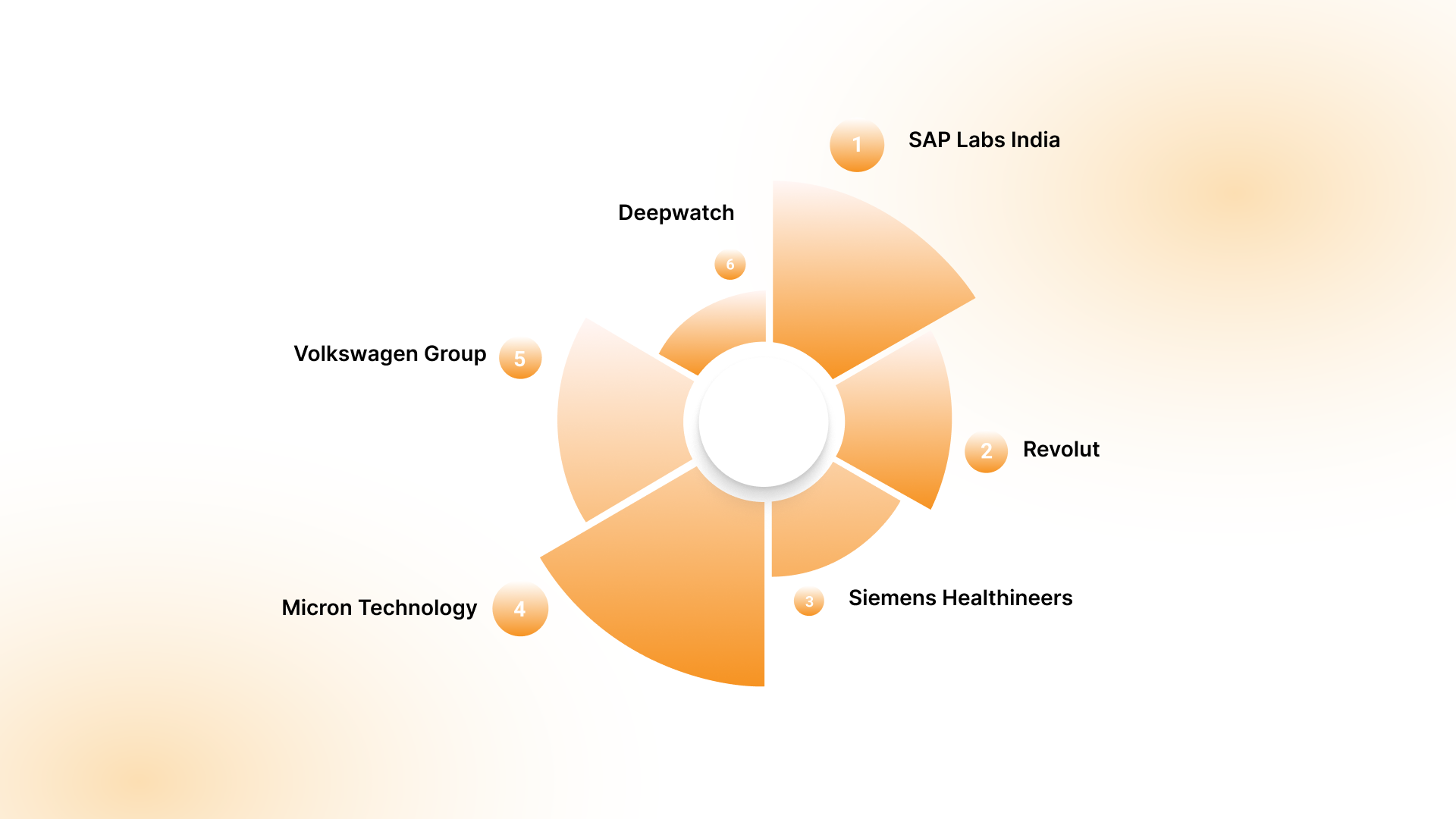
Here are the most notable new setups and expansions shaping this shift.
- SAP Labs India
- SAP opened a 41-acre campus near Bengaluru airport, now its second-largest R&D hub globally after Germany.
- The site anchors SAP’s Business AI initiative, building generative AI integrated into global ERP systems.
- Revolut
- Revolut plans to base up to 40% of its global workforce in India, adding around 1,600 roles in 2026.
- The Bengaluru hub owns onboarding, video-KYC, and fraud detection systems used across global markets.
- Siemens Healthineers
- Siemens Healthineers is expanding its Bengaluru footprint to support cloud-based diagnostic and healthcare platforms.
- The centre leads the development of systems connecting imaging devices and hospital workflows globally.
- Micron Technology
- Micron is scaling Bengaluru operations to support demand driven by global AI and data centre expansion.
- The centre contributes to high-bandwidth memory design used in next-generation AI chips.
- Volkswagen Group
- Volkswagen is expanding Bengaluru to support its shift toward software-defined vehicle architectures in electric vehicles.
- The teams build centralized systems controlling infotainment, vehicle logic, and autonomous capabilities.
- Deepwatch
- Deepwatch entered Bengaluru in late 2025 to build autonomous cybersecurity operations using AI-driven detection systems.
- The centre focuses on reducing human dependency in threat monitoring and response.
Also Read: Top 8 HR Agencies in Bangalore for Expert Recruitment Solutions
Growth at this scale also brings friction, and not every expansion decision plays out smoothly on the ground.
Challenges Companies Face While Setting Up GCCs in Bangalore
Bengaluru still attracts GCCs, but expansion here comes with real operational friction. The biggest problems are infrastructure strain, space competition, and city systems that do not scale as quickly as hiring plans.
- Commute unpredictability disrupts productivity: Companies face daily operational delays because traffic bottlenecks remain unresolved, with projects like the Bengaluru Business Corridor still incomplete despite long timelines.
- Location lock-in limits expansion flexibility: High demand in corridors like ORR and Whitefield makes it difficult to secure contiguous office space when scaling teams quickly.
- Infrastructure gaps spill into employee experience: Reports in 2025 highlight poor pedestrian access and road conditions, directly affecting last-mile connectivity and workforce movement.
- Utilities planning becomes a compliance burden: BWSSB said in 2025 that Bengaluru generates 1,480 MLD of sewage against 1,348.5 MLD of treatment capacity, forcing companies to plan carefully around water and compliance.
- City-level delays force internal workarounds: A June 2025 report said only 3 km of usable footpath exists across 1,700 km of key roads, which makes last-mile access and employee safety harder to manage.
Those constraints shape what comes next, especially as companies rethink how and where they scale their operations.
Future Outlook of GCCs in Bangalore
Bengaluru’s GCC story is moving from scale to specialization, where future growth depends on what gets owned here, not how many centres exist. The next phase is being shaped by AI integration, platform ownership, and tighter alignment with global business outcomes rather than standalone delivery models.
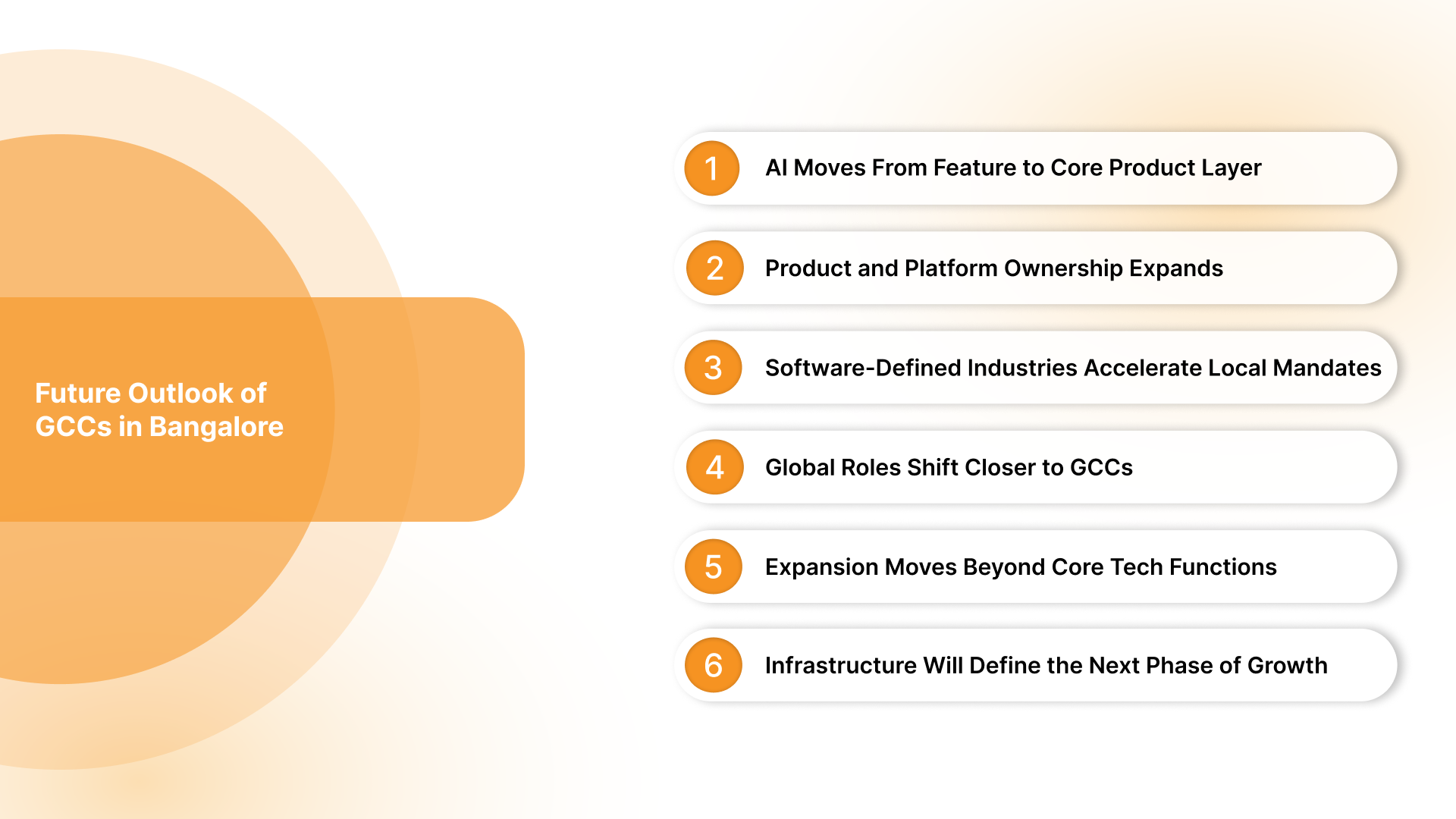
1. AI Moves From Feature to Core Product Layer
GCCs in Bengaluru are no longer adding AI features, because teams are now building models that directly power enterprise products and decision systems. This shift is visible in enterprise software, banking platforms, and healthcare systems, where AI is becoming the default execution layer.
2. Product and Platform Ownership Expands
More GCCs are taking end-to-end ownership of products instead of contributing to isolated modules within global teams. This means roadmap decisions, feature releases, and system performance accountability increasingly sit within Bengaluru-based teams.
3. Software-Defined Industries Accelerate Local Mandates
Automotive, healthcare, and industrial companies are shifting toward software-defined models, which increases the importance of engineering centres like Bengaluru. The result is deeper involvement in systems that control vehicles, devices, and infrastructure rather than supporting external engineering hubs.
4. Global Roles Shift Closer to GCCs
Leadership roles tied to engineering, analytics, and product are gradually moving into GCC locations instead of remaining concentrated in headquarters. This changes how decisions are made, because execution and strategy are starting to sit within the same operating units.
5. Expansion Moves Beyond Core Tech Functions
New GCC setups are expanding into areas like cybersecurity, compliance systems, and digital operations rather than only engineering and IT. This broadens the role of Bengaluru from a technology hub into a multi-function global operations centre.
6. Infrastructure Will Define the Next Phase of Growth
Growth will increasingly depend on how well companies navigate infrastructure constraints rather than talent availability or market demand. Decisions around location, hybrid work models, and distributed teams will become critical to sustaining long-term expansion.

How V3 Staffing Accelerates GCC Expansion in Bangalore?
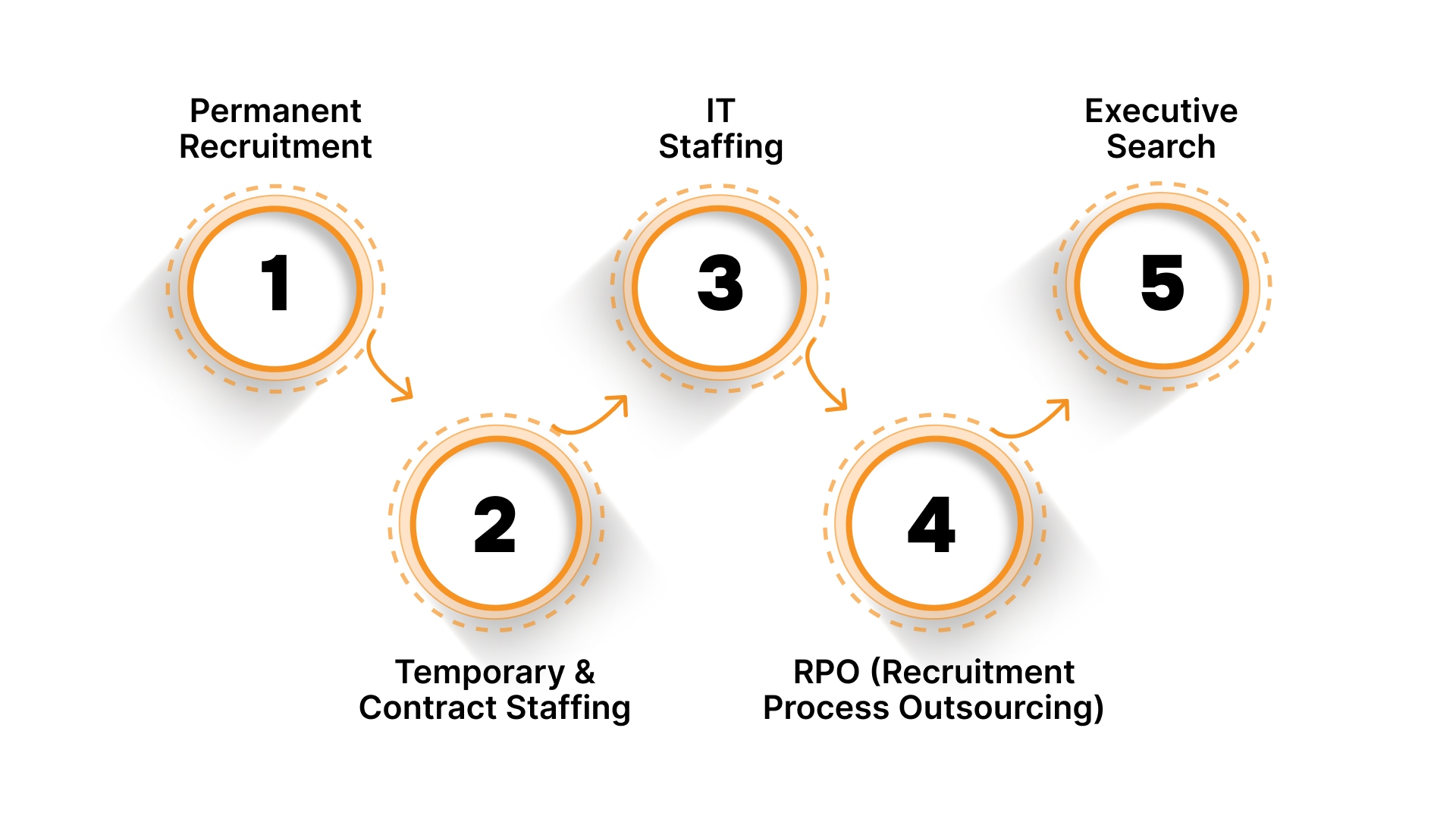
V3 Staffing, with its deep expertise in recruitment and workforce solutions in India, the USA, and the UAE, is uniquely positioned to support GCC expansion in Bangalore.
Here’s how we can help you:
- Permanent Recruitment: V3 Staffing helps GCCs hire full-time professionals across tech, R&D, and leadership roles. Their industry-specific expertise ensures precise matches for both senior and specialist positions.
- Temporary & Contract Staffing: For project-based needs or scaling operations quickly, V3 staffing provides flexible contract staffing solutions. This allows GCCs to manage peak demand without long-term commitments.
- IT Staffing: V3 staffing sources highly skilled IT professionals, including cloud engineers, DevOps, data scientists, and software architects, supporting both product and service-oriented companies.
- RPO (Recruitment Process Outsourcing): V3 staffing can embed with GCCs’ talent-acquisition teams to manage full recruitment life cycles, maintaining SLAs and reducing internal load.
- Executive Search: For leadership, director-level, or global roles based in Bangalore, V3 staffing search capabilities help GCCs build leadership locally.
By working closely with GCCs establishing or growing their operations in Bangalore, V3 Staffing ensures that companies can capitalise on the city’s strengths without being slowed down by hiring or operational challenges.
Conclusion
Bengaluru has moved past the era of being a massive back office. Today, the ecosystem is defined by the strategic weight of the functions it hosts, serving as the primary nerve center for global product roadmaps. Across sectors, critical systems, product decisions, and platform ownership are increasingly anchored in these centres. That changes how companies evaluate the city, not as a cost advantage, but as an operating base for core business functions.
For companies planning entry or expansion, the advantage lies in understanding where real ownership sits and how that aligns with long-term goals. These organizations prove that the city’s true value lies in its ability to own the entire lifecycle of a product, from the first line of code to the final global rollout, effectively moving the world's intellectual 'heavy lifting' to Bengaluru. The next phase of growth will favour those who build with that clarity from the start.
To build reliable, skilled, and scalable GCC teams across Bangalore and India’s major business hubs, connect with us today for tailored hiring support that matches your organisation’s long-term goals.