
.svg)
.svg)
Blue-collar workers play a key role in industries like construction, manufacturing, logistics, and maintenance. These jobs involve hands-on work and help keep day-to-day operations running smoothly.
In 2026, employment in blue-collar roles is expected to grow at an annual rate of 5-6%, showing how important these jobs are for the economy.
Today, companies look for workers who can handle new tools, meet deadlines, and deliver consistent results. Hiring blue-collar talent is not just about filling roles. It is about building a dependable workforce that supports daily operations and long-term growth.
This article will explore into why blue-collar roles matter, the most common job types, the challenges companies face, and simple ways to hire, train, and retain the right people.
Key Takeaways
- Blue-collar roles: Keep industries running smoothly, ensuring operational efficiency across manufacturing, logistics, construction, and technical services.
- Clear career paths exist: Entry-level work leads to skilled trades and advanced technical roles through training, certifications, and hands-on experience.
- Training and compliance address challenges: Regular upskilling, safety protocols, and structured growth plans reduce skill gaps, accidents, and turnover.
- Skilled workers drive business success: Competent blue-collar employees help scale operations, maintain quality, and meet project deadlines reliably.
- Partnering with experts ensures effective hiring: Collaborating with V3 Staffing delivers fast, compliant, and high-quality recruitment across trades, logistics, manufacturing, and technical operations.
What Are Blue Collar Jobs?
Blue-collar jobs are practical, hands-on roles that keep businesses and operations running smoothly. They involve tasks like building, repairing, operating machines, and managing day-to-day operations. These roles are different from office-based jobs and often rely on:
- Vocational training or apprenticeships to learn essential skills
- On-the-job experience to improve efficiency and problem-solving
- Following safety and labor regulations to protect workers and maintain standards
Blue-collar work takes place in factories, construction sites, warehouses, repair shops, and outdoor projects. These jobs are essential because they form the backbone of any operational or industrial activity.
Also Read: How India's AI Workforce is Shaping the Future of Jobs in 2026
Why Companies Hire Blue Collar Workers in 2026?
Organisations across industries rely on blue-collar talent for a combination of skill, scale, and operational reliability. From manufacturing and logistics to maintenance and infrastructure projects, businesses require a workforce capable of delivering consistent performance.
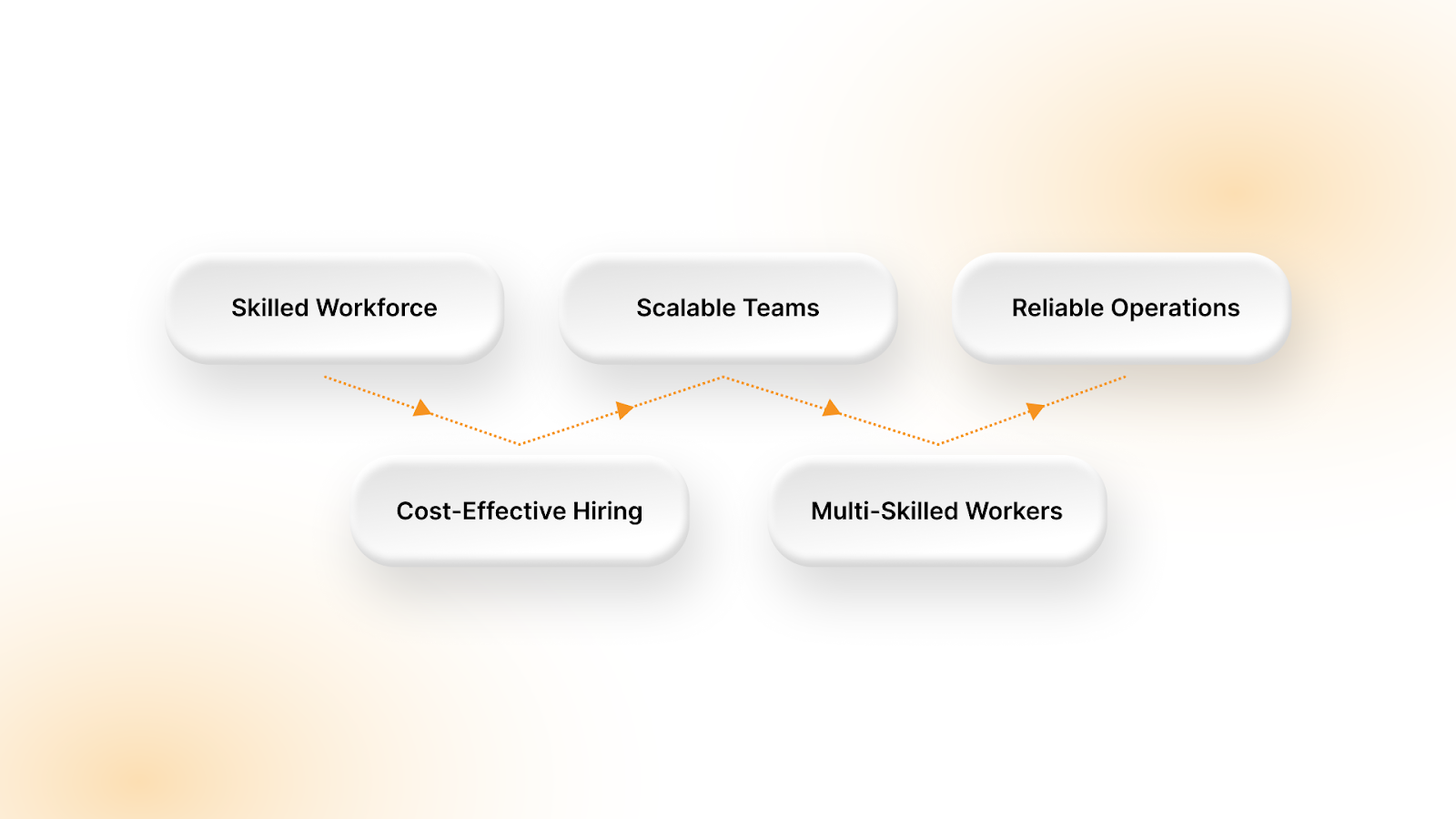
Here’s why blue-collar talent is crucial for modern enterprises:
1. Skilled Workforce
Workers trained in areas like electrical work, plumbing, welding, machine operations, and logistics can immediately contribute to projects. Their expertise reduces training time and ensures high-quality outcomes.
2. Cost-Effective Hiring
Employing blue-collar workers directly helps companies manage costs effectively. Local hires are often more economical than outsourcing, especially for roles that require large teams or continuous work.
3. Scalable Teams
Blue-collar roles allow companies to expand their workforce quickly. Businesses can adjust team size for large projects, seasonal peaks, or urgent operational needs without disrupting existing workflows.
4. Flexible and Multi-Skilled Workers
Many blue-collar professionals can cross-skill in multiple trades. This flexibility enables businesses to deploy workers where they are most needed and respond to changing project requirements efficiently.
5. Reliable Operations
A skilled and motivated blue-collar workforce ensures work is completed on time and meets quality standards. These employees help maintain safety, reduce errors, and support smooth day-to-day operations.
A well-planned blue-collar workforce not only keeps operations running smoothly but also becomes a key driver of growth, efficiency, and business resilience.

Key Differences Between Blue Collar and White Collar Jobs
Blue-collar and white collar roles serve different but complementary purposes in the workforce. Blue-collar jobs focus on hands-on work, practical skills, and operational delivery, while white collar roles revolve around office-based tasks, knowledge work, and management responsibilities.
Knowing the differences can help you identify which career path aligns with your skills, interests, and long-term goals.
Both are essential to business operations, but choosing the right path depends on your aptitude, interests, and career aspirations.
In-Demand Blue Collar Roles and Career Pathways
These roles are not just jobs; they offer structured learning, technical mastery, and opportunities to progress into specialised or supervisory positions. Let’s explore the main categories of blue-collar roles and what makes each one critical for businesses and career growth.
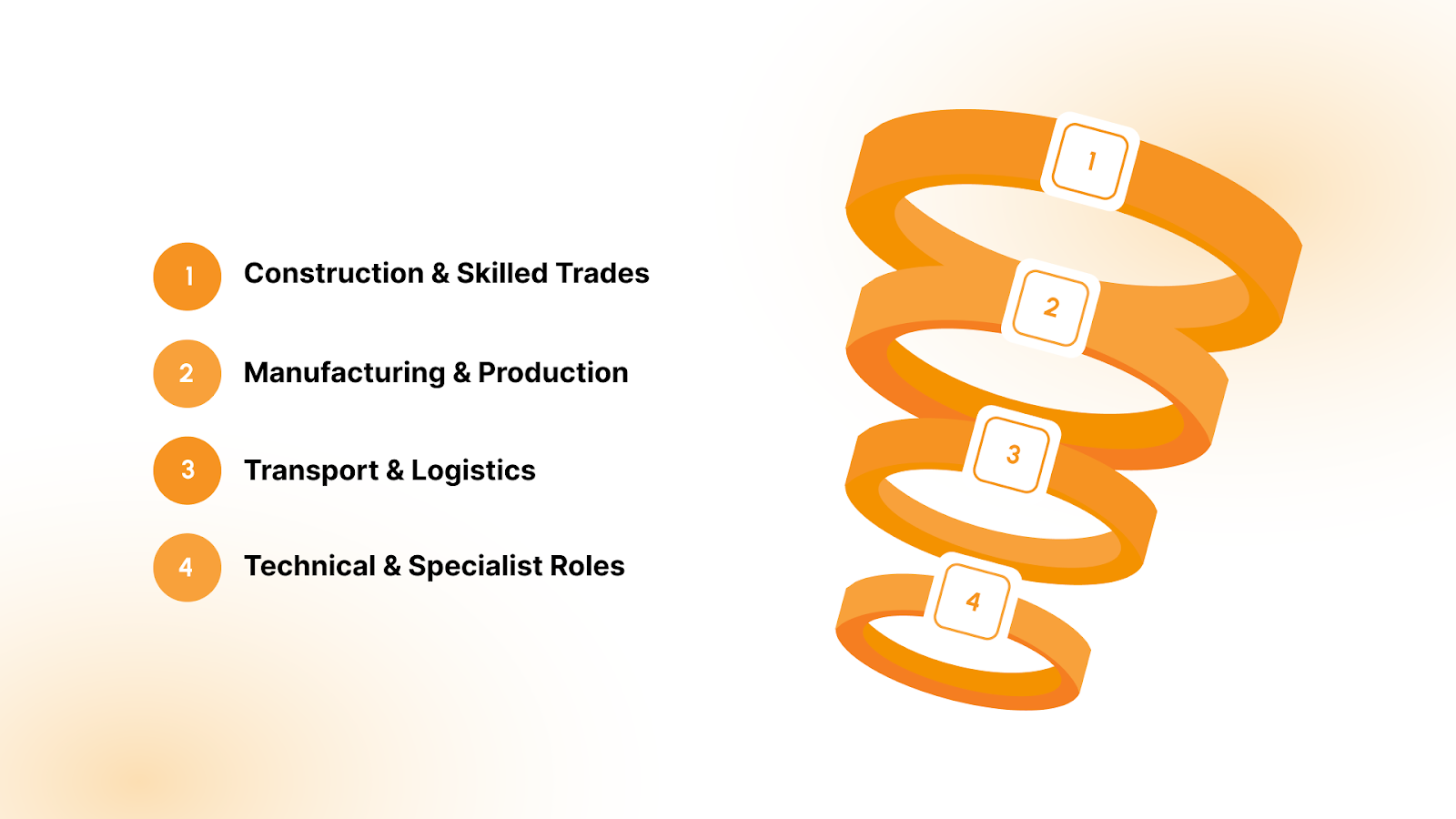
1. Construction & Skilled Trades
Construction and skilled trades are essential for building, maintaining, and upgrading infrastructure. Workers in this sector often learn on the job or through vocational training and play a key role in delivering tangible results.
- Electricians: Install, maintain, and troubleshoot electrical systems in residential, commercial, and industrial settings.
- Plumbers: Ensure smooth water flow, maintain pipelines, and efficiently handle sewage systems.
- Carpenters: Build, repair, and finish wooden structures and furniture.
- Welders: Join metal components safely for construction and manufacturing projects.
These roles often offer certifications, apprenticeships, and pathways to supervisory or specialist positions in large-scale projects.
2. Manufacturing & Production
The manufacturing sector relies on precision, efficiency, and technical know-how. Blue-collar workers here ensure that products are built to specification, that machinery runs smoothly, and that production targets are met consistently.
- Machine Operators: Run and monitor industrial machines, ensuring quality and efficiency.
- Assemblers: Build products from components on assembly lines, maintaining accuracy and speed.
- HVAC Technicians: Install, maintain, and repair heating, ventilation, and air conditioning systems for various facilities.
These roles provide strong opportunities for cross-training, technical skill development, and long-term growth in operational leadership.
3. Transport & Logistics
Transport and logistics roles are the backbone of supply chains, keeping goods moving efficiently and safely. Skilled blue-collar workers in this category ensure businesses can meet deadlines, maintain inventory, and manage material flow.
- Truck Drivers: Deliver goods across regions safely while adhering to schedules and safety protocols.
- Warehouse Workers: Manage storage, sorting, and dispatching of products accurately.
- Forklift Operators: Safely move materials within warehouses, reducing downtime and operational delays.
These positions offer a combination of hands-on experience, safety compliance training, and potential growth into logistics coordination or fleet management.
4. Technical & Specialist Roles
Certain blue-collar roles require highly specialised technical knowledge and advanced problem-solving. These roles are critical in maintaining sophisticated equipment and infrastructure.
- Aircraft Mechanics: Inspect, maintain, and repair aircraft to ensure safe and reliable operations.
- Wind Turbine Technicians: Service renewable energy systems and ensure consistent power generation.
- Elevator Installers/Repairers: Install and maintain elevators, escalators, and lifts, guaranteeing safety and reliability.
Specialised roles often come with certifications, ongoing skill development, and opportunities to work on high-tech projects or manage technical teams.
Each path offers the chance to gain expertise, advance in responsibility, and contribute directly to business outcomes. Companies benefit from reliable, skilled workers, while individuals can grow into technical leaders, supervisors, or trainers.
Hiring blue-collar talent at scale? V3 Staffing helps you build your workforce faster with SLA-driven recruitment, role-specific sourcing, and end-to-end hiring management across India.
With 10,000+ workers placed, 300+ clients served, 16+ years of experience, and rapid deployment timelines, V3 ensures speed, compliance, and workforce reliability.
Also Read: GCC Consultancy That Helps You Build Right and Scale Fast
How Do Blue Collar Jobs Support Skill Development and Career Growth?
Starting from hands-on entry-level positions, workers can move into specialised trades and eventually advanced technical roles with experience, training, and certifications. Companies now focus on skill development programmes and cross-training to ensure employees grow while meeting operational needs.
Here’s a clear view of the typical progression in blue-collar careers:
By investing in skill development and offering structured growth opportunities, companies create motivated, competent blue-collar teams capable of taking on more complex roles over time.
Top Challenges in Blue Collar Work and Best Ways to Handle Them
For businesses, recognising these challenges and planning practical solutions is key to maintaining productivity, ensuring safety, and building a loyal, skilled workforce. Understanding both the limitations and proactive strategies for blue-collar roles can help companies transform potential obstacles into long-term advantages.
Here’s a detailed look:
By addressing these challenges with practical strategies, companies can create a safer, more skilled, and motivated workforce while helping blue-collar workers grow in their careers.

How Does V3 Staffing Help You Hire Blue Collar Talent?
Companies need a structured approach that ensures compliance, quick deployment, and consistent workforce quality across trades, manufacturing, logistics, and technical operations.
V3 Staffing helps organisations efficiently hire and manage blue-collar talent across India, providing scalable recruitment and workforce solutions tailored to operational needs.
With 16+ years of experience, 10,000+ workers placed, and 300+ clients served, V3 acts as a strategic hiring partner rather than just a staffing provider.
Below is how V3 Staffing supports the hiring of blue-collar talent at scale:
- Permanent Recruitment: Full-cycle hiring for warehouse, logistics, assembly, and skilled trades with tailored sourcing and industry-specific screening.
- Temporary & Contract Staffing: Flexible staffing for seasonal demand, projects, or short-term workforce needs with quick deployment and full compliance.
- IT Staffing: Access to technically skilled workers for machinery operation, maintenance, and industrial automation roles.
- Recruitment Process Outsourcing (RPO): Embedded recruitment teams that manage end-to-end hiring for volume blue-collar roles with SLA-driven timelines.
- Executive Search: Targeted search for plant supervisors, operations managers, and team leads with competency-based evaluation.
- Employer of Record (EOR) Services: Legal hiring of blue-collar workers without entity setup, including payroll, statutory compliance, and fast onboarding.
- Global Hiring: International recruitment solutions for the US and UAE, with market insights and structured candidate evaluation.
Whether you need permanent staff, temporary workers, technical specialists, or leadership hires, V3 ensures speed, compliance, and quality across every hire.
Final Thoughts
Blue-collar jobs in India continue to play a crucial role in 2026, supported by strong industrial growth and expanding infrastructure projects. Skilled workers across trades, manufacturing, logistics, and technical services form the backbone of the economy and keep operations running smoothly.
This trend means companies hiring blue-collar talent in India benefit from both cost-effective workforce solutions and access to trained, reliable employees, especially as demand for skilled roles grows faster than supply.
Looking to hire or manage blue-collar workers efficiently while ensuring compliance, safety, and quality performance? Partner with V3 Staffing for tailored permanent, contract, and RPO solutions across all skilled and operational roles. Contact us today.