

.svg)
.svg)
Global banks are steadily expanding their Global Capability Centres (GCCs) in India as part of their long-term strategy for managing technology, analytics, and global banking operations. What began years ago as back-office support units has gradually evolved into strategic centres that contribute to enterprise banking platforms, financial data systems, regulatory operations, and digital banking infrastructure.
The Banking, Financial Services, and Insurance (BFSI) sector is one of the largest contributors to India’s GCC ecosystem. Industry reports estimate that more than 190 BFSI Global Capability Centres operate in India, employing over 540,000 professionals who support global banking systems, analytics platforms, and operational functions.
Several global financial institutions have expanded their presence in India through large capability centres that support international operations. These centres play a critical role in enabling banks to manage complex financial systems, maintain regulatory compliance across markets, and support technology platforms used by millions of customers worldwide.
In this article, we explore how banking GCCs operate in India, why global financial institutions continue expanding these centres, the key functions they manage, and the talent required to support modern banking operations.
Key Takeaways
- India hosts 190+ BFSI Global Capability Centres employing more than 540,000 professionals, making financial services one of the largest GCC sectors in the country.
- Global banks use these centres to support enterprise technology platforms, financial analytics systems, compliance operations, and digital banking infrastructure.
- Cities such as Bengaluru, Hyderabad, Mumbai, Pune, and Chennai have emerged as key hubs where banks establish capability centres to support global operations.
- Banking GCC teams typically work across engineering, data analytics, cybersecurity, cloud infrastructure, and risk management functions.
- As banks continue expanding digital banking services and technology platforms, demand for specialised technology and financial professionals in GCCs is expected to grow further.
What Is a Banking GCC?
A Banking Global Capability Centre (GCC) is a specialised centre established by a bank to support global operations, technology systems, and financial services infrastructure from a central location.
Instead of distributing teams across multiple regions, banks use GCCs to build dedicated teams that support key banking capabilities such as enterprise technology platforms, financial data systems, and regulatory operations.
Earlier, these centres focused primarily on operational support tasks such as transaction processing. Today, their role has expanded significantly. Many banking GCCs now support critical areas including:
- enterprise banking platforms
- financial data and analytics systems
- cybersecurity and infrastructure management
- regulatory and risk operations
Several global banks operate large GCC teams in India, including JPMorgan Chase, HSBC, Citi, Barclays, and Wells Fargo. These centres work closely with global headquarters and regional teams to support international banking operations.
As digital banking and financial technology continue to evolve, GCCs have become an important part of how global banks manage complex systems and scale operations across markets.

Why Global Banks Are Setting Up GCCs in India
Global banks expand Global Capability Centres in India when they need to scale technology teams, manage complex financial systems, and support operations across multiple markets. Instead of building these teams separately in different regions, GCCs allow banks to centralise specialised capabilities in one location.
Several strategic factors drive this expansion.
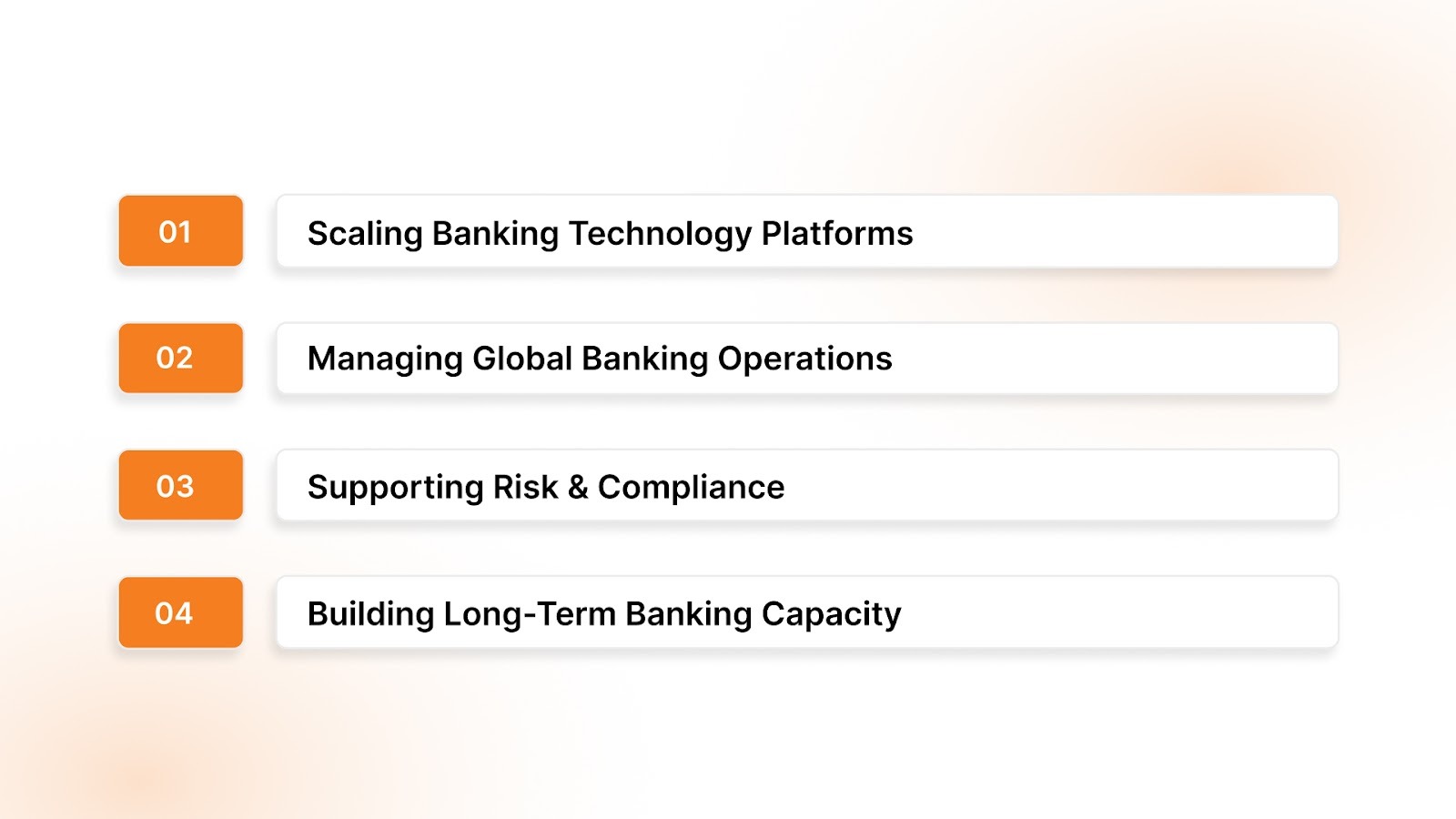
1. Scaling Enterprise Banking Technology
Modern banks rely on large technology platforms to support online banking, payments infrastructure, and financial data systems. GCCs allow banks to build engineering teams that develop and maintain these platforms at scale.
2. Managing Global Operations Efficiently
Banks operate across multiple countries, each with its own operational requirements. Capability centres help centralise key processes so teams can support international operations more efficiently.
Some of the operational functions supported through GCC teams include:
- transaction monitoring and processing
- financial data management
- enterprise platform support
- operational reporting systems
3. Supporting Risk and Compliance Requirements
Financial institutions must comply with regulatory frameworks across multiple jurisdictions. GCC teams assist global compliance and risk teams by supporting monitoring processes, documentation, and reporting systems.
4. Building Long-Term Operational Capacity
As banking operations become more technology-driven, capability centres provide a scalable structure for building long-term teams that support global systems and operational workflows.
For many financial institutions, GCCs have become a strategic way to strengthen global operations while maintaining consistent standards across markets.
Also Read: GCC Outsourcing vs Traditional Outsourcing Explained
Key Functions Managed by Banking GCCs
Banking Global Capability Centres support a wide range of specialised functions that help financial institutions manage global banking systems, operational processes, and regulatory requirements. Over time, these centres have evolved from operational support units into hubs that manage several critical banking capabilities.
Some of the core functions handled by banking GCC teams include:
1. Enterprise Technology and Platform Engineering
Banks rely on GCC teams to build and maintain the technology infrastructure that powers modern banking systems.
Typical responsibilities include:
- developing and maintaining enterprise banking platforms
- supporting payment processing systems
- managing cloud-based infrastructure
- maintaining internal banking software systems
2. Financial Data and Analytics
Banks process large volumes of financial data every day. GCC teams help analyse this data to support decision-making and operational monitoring.
Common analytics responsibilities include:
- transaction data analysis
- financial performance reporting
- customer behaviour analysis
- fraud detection analytics
3. Risk Management and Compliance Operations
Financial institutions must operate under strict regulatory frameworks across different countries. GCC teams support internal teams by assisting with risk monitoring and regulatory reporting processes.
Key responsibilities include:
- monitoring financial risk indicators
- preparing regulatory documentation
- supporting anti-money laundering (AML) processes
- assisting internal audit and governance teams
4. Cybersecurity and Infrastructure Protection
With the growth of digital banking services, protecting financial systems has become a critical priority. GCC teams help monitor security systems and protect sensitive financial data.
Security-related responsibilities typically include:
- monitoring security alerts and threats
- managing identity and access control systems
- supporting infrastructure security operations
- responding to cybersecurity incidents
Through these functions, banking GCCs support the technology systems, operational processes, and governance frameworks required for global banking operations.
Also Read: How GCC Works: A Strategic Guide for Indian Enterprises
Top Banking GCC Companies in India
Several global banks operate large Global Capability Centres in India to support their international operations. These centres handle technology development, financial data systems, operational processes, and regulatory support for global banking services.
Some of the major banks with GCC operations in India include:
These capability centres operate across India’s major technology hubs and play an important role in supporting global banking infrastructure and operational processes.

Top Cities for Banking GCCs in India
Banking Global Capability Centres in India are concentrated in a few major cities that offer strong technology ecosystems, financial services infrastructure, and access to specialised professionals. These locations provide the environment needed for global banks to build and scale capability centres.
Some of the key GCC hubs include:
Bengaluru
Bengaluru is widely considered the largest GCC hub in India. The city has a strong technology ecosystem and a large pool of engineering professionals, making it a preferred location for banks building enterprise technology and platform teams.
Hyderabad
Hyderabad has become a major destination for new GCC investments. The city offers modern infrastructure, business-friendly policies, and a growing ecosystem of global technology and financial services companies.
Mumbai
As India’s financial capital, Mumbai remains an important location for banking GCC operations. Many financial institutions operate teams here to stay connected to the country’s broader financial services ecosystem.
Pune
Pune has developed into a strong technology and operations hub. Several global organisations run capability centres in the city to support enterprise platforms and operational processes.
Chennai
Chennai also hosts multiple GCC operations across industries. Its engineering talent base and technology ecosystem make it a viable location for capability centre expansion.
These cities collectively form the core of India’s GCC ecosystem, enabling banks to build specialised teams that support global banking operations.
Also Read: 7 Mass Hiring Companies in India for IT, GCC, and Shared Services Teams
Talent Demand in Banking GCCs
As banking Global Capability Centres expand in India, hiring specialised professionals has become one of the biggest operational priorities for global banks. Capability centres require teams that understand both enterprise technology environments and financial services systems.
Banks typically hire across a mix of technology, data, and governance roles to support global banking platforms.
Some of the most in-demand roles in banking GCCs include:
In addition to technical skills, many banks look for professionals who understand financial systems, regulatory frameworks, and enterprise-scale technology platforms.
As banks continue investing in digital banking, analytics platforms, and infrastructure modernisation, demand for professionals across these specialised roles is expected to grow across India’s GCC ecosystem.
Also Read: GCC in HR: Transforming Talent Strategy for India’s Enterprises
Challenges Banks Face While Scaling GCCs
While Global Capability Centres provide significant operational advantages, expanding these centres also presents several challenges for global banks. As GCC teams grow in size and responsibility, managing hiring, coordination, and regulatory requirements becomes increasingly complex.
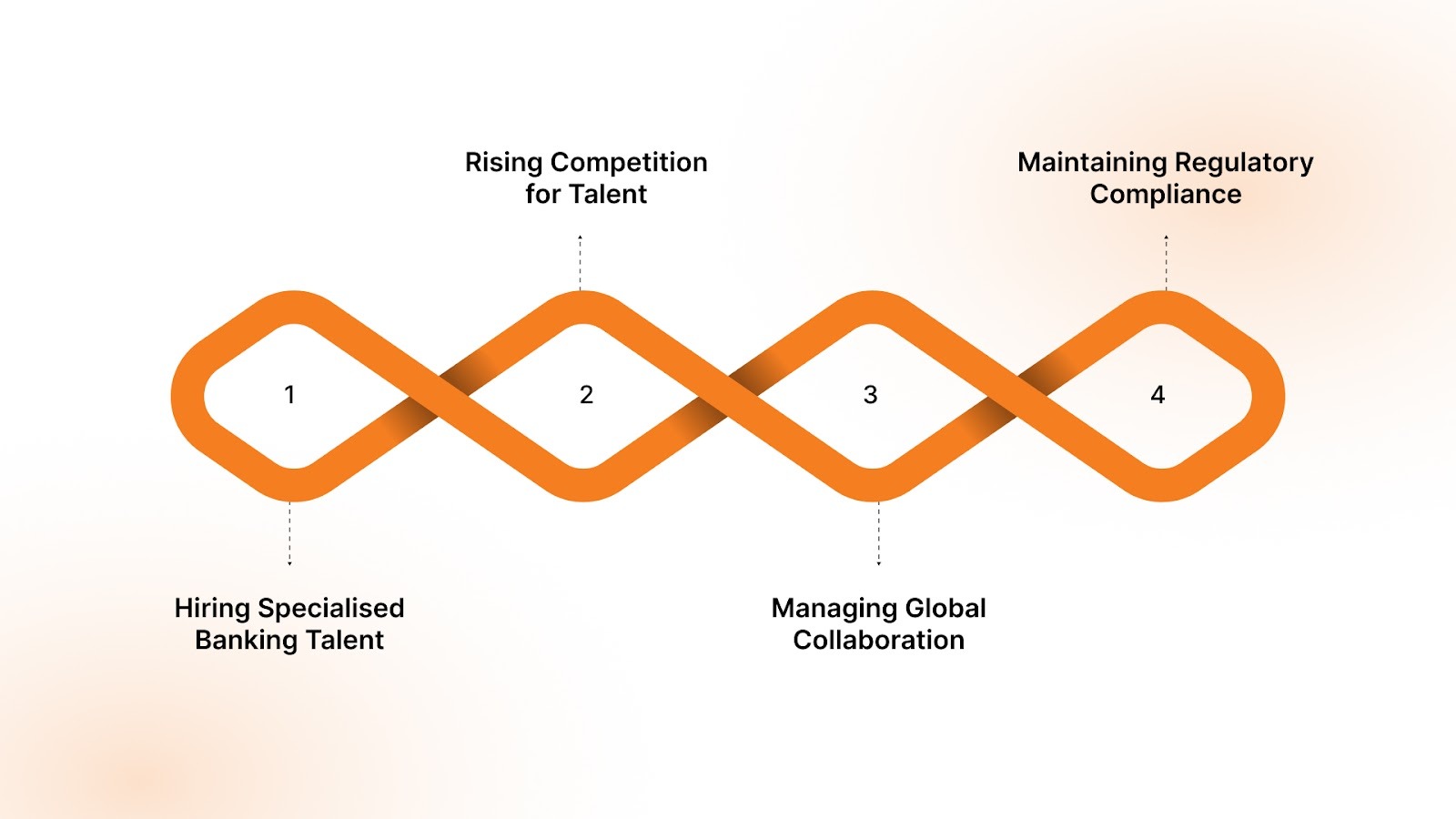
Some of the common challenges include:
1. Hiring Specialised Talent
Many banking GCC roles require professionals who understand both enterprise technology systems and financial services environments. Finding experienced candidates with this combination of skills can take time, especially for niche roles in data engineering, cybersecurity, or cloud infrastructure.
2. Increasing Competition for Talent
India’s GCC ecosystem is expanding rapidly across industries. As more global organisations establish capability centres, competition for experienced professionals continues to increase, making hiring timelines longer.
3. Managing Global Collaboration
Capability centre teams often work closely with headquarters and regional offices across different countries. Coordinating projects across time zones and maintaining alignment with global teams can become challenging as operations scale.
4. Maintaining Regulatory and Governance Standards
Banks must comply with strict financial regulations across multiple jurisdictions. Ensuring that processes, reporting systems, and governance frameworks remain consistent across distributed teams requires strong oversight.
Addressing these challenges is critical for financial institutions looking to expand their capability centres while maintaining operational efficiency and regulatory compliance.
When Should a Banking GCC Work With a Hiring Partner?
As banking Global Capability Centres expand in India, internal hiring teams may find it difficult to fill specialised roles quickly. While banks often manage recruitment internally during early stages, large hiring programs or niche technical roles can require additional support.
Banks typically work with recruitment partners when GCC hiring requirements become complex or time-sensitive.
Some common situations include:
- Launching a new banking GCC in India and building initial engineering and operations teams
- Hiring multiple specialised roles within 60–90 days, especially across engineering, data, or cloud functions
- Expanding teams across multiple cities such as Bengaluru, Hyderabad, and Pune
- Facing long hiring timelines for niche roles like cybersecurity specialists or data engineers
- Scaling teams across multiple technology capabilities, including analytics, infrastructure, and platform engineering
In these scenarios, specialised recruitment partners can help banks access broader talent networks, accelerate hiring timelines, and structure recruitment programs for large capability centre teams.
How Banks Choose the Right Hiring Partner for GCC Expansion
Selecting the right recruitment partner is important for banks expanding Global Capability Centres. The hiring partner must understand both enterprise technology roles and financial services environments.
Banks typically evaluate several factors before choosing a recruitment partner.
Experience with GCC Hiring
Recruitment partners should have experience supporting Global Capability Centres and enterprise hiring programs. This ensures they understand the structure and scale of capability centre teams.
Coverage Across Technology and Financial Roles
Banks require professionals across a wide range of roles, including engineering, analytics, infrastructure, and compliance. Recruitment partners should be able to source talent across these specialised areas.
Screening Process for Niche Talent
Roles in banking GCCs often require professionals with expertise in enterprise systems, financial platforms, and regulatory environments. A structured screening process helps ensure candidates meet these requirements.
Multi-Location Hiring Capability
Many banks operate GCC teams across multiple cities in India. Recruitment partners must be able to support hiring programs across different locations.
Ability to Scale Hiring Programs
Capability centre expansion can involve hiring dozens of professionals within a short period. Recruitment partners should have the sourcing capacity and operational processes needed to support large hiring programs.
India's capability ecosystem offers depth, diversity, and scale - but identifying the right talent requires precision. With V3 Staffing's specialised recruitment solutions, you can build high-performance GCC teams across Bengaluru, Hyderabad, Mumbai, and Delhi NCR with speed and accuracy.
Future of Banking GCCs in India
Banking Global Capability Centres in India are expected to expand further as financial institutions continue investing in digital banking platforms, advanced analytics, and secure financial infrastructure. Industry projections suggest that India’s GCC ecosystem could grow to over 2,400 centres by 2030, with financial services remaining one of the largest sectors.
Several global banks, including JPMorgan Chase, Barclays, and Citi, have already expanded their capability centre teams in India to support enterprise banking systems, technology platforms, and global operational processes.
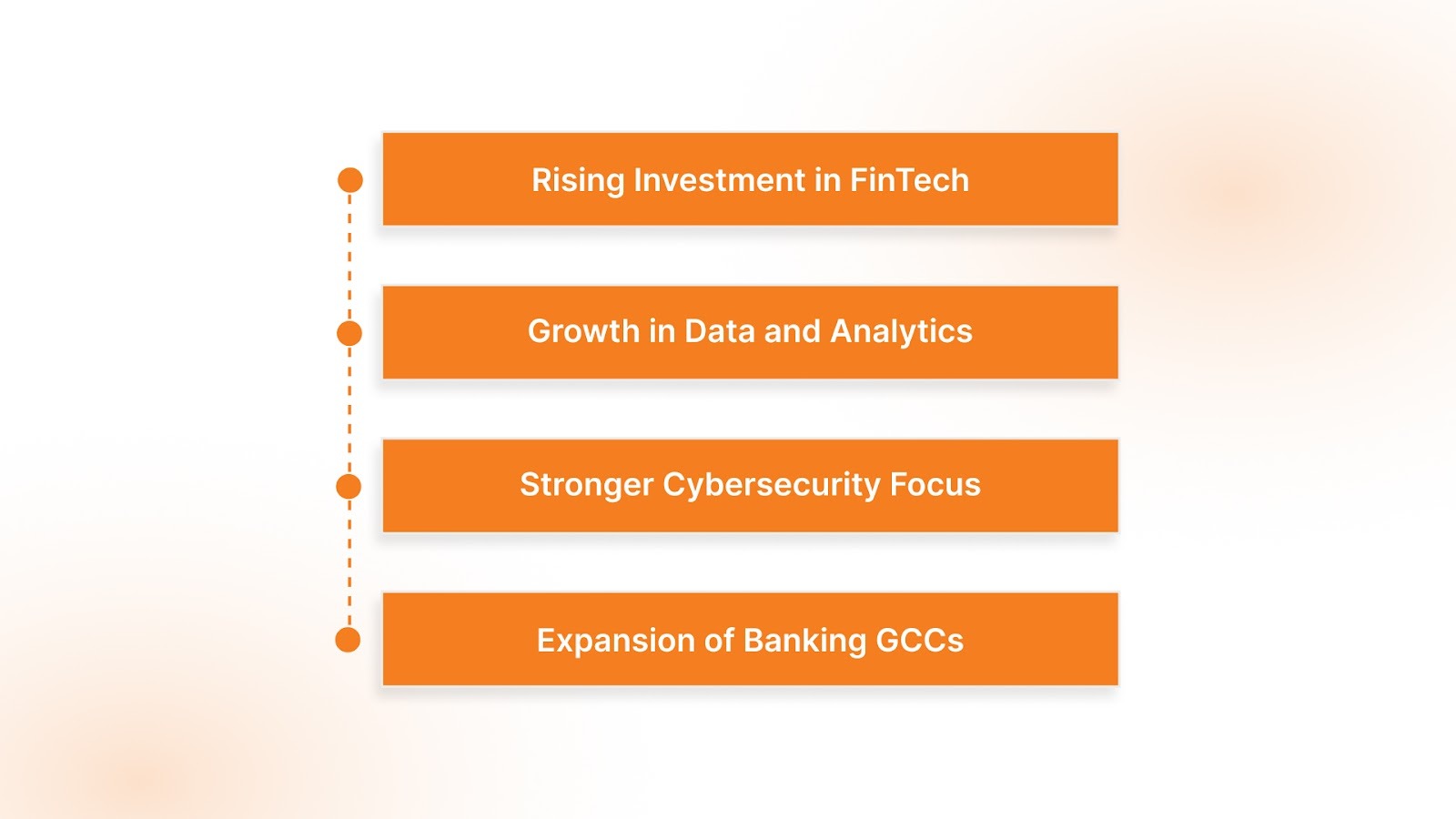
A few key trends are shaping the future of banking GCCs.
Greater Investment in Financial Technology
Banks are increasingly investing in technologies that support digital banking services, payments infrastructure, and financial data systems. Capability centre teams are expected to play a larger role in supporting these initiatives.
Expansion of Data and Analytics Capabilities
Financial institutions are relying more heavily on analytics platforms to process financial data, monitor risk, and generate insights that support operational and strategic decisions.
Increased Focus on Cybersecurity
As digital banking continues to grow, protecting financial systems and customer data becomes increasingly important. GCC teams will continue supporting enterprise security systems and infrastructure protection initiatives.
Continued Expansion of GCC Operations
Many global banks are gradually increasing the scale of their capability centre teams in India. These centres are becoming long-term strategic hubs that support global banking operations and enterprise technology systems.

How V3 Staffing Supports GCC Hiring for Banking, Data, Cloud, and Technology Teams
As banking Global Capability Centres expand in India, one of the most consistent operational challenges for financial institutions is hiring specialised professionals at scale. Many GCC teams require professionals who understand both enterprise technology environments and financial services systems, which can make hiring timelines longer for niche roles.
In such cases, banks often work with specialised recruitment partners that understand GCC hiring models and enterprise technology roles.
V3 Staffing works with enterprises and Global Capability Centres to support hiring across technology, analytics, infrastructure, and governance teams that power modern banking operations.
Some of the common roles supported through GCC hiring programs include:
To support capability centre expansion, organisations often use different hiring models depending on the scale of their requirements.
Permanent Hiring
For long-term teams supporting enterprise banking platforms, organisations rely on permanent recruitment to build stable engineering and operational teams.
Contract and Project-Based Staffing
For short-term initiatives such as platform upgrades or infrastructure programs, organisations often use contract staffing models that allow teams to scale quickly.
Recruitment Process Outsourcing (RPO)
When capability centres need to scale hiring across multiple roles or locations, organisations may use RPO programs where a recruitment partner manages sourcing, screening, and coordination across large hiring initiatives.
By supporting hiring across engineering, data, infrastructure, and financial services roles, V3 Staffing helps organisations build specialised teams required to support the growth of Global Capability Centres.
Conclusion
Global Capability Centres have become an important part of how international banks manage technology systems, financial operations, and regulatory processes across multiple markets. In India, these centres support a wide range of capabilities, from enterprise banking platforms and data systems to compliance operations and infrastructure management.
As digital banking services continue to expand, global financial institutions are increasingly relying on GCC teams to support technology platforms, analytics systems, and operational workflows. This growth is also driving demand for specialised professionals across areas such as engineering, data, cloud infrastructure, cybersecurity, and risk management.
For organisations establishing or expanding banking GCC operations, building the right teams is a critical part of long-term success. Working with recruitment partners that understand enterprise hiring requirements and GCC operating models can help banks scale their capability centres more efficiently.
V3 Staffing works with global organisations to support hiring across technology, analytics, infrastructure, and governance roles that power modern banking operations.
Contact V3 Staffing to learn how we support organisations in building specialised teams for Global Capability Centres.