
.svg)
.svg)
The GCC region, spanning the UAE, Saudi Arabia, Qatar, Oman, Kuwait, and Bahrain, is entering a new era of rapid digital acceleration.
National transformation programs and large-scale tech investments are reshaping the talent scenario, creating intense demand for specialists in AI, cloud engineering, data security, and other high-impact domains.
As competition for skilled professionals reaches unprecedented levels, hiring strategies across mid-to-large enterprises are being forced to evolve.
This overview breaks down the key tech hiring trends GCC countries in 2025 and what organisations must prioritise to stay competitive in a rapidly modernising market.
Key Takeaways
- Generative AI and Machine Learning have moved from experimental projects to enterprise-wide ecosystems, driving intense, expensive competition for specialised AI engineers and data scientists.
- The highest demand is concentrated in the critical digital pillars: AI, Cloud Computing (especially architecture and DevSecOps), and Cybersecurity/Zero Trust architectures.
- Recruitment is pivoting away from traditional academic qualifications toward verified competencies and skills-based assessments, with continuous upskilling becoming a central retention tool.
- While the UAE and Saudi Arabia are leading the talent wars with massive investments, the entire region is focusing on attracting high-quality international talent to fill niche gaps created by their national vision projects.
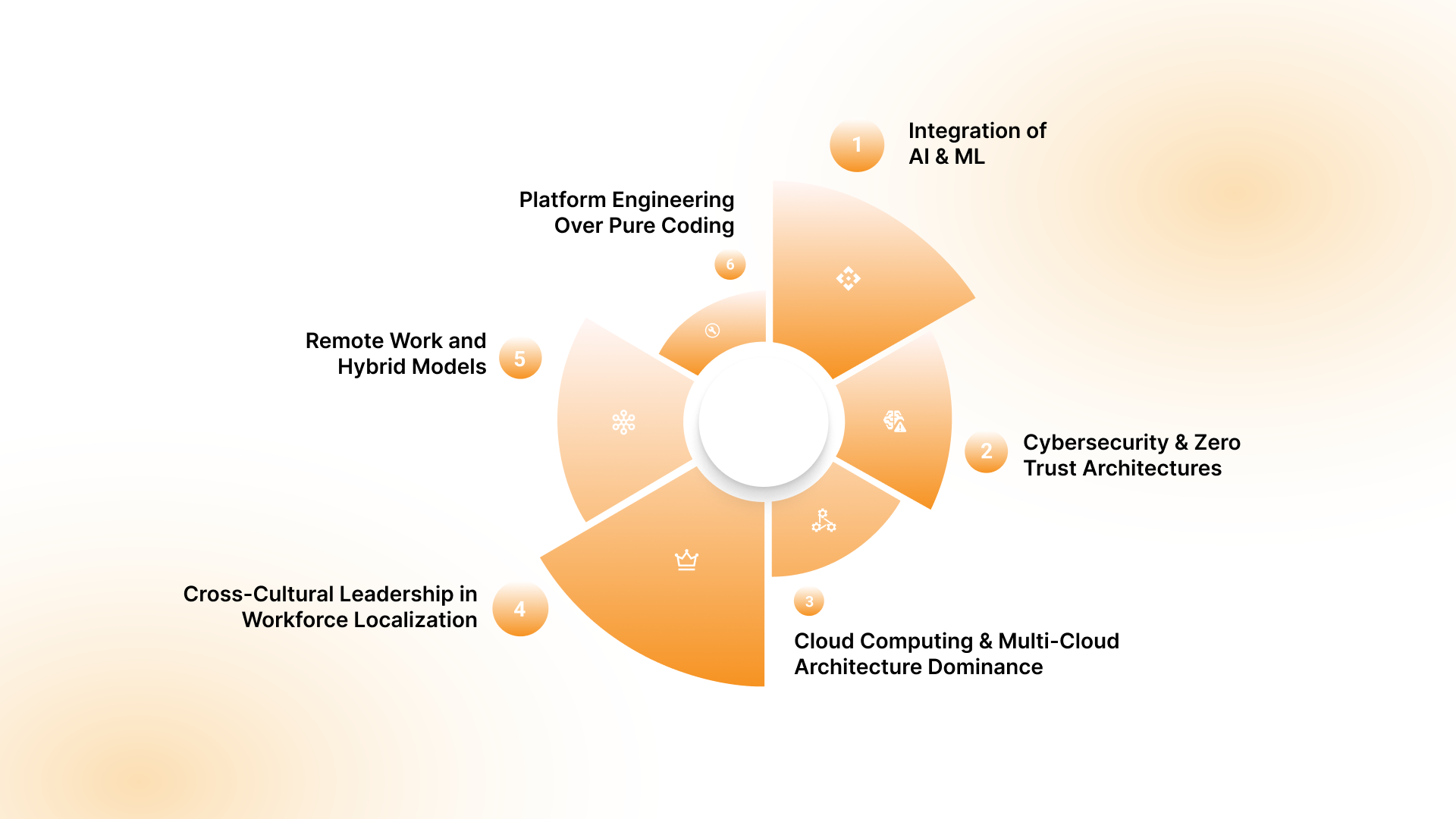
1. Integration of Artificial Intelligence (AI) and Machine Learning (ML)
The single most defining tech hiring trend GCC countries 2025 is the aggressive and pervasive integration of AI. National strategies across the UAE and Saudi Arabia are underpinned by billions in AI investments, aiming to diversify their economies and build 'smart' futures.
Trend: AI Moves from Hype to Enterprise-Wide Ecosystem
The initial phase of AI experimentation is over. 2025 is the year AI becomes deeply embedded in enterprise DNA, transforming daily workflows, decision-making, and operational processes across sectors like finance, healthcare, and infrastructure.
- Impact on Hiring: There is a surge in demand for Generative AI Architects, AI Research Scientists, and Machine Learning Engineers who can operationalise AI solutions at scale.
- The Specialisation Challenge: Companies are competing fiercely for candidates with hands-on experience in Large Language Models (LLMs), natural language processing (NLP), and computer vision.
- Hiring Strategy Pivot: Instead of bulk hiring, companies are focusing on smarter talent allocation, automating lower-value tasks to ensure high-cost digital experts work on transformative, high-impact projects.
This unprecedented focus on AI necessitates a high-precision, strategic hiring model. Our IT Staffing services are tailored to secure this specialised tech talent who are difficult to source through conventional channels.
The next critical demand area is securing these new, AI-driven digital environments, making cybersecurity expertise mandatory.

2. Cybersecurity and Zero Trust Architectures as a Priority
As GCC countries accelerate their digital transformation, implementing e-governance, digital banking, and smart city infrastructure, the threat surface expands exponentially. This makes cybersecurity a top national and business priority.
Trend: Cybersecurity Shifts to Proactive and Advanced Defence
The focus has moved beyond reactive security measures to building sophisticated, proactive defence systems, with a strong emphasis on Zero Trust models and AI-powered threat detection.
- Impact on Hiring: High demand for specialists in Zero Trust Architecture, Cloud Security, and AI-powered Threat Detection. Organisations in the BFSI, government, and telecom sectors are investing heavily in Cybersecurity Analysts, Ethical Hackers, and Risk Management Professionals.
- Compliance and Regulation: Professionals skilled in global and local data residency and compliance standards are highly sought after, reflecting the region's adherence to stringent security standards.
The risk associated with a security skills gap is enormous. Companies need partners who can quickly deploy qualified security professionals. Whether for immediate project needs or long-term strategic roles, our Temporary Staffing and Permanent Recruitment services ensure rapid access to certified security expertise.
Also Read: 5 Ways Recruitment Agencies Can Tackle High Attrition Rates
3. Cloud Computing and Multi-Cloud Architecture Dominance
Cloud adoption is no longer a choice but a mandate across the GCC, driven by the need for scalability, flexibility, and data sovereignty. Major investments in hyperscale data centers are cementing this trend.
Trend: Migration to Cloud-Native and Multi-Cloud Environments
The migration to cloud platforms like AWS, Microsoft Azure, and Google Cloud is reshaping IT departments, with a clear preference for cloud-native development and multi-cloud strategies.
- Impact on Hiring: There is a sustained, strong demand for Cloud Solutions Architects, DevOps Engineers, and Cloud Security Specialists. The ability to manage and integrate different cloud environments is a premium skill.
- DevSecOps Integration: The requirement for professionals skilled in DevSecOps is intensifying, as companies seek to integrate security practices directly into the development and deployment pipelines to accelerate delivery without compromising security.
4. Workforce Localisation and the Demand for Cross-Cultural Leadership
A significant, non-technical trend impacting tech hiring trends GCC countries 2025 is the commitment to nationalisation policies, coupled with the continued need for global expertise.
Trend: Balancing Local Talent Development with Global Niche Expertise
Policies like Saudization and Emiratization are actively increasing the participation of local talent in the private sector, particularly in key economic growth areas.
Simultaneously, the region must attract specialised international talent for niche, high-end roles where local skills gaps still exist.
- Impact on Hiring: This dual focus means recruitment strategies must be highly nuanced. Organisations need strong HR Directors and Talent Acquisition Heads capable of designing upskilling programs (for local talent) while simultaneously managing complex cross-border talent flows (for expatriate talent).
- The Leadership Requirement: There is high demand for BU Heads and Delivery Managers who possess both technical proficiency and the soft skills necessary to navigate a multicultural workforce and foster inclusion.
Also Read: GCC Outsourcing vs Traditional Outsourcing Explained
5. Remote Work and Hybrid Models: The Flexibility Imperative
Flexible work arrangements have evolved from a temporary measure to a strategic imperative in the GCC. The region's commitment to attracting diverse global talent, especially in high-demand tech roles, is driving this adoption.
Trend: Hybrid-First Becomes the Standard for Tech Roles
While fully remote work is still less common in the GCC compared to global averages, the "hybrid-first" model is rapidly becoming the default for technology and knowledge-based roles across the UAE and Saudi Arabia.
- Impact on Hiring: Offering flexibility is now non-negotiable for securing top-tier engineers, data scientists, and cybersecurity specialists. Companies in the GCC, especially those based in the UAE, are leveraging favourable policies to attract digital nomads and talent from global markets.
- The Talent Expectation: Younger professionals are overwhelmingly shaping expectations, valuing work-life balance and autonomy. Organisations that cannot offer a structured hybrid model risk losing talent to more agile, global competitors.
- Operational Challenges: This shift increases the demand for professionals skilled in supporting remote collaboration, securing distributed environments, and managing performance across diverse time zones.
Also Read: Top HR Consultancy and Recruitment Services
6. Product Thinking and Platform Engineering Over Pure Coding
The role of the technologist in the GCC is evolving from a mere executor to a strategic innovator who thinks like a product owner.
Trend: Focus on Outcome-Based Roles and Customer-Centric Innovation
GCCs are shifting from viewing technology as a support function to treating it as a core business driver. This necessitates hiring professionals who blend technical depth with design thinking and commercial awareness.
- Impact on Hiring: The demand for Platform Engineers is soaring, as they build the underlying infrastructure that enables product teams to work faster and more independently. AI/ML Product Managers who can translate business goals into technical roadmaps are also critical.
- Skills Demand: Recruiters are prioritising candidates with skills in Design Thinking, Cross-Functional Collaboration, and Outcome-Based Delivery. Pure coding skills alone are insufficient; the ability to identify user needs and deliver practical, scalable solutions is paramount.
This strategic recruitment shift requires a partner with deep industry specialisation. V3 Staffing’s domain-experienced recruiters ensure precision in the role-to-talent match, securing professionals who contribute measurable business impact, not just headcount.

V3 Staffing: Your Trusted Tech Hiring Partner
Staying competitive amid the fast-evolving tech hiring trends in GCC countries requires an agile, data-driven talent partner who understands the region’s pace and complexity. V3 Staffing delivers specialised recruitment solutions built for high-demand, high-impact roles across the Gulf.
Secure Your Strategic Tech Workforce:
- IT Staffing Specialisation: We rapidly source highly specialised tech professionals in Cloud, AI, and Cybersecurity, overcoming the acute demand-supply gap that challenges global firms.
- Strategic Leadership Sourcing: Our Executive Search service targets CXO, VP, and Director-level positions, securing the senior leaders needed to drive your multi-billion dollar digital mandates.
- Scalable Hiring Engine: Utilise our R P O model to handle high-volume, critical hiring with a guaranteed SLA-driven delivery, ensuring your expansion across India’s core hubs (Hyderabad, Bengaluru, Chennai, Pune, Delhi NCR, and Mumbai) is executed with speed and quality.
- Flexible Deployment: Our Temporary Staffing solutions provide quick access to expert contractors for project-based needs, allowing you to maintain momentum in fast-moving domains like cloud migration and digital transformation.
Partner with V3 Staffing to ensure your high-impact technology talent acquisition is executed with precision and professionalism.