

.svg)
.svg)
India has rapidly emerged as a strategic hub for healthcare GCCs, with global life sciences and healthcare firms expanding their footprint across major Indian metros. According to a recent Ernst & Young (EY) analysis, 23 of the world’s top 50 life sciences companies have established Global Capability Centres in India over the past five years, reflecting a significant shift from traditional support functions to high‑value research, innovation, and commercial operations.
However, while growth is evident, the real challenge lies in execution: attracting specialised talent, managing complex hiring cycles, and integrating operational excellence throughout GCC functions. This blog explores the dynamics behind this growth, the challenges organisations face, and how strategic workforce planning can unlock sustained success for healthcare GCCs in India.
Key Takeaways
- India has become a strategic hub for healthcare GCCs, hosting 95+ centres from 55+ global healthcare and life sciences companies, employing over 300,000 professionals.
- Healthcare GCCs in India are no longer back offices: they drive AI-led drug discovery, digital health engineering, clinical analytics, regulatory compliance, and global process ownership for U.S. and multinational pharma giants.
- Top pharma GCCs, including AstraZeneca, Bristol Myers Squibb, GSK, Novartis, and Pfizer, collectively employ over 17,000 professionals, investing heavily in R&D, clinical operations, and IT innovation.
- Bengaluru, Hyderabad, Pune, Chennai, Delhi NCR, and Mumbai host the majority of healthcare GCCs, forming the backbone of India’s innovation, regulatory, and digital health capabilities.
- V3 Staffing supports healthcare GCCs in India with SLA-driven recruitment for permanent, temporary, and contract roles, ensuring predictable hiring, compliance, and operational continuity across high-value functions.
- India’s healthcare GCC ecosystem is now a high-growth, innovation-led engine driving global healthcare transformation, combining deep STEM talent, cost-efficient scalability, and strong regulatory frameworks.
Why India Has Become a Global Strategic Hub for Healthcare GCCs
Global healthcare organisations are increasingly choosing India as a strategic location for their Global Capability Centres (GCCs). Rising operational costs, talent shortages, and the need for faster digital transformation have prompted U.S. healthcare leaders to rethink traditional GCC models. India addresses these challenges effectively through its talent pool, regulatory maturity, and cost advantages.
Key Reasons U.S. Healthcare Companies Are Turning to India for GCCs:
- Talent Depth & Specialisation: India has over 2.7 million professionals in life sciences and allied STEM fields, providing a rich pool of data engineers, analytics specialists, and clinical operations experts. Annual inflow of STEM graduates ensures the continuous availability of skilled talent.
- Operational Efficiency & Cost Advantage: GCCs in India can reduce talent and operational costs by 40% compared with equivalent U.S. or European functions, enabling companies to maintain profit margins while scaling operations.
- Regulatory & Ecosystem Maturity: India has developed reliable data security frameworks and regulatory compliance standards, critical for handling sensitive healthcare data. GCCs are now integrated into global product lifecycles, managing telehealth enablement, pharmacovigilance, and regulatory reporting.
- Innovation Beyond Cost Savings: Healthcare GCCs in India are no longer just support centres; they contribute to digital health initiatives, advanced analytics, and AI-driven clinical operations. This allows firms to accelerate product development, improve patient safety, and enhance service delivery.
- Strategic Location for Global Operations: India serves as a scalable hub for multiple GCC functions, enabling businesses to consolidate operations and standardise processes across geographies. GCCs are expected to contribute to over 420,000 jobs in healthcare and life sciences by 2030.
Scaling high-value healthcare GCCs requires predictable, SLA-driven hiring. V3 Staffing enables GCCs in India to quickly onboard specialised teams across hubs like Bengaluru, Hyderabad, and Pune, ensuring operational continuity, regulatory compliance, and timely execution of critical healthcare initiatives.

How Healthcare GCCs in India Are Evolving Beyond Back-Office Operations
Healthcare GCCs in India are undergoing a significant transformation, moving from traditional support functions to becoming strategic centres of innovation. These centres now handle sophisticated tasks that directly contribute to global healthcare outcomes.

- Clinical Data Analytics: Indian GCCs are increasingly responsible for advanced analytics of clinical and operational data, enabling better clinical trial planning and improved patient outcome forecasting.
- Digital Health Platforms: GCCs are actively managing telehealth solutions, remote patient monitoring, and engagement platforms. This allows global healthcare firms to accelerate digital care initiatives while maintaining strict regulatory compliance.
- AI-Driven Operational Models: Artificial intelligence is being deployed to automate workflows, support clinical decision-making, and enhance pharmacovigilance processes. GCCs in India are increasingly taking ownership of AI tools to improve efficiency and accuracy across global operations.
- End-to-End Global Process Ownership: Today, Indian GCCs oversee entire operational pipelines, from data collection and reporting to compliance and regulatory submissions, enabling companies to maintain high-quality standards and faster delivery timelines.
The evolution of healthcare GCCs in India demonstrates that the country is not just a cost-efficient option, but a strategic innovation hub capable of supporting critical global healthcare processes at scale.
Also read: India and GCC: Strengthening Economic and Strategic Ties - V3Staffing
The Numbers Behind the Growth of Healthcare GCCs in India
India’s healthcare GCC ecosystem has grown into a strategic powerhouse, supporting global life sciences and pharmaceutical operations while driving innovation at scale. The growth is reflected in several key metrics:
- Scale of Operations: Over 1,700 GCCs currently operate across India, generating more than US$64 billion in annual revenue and employing close to 2 million professionals across various sectors, including healthcare, pharmaceuticals, and life sciences.
- Healthcare Focus: Healthcare-related GCCs represent approximately 15% of this workforce, underlining India’s importance in critical medical, research, and regulatory operations.
- Metro Concentration: Bengaluru and Hyderabad remain the primary hubs, hosting nearly 60% of all healthcare GCCs. These centres support major global companies such as Pfizer, GSK, AstraZeneca, Bayer, Novartis, and Sanofi, providing both operational support and innovation capabilities.
- Digital Health Market: India’s digital health sector is currently valued at US$14.5 billion (2024) and is projected to exceed US$107 billion by 2033, growing at a Compound Annual Growth Rate (CAGR) of 25%.
- Government-Led Innovation: Initiatives like the Ayushman Bharat Digital Mission (ABDM) have created a massive digital ecosystem, issuing hundreds of millions of digital health IDs and onboarding thousands of hospitals and healthcare professionals. This infrastructure is accelerating data-driven healthcare innovation and GCC-led R&D.
These numbers demonstrate that India is not only a cost-effective location for GCCs but also a high-growth, innovation-oriented hub capable of delivering critical healthcare, pharmaceutical, and digital health solutions at a global scale.
Also read: 7 Major Growth Trends Defining India’s GCC Report - V3Staffing
India’s Leading Healthcare GCC Locations and Innovation Hubs in 2026
India hosts some of the world’s most advanced healthcare GCCs, with key cities emerging as strategic hubs for talent, innovation, and operational excellence. The table below highlights the distribution of healthcare GCCs, workforce concentration, and notable companies across India’s major hubs:
These cities anchor India’s healthcare GCC ecosystem, supporting large-scale operations across digital health, analytics, and regulatory functions.
Top Pharmaceutical Healthcare GCCs in India
India is fast becoming a core strategic location for major pharmaceutical companies’ Global Capability Centres (GCCs). These centres are not just support hubs but increasingly drive innovation, regulatory work, R&D, and global drug development activities. Industry research highlights several pharmaceutical GCCs with significant investments, workforce scale, and strategic functions:
These GCCs collectively represent some of the largest pharmaceutical innovation investments in India, spanning clinical operations, regulatory affairs, advanced analytics, and cross‑functional R&D work. Their presence underscores India’s ability to support high‑value global pharmaceutical functions beyond traditional delivery roles.
Key Talent Challenges Affecting Healthcare GCC Growth in India
While healthcare GCCs in India continue to expand in scale and mandate, many centres face operational friction at the talent level. These challenges often slow innovation, delay programme execution, and increase delivery risk, even for well-established GCCs.

1. Shortage of Niche Healthcare and Digital Skills
Healthcare GCCs increasingly require specialised capabilities such as clinical informatics, real-world evidence analytics, and AI/ML expertise tailored for healthcare use cases. However, the supply of professionals with both domain knowledge and advanced technical skills remains limited.
As GCC mandates evolve towards analytics-driven and digital health functions, the gap between demand and available talent has become more pronounced, particularly for roles that require regulatory and clinical context.
2. Intense Competition for Mid–Senior Talent Across Key Hubs
Cities such as Bengaluru, Hyderabad, and Delhi NCR attract a high concentration of healthcare GCCs, resulting in intense competition for experienced professionals. Mid to senior-level talent with prior GCC or global healthcare exposure is especially difficult to secure.
This competition often leads to longer hiring cycles, increased compensation pressure, and challenges in maintaining workforce stability during periods of rapid expansion.
3. Attrition Risks in High-Demand Roles
High demand for specialised healthcare roles has contributed to elevated attrition rates, particularly in analytics, digital health platforms, and regulatory operations. For GCCs managing critical healthcare processes, frequent talent movement can disrupt continuity, impact compliance timelines, and increase operational risk.
Retaining skilled professionals has therefore become as important as hiring them, especially for roles tied to long-term global programmes.
4. Fragmented Internal Hiring Processes
Many healthcare GCCs still rely on distributed or reactive hiring models, where recruitment ownership is spread across multiple teams or vendors. This often results in delayed closures, inconsistent quality, and limited visibility into hiring progress.
Without a structured approach to workforce planning and recruitment governance, even high-growth GCCs may struggle to meet timelines and deliver against global commitments.
These talent bottlenecks highlight why execution, not intent, determines healthcare GCC success in India, making workforce strategy a critical priority for GCC leadership.
What High-Performing Healthcare GCCs in India Do Differently
As healthcare GCCs in India mature, performance gaps are driven less by location or scale and more by how talent, governance, and accountability are structured. High-performing centres adopt operating models designed for long-term healthcare outcomes rather than short-term delivery.
- Proactive workforce planning aligned to global healthcare roadmaps: Talent strategies are built around upcoming clinical, digital health, and regulatory initiatives, ensuring capability readiness ahead of demand.
- Dedicated hiring models for critical healthcare roles: GCCs use SLA-driven hiring approaches for niche roles such as clinical analytics, pharmacovigilance, and healthcare data engineering to reduce dependency on reactive recruitment.
- Strong governance between global HQ and India GCC leadership: Clearly defined decision rights and compliance ownership enable faster execution while maintaining regulatory control.
- Ownership of healthcare outcomes, not just delivery metrics: Performance is measured through data accuracy, compliance adherence, innovation velocity, and impact on patient and clinical outcomes.
Strategic Benefits for U.S. Healthcare Enterprises from GCCs in India
For U.S. healthcare organisations, well-structured GCCs in India serve as accelerators of transformation rather than cost-efficient extensions.
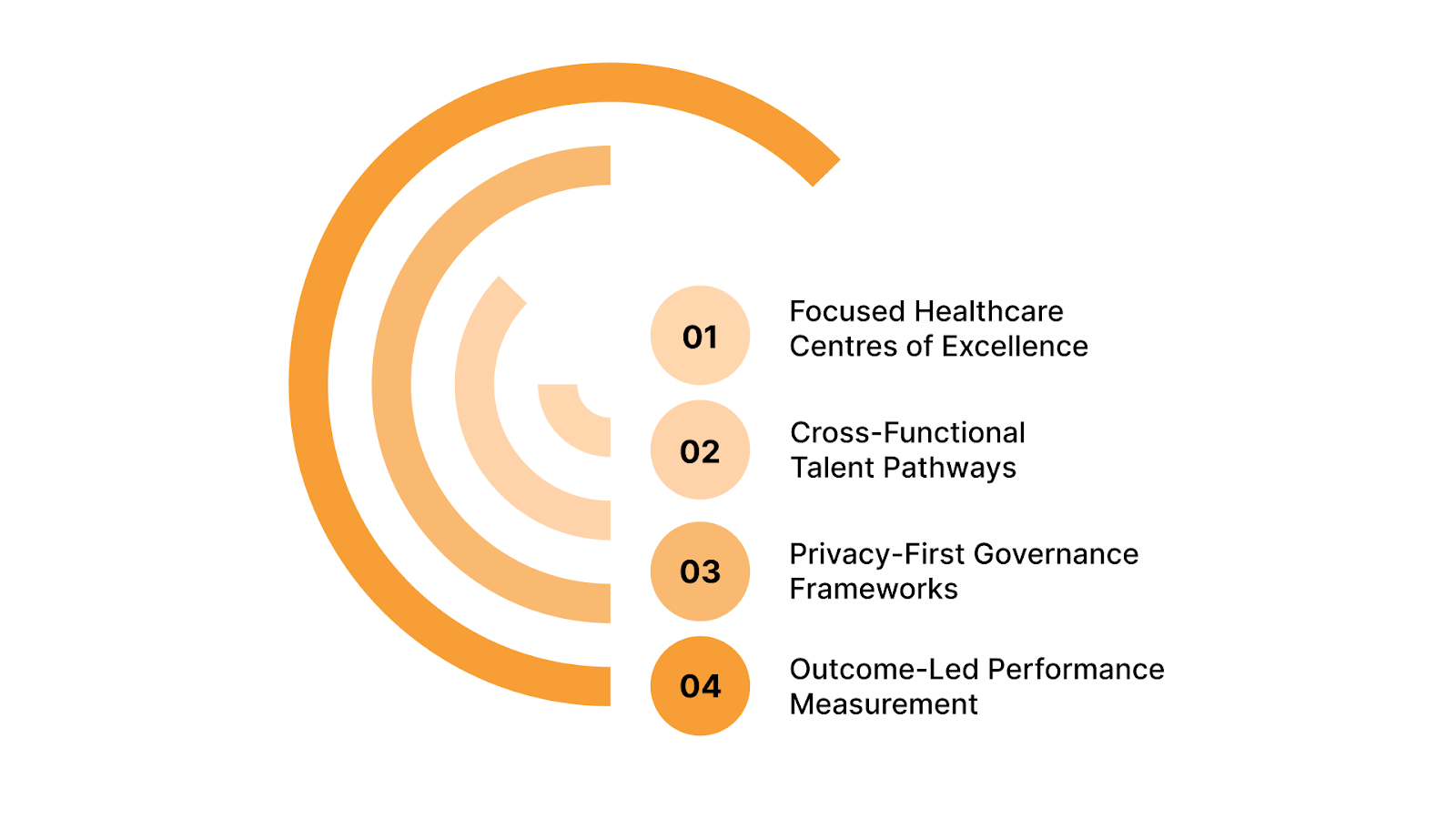
- Focused Healthcare Centres of Excellence (CoEs): Enterprises establish GCC teams dedicated to digital health analytics, compliance automation, or R&D operations within mature ecosystems such as Bengaluru and Hyderabad.
- Cross-Functional Talent Pathways: Structured collaboration between U.S.-based clinical leaders and India-based technology teams improves domain understanding, accountability, and delivery quality.
- Privacy-First Governance Frameworks: GCC operations are designed around HIPAA, GDPR, and India’s Digital Personal Data Protection Act to ensure compliance across the entire data lifecycle.
- Outcome-Led Performance Measurement: Success is evaluated through faster time-to-market, reduced manual intervention, and improved patient engagement rather than cost savings alone.
When executed with clear ownership and governance, healthcare GCCs in India enable U.S. enterprises to scale innovation with confidence while maintaining regulatory and clinical integrity.
Building a Scalable Healthcare GCC Workforce with an SLA-Driven Hiring Model
As healthcare GCCs in India scale into innovation-led, compliance-critical operations, workforce execution becomes a decisive success factor. Traditional, ad-hoc recruitment models often lack the predictability and governance required for regulated healthcare environments.
- Why Healthcare GCCs Require SLA-Driven Hiring Models: SLA-based recruitment introduces defined accountability for turnaround times, role criticality, and delivery quality, enabling GCCs to scale systematically rather than through fragmented vendor engagement.
- Predictability in Time-to-Hire for Regulated Healthcare Roles: Functions spanning clinical analytics, regulatory reporting, pharmacovigilance, and digital health platforms require consistent hiring timelines to prevent compliance exposure and operational disruption.
- Improved Workforce Continuity and Risk Mitigation: Structured hiring frameworks reduce attrition in high-impact roles by ensuring stronger role alignment, domain validation, and onboarding consistency across healthcare programmes.
- Higher Quality-of-Hire Aligned to GCC Mandates: An SLA-led approach prioritises healthcare domain readiness and long-term capability building over transactional closures, supporting sustained global delivery outcomes.
How V3 Staffing Supports Healthcare GCCs in India with SLA-Based Recruitment
V3 Staffing supports healthcare GCCs in India through a structured, SLA-driven recruitment model built for regulated and high-complexity environments. The firm delivers Permanent Recruitment, Temporary Staffing, and Contract Staffing solutions to help GCCs meet both long-term capability goals and immediate workforce demands.
- SLA-Aligned Workforce Delivery: Hiring timelines, role prioritisation, and fulfilment metrics are contractually defined, giving GCC leadership visibility and delivery control.
- Healthcare-Focused Talent Mapping: Recruitment is aligned to clinical, life sciences, digital health, and healthcare IT roles, ensuring candidates meet technical standards and regulatory requirements.
- Scalable Hiring Across Core GCC Hubs: V3 Staffing supports bulk and phased hiring across Bengaluru, Hyderabad, Pune, Chennai, Mumbai, and Delhi NCR to enable multi-location GCC expansion.
- Security and Compliance Assurance: Structured screening, background verification, and documentation processes support sensitive healthcare operations and data protection requirements.
- Operational Continuity for Global Mandates: Proactive workforce planning reduces talent gaps in critical functions, helping healthcare GCCs maintain compliance and delivery stability.
By integrating hiring governance into workforce strategy, V3 Staffing enables healthcare GCCs in India to move from reactive hiring to planned, execution-focused scaling aligned with global healthcare priorities.

Conclusion
India’s healthcare GCC ecosystem is evolving from cost-efficient centres to strategic hubs handling clinical analytics, digital health platforms, regulatory reporting, and AI-driven operations. Execution consistency, particularly in building specialised teams within regulatory and quality frameworks, is now the key differentiator for success. These GCCs are increasingly expected to deliver measurable impact on patient outcomes and global business performance.
High-performing healthcare GCCs treat hiring as a governed, SLA-led function aligned to global healthcare roadmaps. This ensures not only timely onboarding but also that teams are capable of managing complex healthcare operations with precision and reliability. V3 Staffing supports this by providing structured, SLA-driven recruitment for regulated healthcare roles across India’s core GCC hubs, enabling organisations to scale critical teams with predictability, compliance, and workforce stability.
Contact us to explore how V3 Staffing can help your healthcare GCC in India scale talent efficiently while maintaining innovation, compliance, and operational excellence.