
.svg)
.svg)
Scaling a Global Capability Centre (GCC) in India can feel like walking a tightrope. While the country offers a huge talent pool and cost advantages, several challenges can slow down operations if not handled strategically.
These challenges range from sourcing specialised talent to handling regional compliance requirements and managing multi-location expansion, making GCC operations complex. India’s prominence as a GCC hub, hosting nearly 1,700 of the world’s 3,200 centres, or around 53% of the global total, shows the scale and competitive nature of this industry.
For HR heads, talent acquisition leaders, and business unit managers, understanding these challenges and their regional variations is crucial for building a strong, efficient, and future-ready GCC. In this blog, you’ll explore the key challenges faced by GCCs in India and discuss practical strategies to overcome them.
Key Takeaways:
- Talent Acquisition Remains a Top Challenge: GCCs in India face growing competition for niche tech talent, making it crucial to use local and global talent pools.
- Regional Variations Impact GCC Operations: Challenges such as talent availability, costs, and regulations vary across cities, so strategies must be tailored to each region.
- Hybrid Work Models Require New Management Strategies: Clear communication, flexible policies, and digital collaboration tools are essential to manage hybrid and remote teams effectively.
- Regulatory Compliance and Automation Bring Efficiency: Staying updated on India’s evolving regulations and adopting AI-driven tools helps GCCs simplify operations and stay competitive.
- Upskilling and Employee Retention are Crucial for Growth: Investing in learning programmes, career progression, and engagement initiatives ensures employee loyalty and long-term success.
10 Global Capability Centre Challenges & Ways to Handle Them
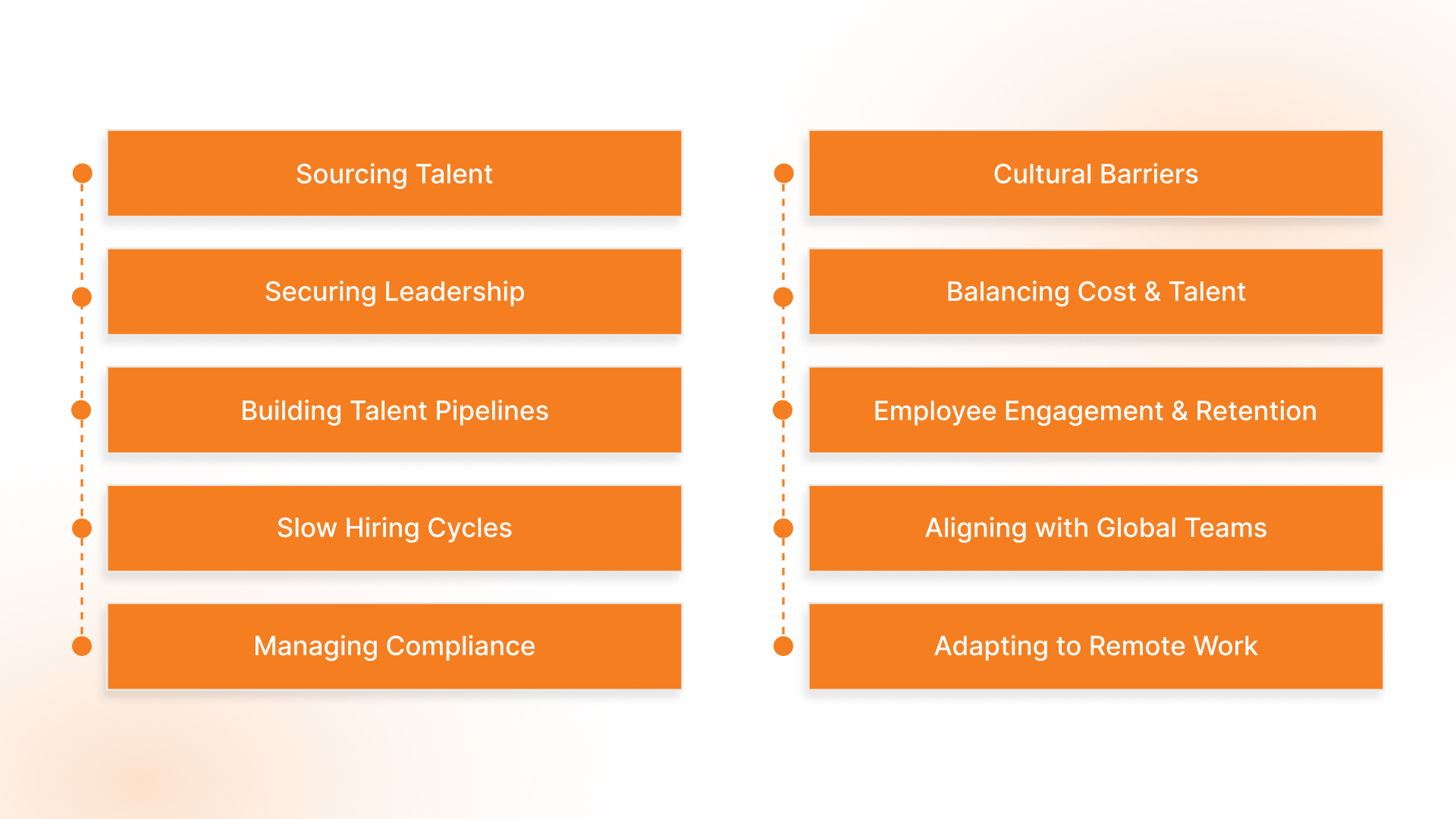
Global Capability Centres (GCCs) are at the core of how multinational companies (MNCs) operate, handling key functions such as IT, finance, customer support, and R&D. While they offer significant business advantages, setting up and expanding a GCC in India presents its own set of challenges.
Here’s a closer look at the main hurdles they face:
1. Sourcing Specialised Talent
Finding skilled professionals for niche roles such as cloud engineers, data scientists, and senior-level developers remains a significant hurdle for GCCs. India’s upgrading tech sector and high demand for specialised skills make it difficult to attract top talent.
This challenge is especially pronounced in emerging technologies and senior leadership roles, where skill gaps persist.
Impact on GCCs:
Delays in hiring the right talent can slow down a GCC’s operations, causing projects to miss deadlines, limiting growth in key areas, and creating avoidable inefficiencies.
How to Overcome this Challenge:
- Build Strong Employer Branding: Highlight your company’s culture, mission, and opportunities for growth. Talented professionals are more likely to join a company that aligns with their values and provides clear career progression paths.
- Utilise Local and Global Talent Pools: Use multiple channels for recruitment, such as collaborations with universities, talent networks, and global platforms like LinkedIn. Focus on tier-II cities where specialised talent may be underutilised and more affordable.
- Offer Upskilling and Training Programmes: Invest in employee development through certifications, training programmes, and continuous learning initiatives. Upskilling internal employees reduces reliance on external recruitment and helps bridge skill gaps.
- Use Headhunting for Senior-Level Roles: For critical leadership positions or highly specialised technical roles, utilise headhunting or executive search services. These agencies specialise in sourcing high-calibre talent with niche skills.
- Collaborate with Recruitment Agencies: Partner with agencies that specialise in sourcing niche talent for tech and senior leadership roles. These agencies often have curated databases of pre-screened candidates, speeding up the recruitment process.
V3 Staffing helps you secure high-quality talent faster. Through RPO, permanent hiring, and IT staffing services, and drawing on deep domain expertise and a pan-India network, V3 Staffing connects your GCC in India with the right candidates every time.

2. Managing Talent Across Multiple Locations
Scaling GCC operations across various regions, such as Bengaluru, Hyderabad, Pune, Delhi NCR, and Mumbai, can present significant challenges. Differences in regional culture, operational standards, and local talent availability can affect recruitment consistency and overall performance.
Impact on GCCs:
Inconsistent recruitment quality, operational misalignments, and delays in scaling across multiple regions.
How to Overcome this Challenge:
- Use Standardised Recruitment Processes: Develop uniform recruitment standards and guidelines that apply across all locations. This ensures consistent candidate screening, interview protocols, and onboarding procedures.
- Centralised Recruitment Management: Use a centralised recruitment management system to ensure consistent oversight and coordination of recruitment efforts across regions.
- Utilise Local Expertise: In each region, hire or consult with local experts who understand the talent industry and regional recruitment nuances. They can help optimise processes and ensure faster and more efficient recruitment.
- Regional Coordination with Global Leadership: Establish a global recruitment team that works closely with regional managers to align hiring strategies, recruitment priorities, and timelines.
V3 Staffing specialises in recruitment for Global Capability Centres (GCCs) across key Indian hubs like Hyderabad and Bengaluru. Through RPO, contract staffing, and executive search, we help GCCs scale rapidly, maintain high-quality talent, and simplify hiring operations.
3.High Attrition and Quality-of-Hire Concerns
Attrition rates in India’s competitive job market, especially in tech, customer service, and support roles, can be quite high. This often leads to frequent hiring cycles, which raise recruitment costs and create instability within teams. On top of that, bringing in the wrong talent can affect long-term operations and hold back overall business success.
Impact on GCCs:
High turnover, operational disruptions, increased recruitment costs, and reduced productivity due to the constant need to replace departing employees.
How to Overcome this Challenge:
- Improve Employee Engagement: Develop programmes that focus on employee engagement and well-being. Regular feedback loops, recognition programmes, and a positive work environment can significantly reduce employee attrition.
- Offer Career Progression: Provide clear career growth opportunities and mentorship. Talented employees are more likely to stay with an organisation that offers professional development and a structured career path.
- Simplify Onboarding and Training: Ensure a smooth and engaging onboarding process, along with effective training programmes that help employees succeed in their roles, ultimately improving long-term retention.
- Conduct Exit Interviews: Regularly conduct exit interviews to understand why employees are leaving and identify areas of improvement in workplace culture, management, or job roles.
4. Slow Internal Hiring Cycles
Internal hiring processes, particularly in large organisations, often lead to delays in filling critical roles. This can occur due to slow internal processes, limited recruitment support, or complex approval steps, all of which hinder the smooth expansion or growth of a GCC.
Impact on GCCs:
Delayed project timelines, missed business opportunities, and difficulty scaling teams due to slow internal recruitment cycles.
How to Overcome this Challenge:
- Use Efficient Recruitment Workflows: Automate routine tasks like candidate screening, interview scheduling, and offer management to speed up the hiring process.
- Set Clear SLAs (Service Level Agreements): Establish SLAs to track and measure the efficiency of each stage in the recruitment process. This helps identify bottlenecks and optimise the workflow.
- Use Contract and Temporary Staffing: In urgent cases, use contract or temporary staffing solutions to quickly fill critical positions while working on long-term hires.
- Outsource to Recruitment Process Outsourcing (RPO): Consider outsourcing parts of the recruitment process to specialised RPO providers to ensure faster turnaround times and quality hiring.
5. Managing Regulatory Compliance and Labour Laws
India’s regulatory industry, including compliance with labour laws, tax regulations, and other legal requirements (e.g., FEMA, RBI, tax laws), can be complex. This challenge increases as GCCs scale operations and hire across different Indian states with varying rules.
Impact on GCCs:
Non-compliance can result in fines, legal issues, and reputational damage, while also slowing down the hiring process due to the need for legal checks.
How to Overcome this Challenge:
- Stay Updated with Local Laws: Continuously monitor changes in labour laws, tax regulations, and other legal requirements across different states in India.
- Partner with Compliance Experts: Work with legal and compliance specialists to ensure that the recruitment process adheres to all legal requirements, minimising risks and penalties.
- Invest in Compliance Technology: Use technology tools that can automatically track and ensure compliance with labour laws and other regulations, reducing manual effort and the risk of errors.
6. Cultural and Communication Barriers
India’s multi-lingual and culturally diverse workforce can present communication challenges for GCCs, especially when managing teams across different regions.
Impact on GCCs:
Poor communication can lead to inefficiencies, project delays, and dissatisfaction among employees and clients.
How to Overcome this Challenge:
- Offer Cross-Cultural Training: Provide training programmes that improve cross-cultural communication, helping employees understand regional differences and improve collaboration.
- Use Standardised Communication Tools: Implement unified communication platforms such as Slack or Microsoft Teams to ensure smooth communication across regions and time zones.
- Encourage Regular Video Conferencing: Foster real-time communication through regular video meetings, helping to bridge the physical distance and improve engagement.
7. Balancing Cost Management with Talent Needs
GCCs must strike a balance between the need for high-quality talent and cost efficiency, especially in a competitive job market like India. Cost constraints can limit the ability to hire top talent, potentially compromising the quality of work and operational efficiency.
Impact on GCCs:
Reduced quality of hires, lower employee satisfaction, and higher turnover as a result of budget cuts in talent acquisition.
How to Overcome this Challenge:
- Optimise Talent Sourcing: Look for opportunities to hire talent from emerging markets or tier-II cities, where salaries are lower, and quality candidates are available.
- Invest in Employee Retention Programmes: Focus on retaining existing talent through career development, benefits, and engagement, reducing the need for continuous external hiring.
- Utilise Contract and Part-Time Hiring: Use contract or part-time workers for specialised roles that can help control costs without compromising talent quality.
8. Managing Employee Engagement and Retention
Engagement and retention of employees in GCCs are critical, as high turnover can disrupt operations and lead to increased recruitment costs.
Impact on GCCs:
Increased costs due to frequent re-hiring, loss of knowledge, and decreased employee morale.
How to Overcome this Challenge:
- Regular Performance Reviews and Feedback: Conduct periodic reviews and feedback sessions to address employee concerns and provide career development opportunities.
- Employee Recognition Programmes: Use recognition programmes that highlight employees’ achievements, improving morale, and reducing attrition.
- Promote Work-Life Balance: Support a culture of work-life balance by offering flexible working hours, remote work options, and wellness programmes to improve employee satisfaction.
9. Aligning with Global Teams
Ensuring that the GCC works effectively with global teams, especially when managing time zone differences and varying work practices, can be a challenge for international companies.
Impact on GCCs:
Lack of alignment can lead to inefficient workflows, project delays, and difficulties in meeting global performance expectations.
How to Overcome this Challenge:
- Promote Regular Communication: Schedule regular meetings between global and local teams to ensure alignment on goals, priorities, and deadlines.
- Set Clear Expectations and KPIs: Clearly define expectations, performance metrics, and communication protocols to ensure consistency and alignment across global teams.
- Use Collaboration Tools: Utilise tools that allow real-time collaboration, such as project management software, chat systems, and video conferencing tools.
10.Adapting to Hybrid and Remote Work Models
With the rise of hybrid and remote work, GCCs must adapt to a workforce that is not always physically present in the office, especially in geographically dispersed teams across India.
Impact on GCCs:
Managing a hybrid or fully remote workforce can lead to difficulties in maintaining culture, productivity, and communication.
How to Overcome this Challenge:
- Use Remote Work Policies: Create clear remote work policies that define expectations around work hours, availability, and communication.
- Invest in Collaboration and Productivity Tools: Use technology to maintain communication and track productivity, ensuring that remote teams are working efficiently.
- Promote a Strong Company Culture: Develop a strong company culture that is inclusive of remote workers, ensuring they feel connected and valued, regardless of their physical presence in the office.
Once you understand the common challenges faced by Global Capability Centres, it makes it easier to address them effectively as new changes arise.
Suggested Read: GCC Growth in India: Key Drivers and Talent Impact
How to Handle Global Capability Centre Challenges with Upcoming Changes?
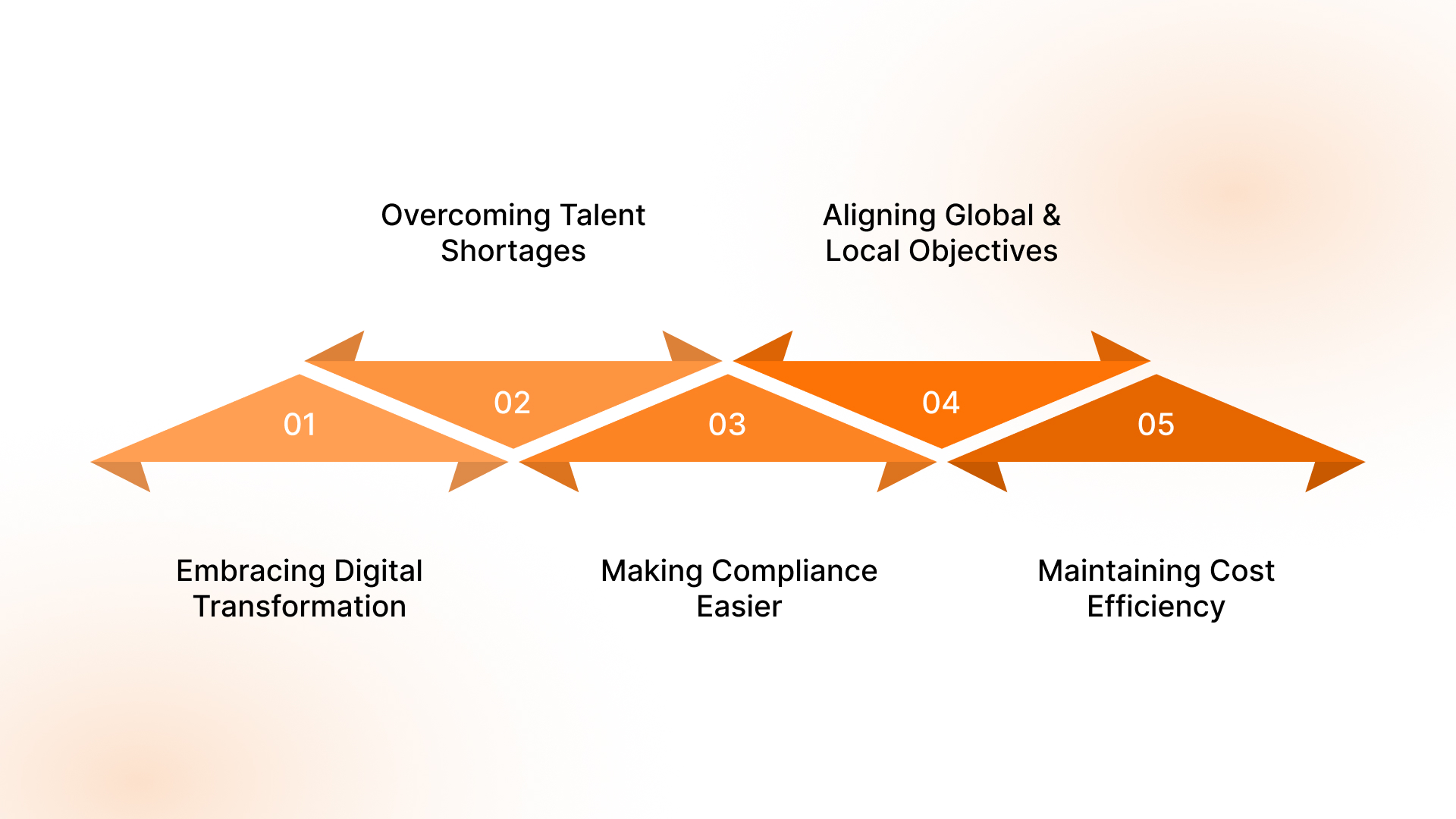
Global Capability Centres (GCCs) are operating in a constantly changing industry, shaped by shifts in technology, business models, and global workforce trends. GCC leaders must remain agile to stay competitive and ensure their operations run smoothly. Here’s a practical guide on addressing the emerging challenges that GCCs are likely to face:
1.Embracing Digital Transformation in Recruitment
The rise of artificial intelligence (AI), machine learning (ML), and automation is reshaping how recruitment and talent management work within GCCs. As these technologies become more central, GCCs need to adapt to make hiring smoother, improve the candidate experience, and strengthen talent acquisition.
How to Handle It:
- Adopt AI-driven Recruitment Tools: Use tools that automate candidate sourcing, screening, and initial interviews. These technologies can reduce hiring time and improve talent matching.
- Utilise AI for Predictive Analytics: Use predictive analytics to forecast hiring needs, spot skill gaps, and estimate attrition. This helps teams make proactive decisions on sourcing and retaining talent.
- Improve Candidate Experience with Automation: Keep candidates engaged with chatbots and automated responses throughout the hiring process, improving communication efficiency and reducing drop-off rates.
2. Overcoming Talent Shortages with Upgraded Skill Development Programmes
As technology evolves quickly, GCCs often struggle to find employees with the exact skills they need. Emerging technologies are widening the gap between the skills companies require and what’s available in the market.
How to Handle It:
- Invest in Continuous Learning: Develop learning and development programmes that upskill employees in emerging technologies, such as AI, machine learning, cloud computing, and data analytics.
- Collaborate with Educational Institutions: Partner with universities and tech bootcamps to create a steady pipeline of talent equipped with the latest skills.
- Develop Internal Talent Pools: Identify high-potential employees within the organisation and provide them with resources to help them upskill, thereby reducing dependence on external recruitment.
3. Making Compliance Easier in a Tough Legal Industry
As India’s regulatory industry changes, especially with labour laws and tax regulations, GCCs face challenges in ensuring compliance. Non-compliance can cause fines, legal risks, and operational delays.
How to Handle It:
- Stay Updated on Local Laws: Monitor labour, tax, and other legal requirements regularly across different states.
- Partner with Compliance Experts: Work with legal consultants or in-house compliance teams familiar with local regulations to navigate complexities.
- Conduct Regular Compliance Audits: Periodically review operations to ensure compliance with payroll, taxation, and labour laws.
4. Aligning Global and Local Business Objectives
As GCCs grow, connecting the strategic goals of global headquarters with local operations in India can be a challenging task. Local teams must clearly understand and align with the global vision to ensure smooth operations.
How to Handle It:
- Regular Strategic Alignment Meetings: Hold consistent meetings between global and local leadership to align business goals, priorities, and execution.
- Clear Communication of Global Objectives: Ensure that global headquarters’ goals and expectations are clearly communicated to local teams, allowing for feedback and adjustments.
- Promote Cross-Border Collaboration: Encourage joint initiatives, virtual brainstorming sessions, and team-building activities between global and local teams.
5. Maintaining Cost Efficiency While Scaling Operations
GCCs are often created to reduce operational costs. But as they scale, maintaining cost efficiency while ensuring quality becomes increasingly challenging.
How to Handle It:
- Outsource Non-Core Functions: Consider outsourcing IT support, accounting, or customer service to third-party providers, allowing the GCC to focus on core business functions while controlling costs.
- Utilise Lean Processes: Use lean management techniques to cut waste, simplify operations, and maximise the value from each resource.
- Invest in Scalable Technologies: Adopt cloud-based platforms that can grow with your business without incurring heavy additional costs.
Once you know how to handle upcoming changes, it’s helpful to see how these challenges vary across different regions in India.
Also Read: Decoding the Powerhouses: A Deep Dive into Global Capability Centers (GCCs)

How V3 Staffing Supports India–GCC Collaboration in the Modern Economy?
V3 Staffing helps Global Capability Centres (GCCs) in India tackle talent and workforce challenges through specialised recruitment and staffing solutions. With strong delivery hubs in Hyderabad, Bengaluru, Chennai, Pune, Delhi NCR, and Mumbai, we enable GCCs to build high-quality teams, overcome hiring bottlenecks, and scale confidently across functions.
Here's how we can help you:
- Permanent Recruitment: Builds stable, future-ready teams by hiring full-time professionals across GCC functions and matching them to the right roles for long-term workforce strength.
- Temporary & Contract Staffing: Provides flexible, compliant staffing solutions to manage workload spikes, project rollouts, and seasonal demands without disrupting productivity.
- IT Staffing: Connects GCCs with skilled technology talent across cloud, data engineering, cybersecurity, AI, DevOps, and software development to accelerate digital transformation.
- Recruitment Process Outsourcing (RPO): Handles end-to-end hiring for fast-growing GCCs, improving speed, efficiency, and candidate quality while supporting multi-location expansion.
- Executive Search: Identifies senior leaders for cross-functional and cross-border roles who can drive strategy, culture, and performance in GCCs.
V3 Staffing’s India-based delivery model, GCC-focused hiring expertise, and presence across major business hubs make us a trusted partner for companies building or expanding their Global Capability Centres in India.
Must Read: Top Trends of 2025 for GCCs in India
Final Thoughts
Global Capability Centre challenges in India are real, but they also bring opportunities for those ready to adapt and innovate. By paying attention to regional differences, embracing technology, and investing in employee growth, GCCs can turn these hurdles into advantages.
For GCCs managing these challenges, partnering with a recruitment firm that understands both the Indian talent market and the operational needs of global centres is crucial. V3 Staffing uses this expertise to strengthen talent pipelines, simplify recruitment across India’s major hubs, and help GCCs achieve their workforce goals with confidence.
Contact us today to discuss your hiring needs and see how our solutions can support your GCC’s growth strategy.