
.svg)
.svg)
Financial institutions are moving from systems that assist employees to systems that execute actions across payments, credit approvals, fraud controls, and compliance handling in real time. Adoption has already crossed the experimental stage. Around 70 percent of commercial banks now use AI in at least one core function, and many deploy it across multiple operational areas.
As decisions begin to happen automatically in production environments, the biggest change is in workforce design rather than in technology rollout. Employees are no longer reviewing every case. They are supervising behaviour, resolving exceptions, and answering for outcomes.
This blog explains the roles banks are creating, why talent availability is tightening, how team structures are changing, and how organisations should approach recruitment for banking agentic AI hiring.
Key Takeaways
- Agentic AI executes banking decisions directly, so hiring shifts from processing staff to decision supervision and accountability roles
- New roles focus on auditability, risk governance, and behaviour monitoring, while routine operations roles reduce
- Talent shortage comes from hybrid skill demand combining finance knowledge, system behaviour understanding, and regulatory reasoning
- Banks must organise hiring around governance pods and cross-region consistency rather than department silos
- Future teams monitor decision quality and exceptions instead of handling transaction volume
What Changes When AI Starts Taking Actions Instead of Giving Insights?
For years, banking AI functioned as an advisory layer. Systems analysed behaviour, flagged risks, and suggested next steps, but a human employee still completed the task. Agentic systems change that structure.
Agentic AI now executes actions inside production systems, whether that means freezing a transaction, approving a limit, opening a compliance case, or issuing a provisional credit.
This alters accountability inside the bank. The question is no longer who processed the request, but who validated the decision logic and monitored behaviour after deployment.
As a result, operations teams move closer to control and governance rather than execution.
Difference Between Automation AI And Agentic AI In Banking Workflows
Traditional automation follows predefined rules or produces recommendations that require staff confirmation. Agentic systems evaluate context, select an action, execute it, and record the decision path without waiting in a queue.
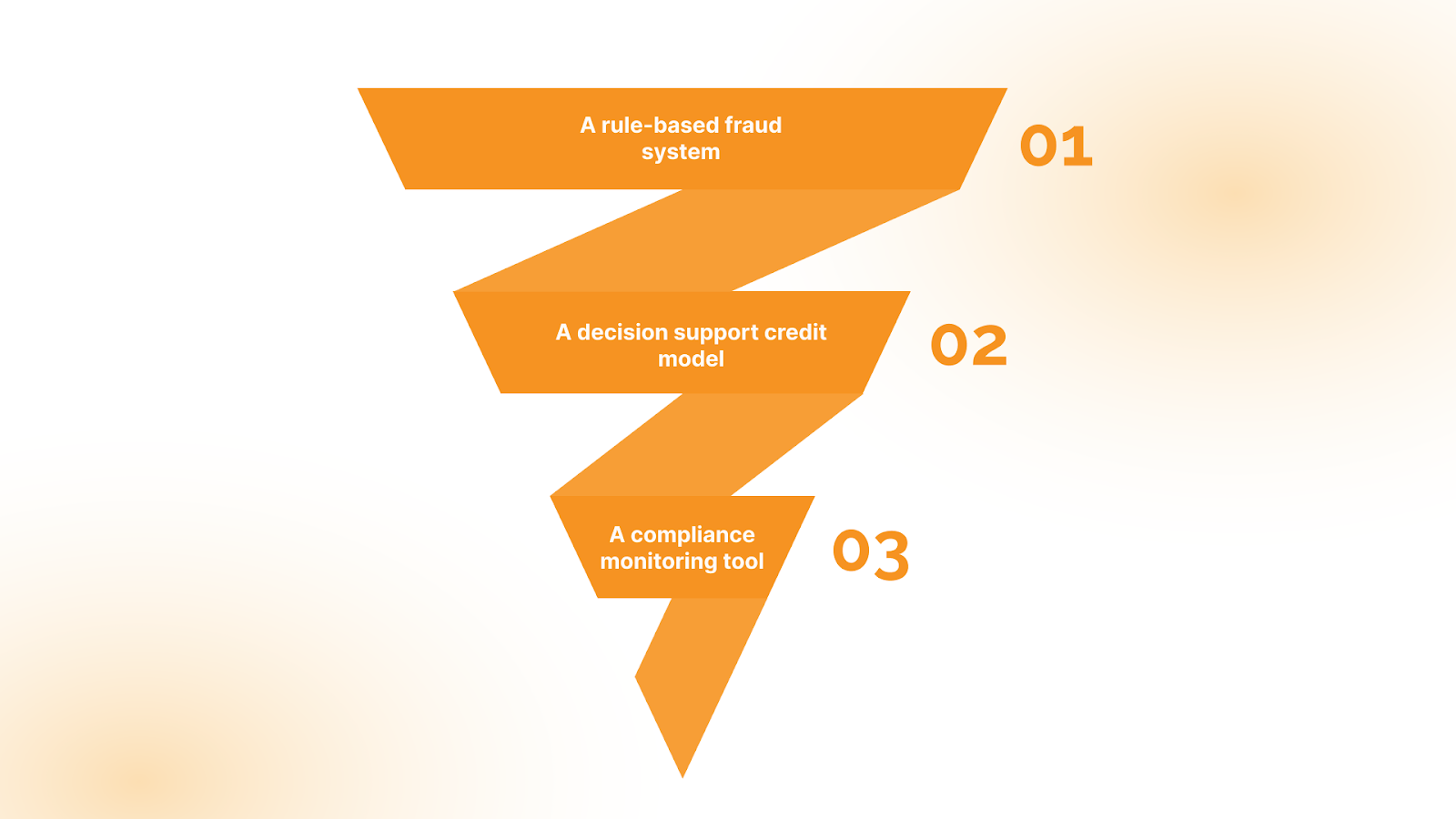
To understand the operational shift, consider how responsibilities change in daily workflows:
- A rule-based fraud system flags a suspicious transaction for analyst review, whereas an agentic system blocks the transaction, informs the customer, and creates a documented case automatically
- A decision support credit model proposes a score band, whereas an agentic system conditionally approves the application and updates exposure limits inside the core banking
- A compliance monitoring tool generates alerts, whereas an agentic workflow files a structured suspicious activity report with traceable reasoning
The bank still legally owns the decision, yet the action no longer goes through a processing team. This changes staffing priorities from volume handling to behavioural oversight.
Where Banks Are Already Deploying It
Banks prioritise agentic deployment in areas where response speed directly affects financial exposure and customer trust.
Fraud resolution
Card networks report that machine decisioning significantly reduces false positives and resolves fraud cases in real time, rather than through manual queues. The measurable outcome is lower customer friction combined with lower operational workload.
Customer dispute handling
Retail banking platforms now classify disputes, issue provisional credits, and trigger investigation workflows within minutes. The operational centre shifts from call handling to judgment on escalation and recovery validation.
Credit decisions
Instant lending platforms continuously evaluate behavioural transaction data instead of relying solely on bureau records. Credit officers intervene only when decisions cross policy thresholds or unusual patterns appear.
Compliance monitoring
Continuous monitoring replaces periodic review cycles. Systems automatically create structured case documentation, and compliance teams review the appropriateness of decisions rather than compiling reports manually.

Why Operational Ownership Moves From Humans To AI Supervisors
Regulators still expect human accountability for financial decisions. The difference is that employees supervise behaviour rather than execute tasks. Their responsibility includes validating logic, confirming policy alignment, and detecting drift in system actions.
Operational teams increasingly focus on:
- Reviewing decision trails
- Adjusting policy thresholds
- Handling exceptions and escalations
- Confirming regulatory defensibility
The role becomes closer to operational risk management than transaction processing.
Hiring Implication Operators And Validators to Replace Processors
Institutions now hire professionals who can interpret system behaviour, identify anomalies, and justify outcomes during audits.
This change reduces the need for high-volume processing roles and increases demand for professionals who oversee how these systems perform.
Key roles emerging in this environment include:
- Operations Supervisors: Monitor automated workflows and review flagged transactions or exceptions that require human judgment.
- Model Validation Specialists: Examine how system rules and models produce decisions and confirm they operate within defined risk parameters.
- Audit and Explainability Analysts: Document how automated decisions were reached and provide clear explanations during internal or regulatory reviews.
- Risk and Compliance Reviewers: Ensure that automated processes comply with regulatory requirements and internal governance standards.
The emphasis shifts from processing volume to oversight, verification, and accountability across automated banking operations.
Also Read: Best Practices for Managing High-Volume Seasonal Hiring in 2026
Which New Roles Are Banks Creating Because Of Agentic AI Hiring?
Banks implementing autonomous decision systems quickly discover that model development is only a small portion of the workforce impact.
The greater demand arises around supervision, control, and financial accountability as systems begin to act independently within production workflows.
New Roles Emerging In Banking Agentic AI Hiring
The hiring focus shifts to professionals who monitor behaviour, validate outcomes, and intervene when financial risk appears.
Roles Declining
As decision execution becomes automated, high-volume processing roles gradually reduce. The change occurs in execution capacity, not accountability coverage.
Banks still maintain operational teams, but their focus moves to reviewing unusual behaviour rather than completing repetitive tasks.
How Team Structures Change From Operations To Oversight To Intervention
Organisational structures shift from linear processing chains to layered supervision models.
- Observation Layer: Teams monitor live activity and identify behaviour patterns across products.
- Validation Layer: Specialists verify decisions against credit policy, compliance standards, and risk appetite.
- Intervention Layer: Senior staff handles rare escalations, customer disputes, and policy exceptions.
Instead of large operations floors handling thousands of daily tasks, banks operate smaller specialised groups that react only when judgment is required. Workforce planning moves away from transaction volumes and focuses on exception frequency and risk exposure.
Need specialised talent for agentic AI banking teams across regions? V3 Staffing hires engineering, product, data, cloud, AI ML, and cybersecurity professionals through scalable RPO and contract models with transparent reporting.
We have 16+ years of experience delivering accountable hiring outcomes across India, the USA, and the UAE.
Also Read: 11 Best Recruitment Startups Transforming the Hiring Industry
Why Is Talent Suddenly Harder To Find For Agentic AI Banking Teams?
The hiring problem is not about fewer candidates. It is about fewer candidates who understand how automated decisions affect money, risk, and compliance simultaneously.
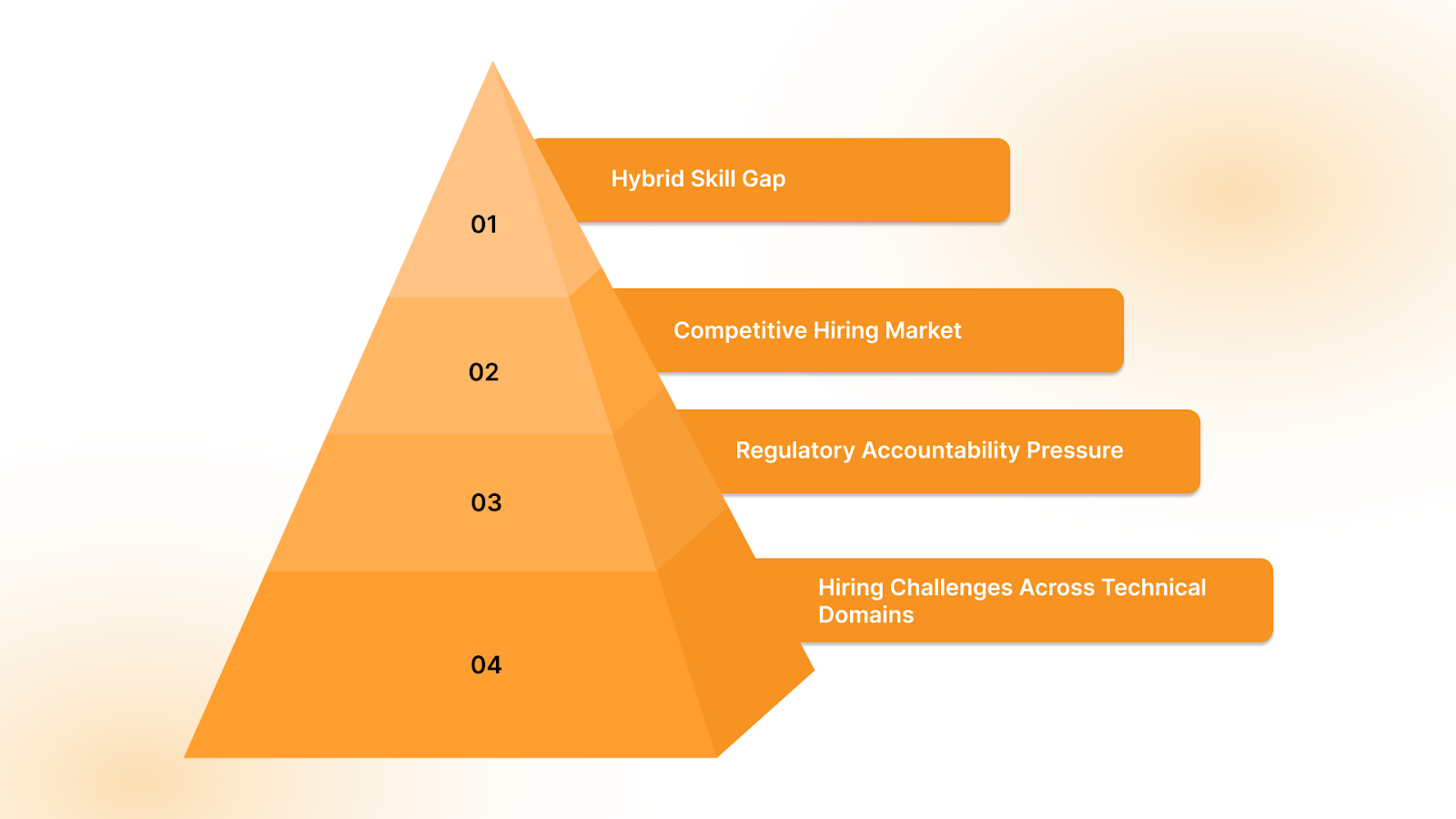
Agentic systems execute approvals, blocks, and escalations inside production banking workflows, so banks need judgment capability rather than only technical ability.
Recent labour data from India shows how sharp this shift is. AI-related roles in BFSI grew 41 percent year-on-year, one of the fastest increases across industries, signalling rising demand outpacing supply.
Hybrid Skill Gap
Banks now search for professionals who can interpret automated decisions in a financial context. A technologist may understand model output but not credit policy. A banker may understand exposure but not system behaviour.
The most difficult combinations to hire today include:
- Data interpretation with credit policy judgement
- Operational risk review using system logic
- Compliance validation using technical audit trails
Internal training helps with tools, but judgment comes from exposure to financial consequences, which cannot be accelerated easily.
Competitive Hiring Market
Financial institutions compete directly with fintech platforms and payment companies that hire the same profiles for product ownership roles. These environments often offer clearer accountability and faster decision cycles.
Industry reports show AI hiring expanding rapidly across sectors and geographies, pushing organisations to compete for a limited pool of experienced professionals rather than general developers.
Regulatory Accountability Pressure
Every automated approval or block must be explainable to auditors and regulators. This increases demand for professionals who can defend decisions rather than simply operate systems.
Banks now need employees who understand:
- Policy intent
- System behaviour
- Financial exposure
Few candidates have worked across all three simultaneously, which restricts available talent far more than overall AI adoption levels.
Hiring Challenges Across Technical Domains
The shortage appears across multiple specialised areas where financial context matters more than raw technical skill.
- Data professionals must analyse behaviour, not just produce dashboards.
- Cloud engineers must design resilient transaction workflows, not generic uptime infrastructure.
- AI and ML specialists must control decision behaviour, not only optimise prediction accuracy.
- Cybersecurity teams must assess automated action risk, not only detect intrusions.
The constraint is contextual expertise with accountability awareness. That combination takes years to develop, which is why hiring slows even as AI adoption accelerates.
Struggling to hire professionals who can supervise and govern autonomous banking decisions? V3 Staffing builds an SLA driven hiring engine with domain-specific sourcing and full pipeline ownership, cutting internal workload and delays.
Trusted by 300+ clients with 10,000+ specialists hired and an average of 10 days to hire.
Also Read: Cons of Leadership Hiring: Key Considerations
How Should Banks Structure Hiring For Agentic AI Adoption?
Agentic AI does not sit inside a single department. It executes credit decisions, triggers fraud actions, and produces compliance records across the institution. Banks that keep hiring inside traditional silos struggle to scale adoption.

Below is a structured hiring approach aligned with how banks are actually reorganising teams.
1. Choose The Right Capability Model First
Before hiring, banks decide how much capability stays internal and what requires specialised partners.
Specialised hiring models are on the rise because hybrid skill profiles are scarce and senior AI roles continue to grow across industries.
2. Organise Teams Around Decisions, Not Departments
Agentic workflows cut across operations, product, and risk. Banks now structure teams around decision ownership rather than reporting hierarchy.
This cross-functional structure helps banks move from pilot projects to scaled deployment, a barrier many organisations still face due to organisational complexity.
3. Split Responsibility Clearly
Accountability must be explicit when systems act automatically.
Regulators increasingly require explainable automated decisions, which drives hiring demand in governance and monitoring roles rather than only engineering roles.
4. Plan For Multi Geography Deployment
Banks increasingly operate shared decision systems across regions. Hiring must combine central standards with local expertise.
Global banks are expanding AI roles even while overall hiring slows, showing restructuring rather than workforce reduction.
Also Read: Key Benefits of Executive Search Services in 2026
What A Future Ready Banking Workforce Actually Looks Like
The workforce no longer revolves around processing volume. It revolves around supervising automated behaviour across credit, payments, and compliance systems.
Employees increasingly manage decision quality, escalation logic, and risk exposure rather than completing individual transactions.
Shift In Human Responsibilities
In practice, operations teams begin using monitoring dashboards similar to reliability engineering consoles. They track decision confidence scores, anomaly frequency, and policy breach rates. Instead of daily workload targets, teams track risk indicators, such as unexpected approval spikes or clusters of abnormal customer behaviour.
Entry-level processing jobs decline as routine tasks are completed automatically, while demand grows for staff who can interpret patterns and intervene before financial exposure accumulates.
Core Technical Capabilities Expected From Employees
A future-ready banking workforce blends financial judgement with system literacy. Teams are expected to work directly with the operational decision infrastructure.
Employees increasingly interact with monitoring tools, rule engines, model governance dashboards, and case orchestration platforms rather than traditional workflow queues.
12 To 24 Month Hiring Roadmap
Banks scale their capability gradually to avoid operational risk while introducing autonomous decision-making.
During early rollout, teams mainly verify whether decisions are correct. Later, they optimise how decisions affect portfolio performance and customer experience. In mature stages, specialists work directly with product and engineering teams to refine behaviour before issues reach customers.
Across the sector, AI-specific roles in banking continue to grow even as overall hiring slows. The expansion reflects a shift from operational processing capacity to technical oversight capacity, centred on accountability and behavioural control.
How V3 Staffing Supports Agentic AI Banking Hiring
Agentic AI changes hiring from volume recruitment to precision hiring. Banks now need professionals who can supervise automated decisions, manage risk exposure, and maintain audit readiness across regions.
V3 Staffing provides a structured recruitment engine built for specialised roles, helping organisations hire faster with measurable accountability backed by 16+ years of experience and an average 10-day time to hire.
Permanent Recruitment
Identifies long-term hires for governance, risk, and decision supervision functions. Matches domain expertise to credit, fraud, compliance, and operational accountability roles.
Employer of Record (EOR)
Onboards local talent in India without requiring entity setup. Handles payroll, contracts, and statutory compliance while teams manage operational oversight.
Contract Staffing
Deploys specialists quickly for pilot deployments, monitoring phases, and regulatory reviews. Allows workforce expansion without permanent headcount commitments.
Executive Search
Sources senior leaders responsible for AI governance, risk ownership, and operational accountability. Focused headhunting for CXO and leadership-level decision owners.
Recruitment Process Outsourcing (RPO)
Manages the full hiring lifecycle for specialised banking teams. Standardises evaluation, reporting, and hiring performance across business units and locations.
Conclusion
Agentic AI changes how work flows through a bank in practical ways. Tasks no longer wait in queues for approval, and systems begin acting instantly across credit, fraud, and compliance processes. This means people step in mainly when judgment, context, or escalation is required. The real challenge becomes hiring professionals who can review decisions, question behaviour, and take responsibility for outcomes rather than simply process requests.
Banks that redesign teams around accountability move faster and operate with more control, while others slow down under manual checks and audit pressure.
If you are preparing for this shift, connect with V3 Staffing to build hiring pipelines suited for autonomous banking operations.