

Leadership hiring is one of the most critical aspects of organisational growth and success. Selecting the right leaders can significantly influence a company’s culture, operational efficiency, and long-term performance. Yet, this process comes with its own set of challenges. Research indicates that nearly 60% of leadership hires fail within the first 24 months, often due to misalignment in expectations, cultural mismatch, or unclear role definitions.
Addressing these challenges requires precise planning, targeted sourcing, and access to a reliable recruitment partner that can deliver quality leadership candidates consistently. In this blog, we’ll explore common leadership hiring issues and share practical solutions organisations can apply for better results.
In a nutshell:
- Leadership hiring requires identifying candidates who align with strategic goals, cultural values, and long-term organisational growth.
- Talent shortages, cultural misfit, unclear expectations, weak assessments, high competition, and confidentiality risks are common challenges in leadership recruitment.
- Clear role definitions, diverse sourcing channels, structured evaluations, efficient processes, and effective onboarding improve hiring outcomes.
- Specialised recruitment solutions provide permanent, contract, IT, RPO, and executive search support to secure high-quality leaders efficiently.
What is Leadership Hiring?
Leadership hiring refers to the process of identifying, evaluating, and recruiting individuals for senior roles such as CXO, VP, Director, or Head of Department. Unlike standard recruitment, leadership hiring demands a comprehensive understanding of both business needs and cultural fit, as these leaders drive strategic decisions, manage large teams, and shape organisational outcomes.
The objective of leadership hiring is not only to fill positions but to secure individuals who can lead, inspire, and sustain long-term growth. In Indian corporate hubs, leadership roles often require a nuanced approach, as candidates may possess domain expertise but need to align with company culture and expectations across various regional offices.
Also Read: Women in Leadership: Changing Dynamics of the Corporate World
Common Challenges in Leadership Hiring
Leadership hiring is inherently complex, and organisations across India face several recurring challenges when recruiting for senior roles.
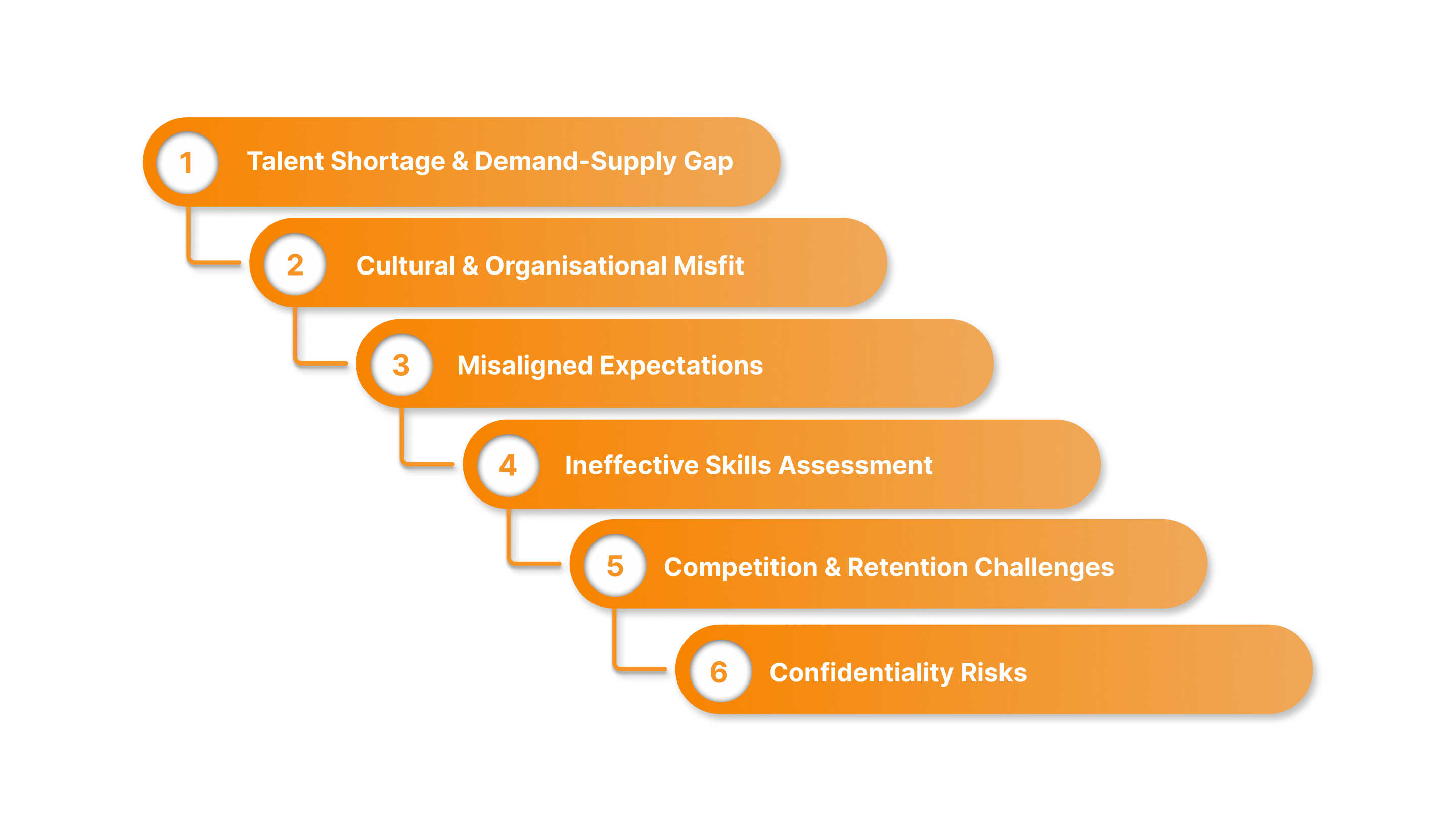
Below, we’ll explore the most pressing challenges in leadership hiring.
1.Talent Shortage and Demand-Supply Gap
Finding leaders who combine technical expertise, strategic vision, and people management skills has become increasingly difficult. Demand for such talent often exceeds supply, especially in niche sectors like IT, BFSI, and engineering.
Key impact:
- Delayed Hiring: Vacancies remain unfilled for longer periods, affecting organisational decision-making.
- Overburdened Teams: Existing teams may face pressure, impacting productivity and morale.
- Compromised Quality: Companies might settle for candidates who partially meet the role requirements.
Securing top-tier leaders requires proactive talent mapping and using specialised recruitment partners to bridge the gap effectively.
2. Cultural and Organisational Misfit
Even highly qualified leaders may struggle if their values, management style, or vision do not align with the organisation’s culture. Multi-location companies especially face this challenge because regional office cultures can vary.
Key impact:
- Team Disengagement: Misalignment can reduce collaboration and team motivation.
- High Turnover: Leaders who do not fit culturally often exit prematurely, increasing hiring costs.
- Brand Reputation: Misfits at senior levels can impact the organisation’s external and internal perception.
You can retain leaders who integrate seamlessly with teams across locations by ensuring cultural alignment through careful assessment and engagement during hiring.
3. Misaligned Expectations
A lack of clarity about responsibilities, decision-making authority, or performance metrics can lead to conflicts between the organisation and new leaders. These gaps usually appear after onboarding, creating dissatisfaction on both sides.
Key impact:
- Performance Issues: Leaders may underperform if expectations are unclear or unrealistic.
- Conflict with Management: Misunderstandings over role scope can strain executive relationships.
- Lower Retention: Misunderstandings can result in shorter tenure, increasing turnover costs.
Clearly defining roles with measurable KPIs and discussing them openly during interviews reduces the chances of misaligned expectations.
4. Ineffective Assessment of Skills and Competencies
Traditional recruitment methods often fail to evaluate a leader’s strategic thinking, problem-solving, or people management skills. This often leads to hiring individuals who excel technically but struggle to lead effectively.
Key impact:
- Poor Decision-Making: Leaders may lack critical skills for complex organisational challenges.
- Team Management Issues: Lack of leadership skills can affect productivity and engagement.
- Long-Term Costs: Mis-hires require additional investment in coaching or replacement.
You can better assess candidates for senior roles by using structured evaluations such as competency-based interviews and scenario exercises.
5. High Competition and Retention Challenges
The market for leadership talent in India’s major hubs is extremely competitive. Organisations often compete for the same candidates, which drives compensation inflation and retention risks.
Key impact:
- Salary Inflation: Competition for top talent drives up compensation packages.
- High Attrition: Leaders may switch companies frequently, disrupting organisational continuity.
- Increased Hiring Costs: Repeated searches for senior roles increase recruitment expenditure.
You can improve retention and shorten recruitment cycles by maintaining strong employer branding, personalised engagement, and competitive packages.
6. Confidentiality Risks
Leadership recruitment often involves sensitive information, including strategic plans, compensation structures, and operational data. Any leaks during the hiring process can compromise your competitive advantage or destabilise the organisation.
Key impact:
- Data Exposure: Sensitive information exposure can affect the company’s strategy or market position.
- Internal Disruption: Rumours or leaks can create uncertainty among employees.
- Reputation Risk: Mishandled confidentiality can damage external perceptions of the organisation.
You can manage confidentiality risks in leadership hiring by using secure recruitment processes and discreet executive search practices.
Addressing these challenges requires structured strategies that you can implement to improve leadership hiring outcomes.
Also Read: How To Screen Candidates For Leadership Positions In India’s 2026 Job Market
Strategies for Effective Leadership Hiring
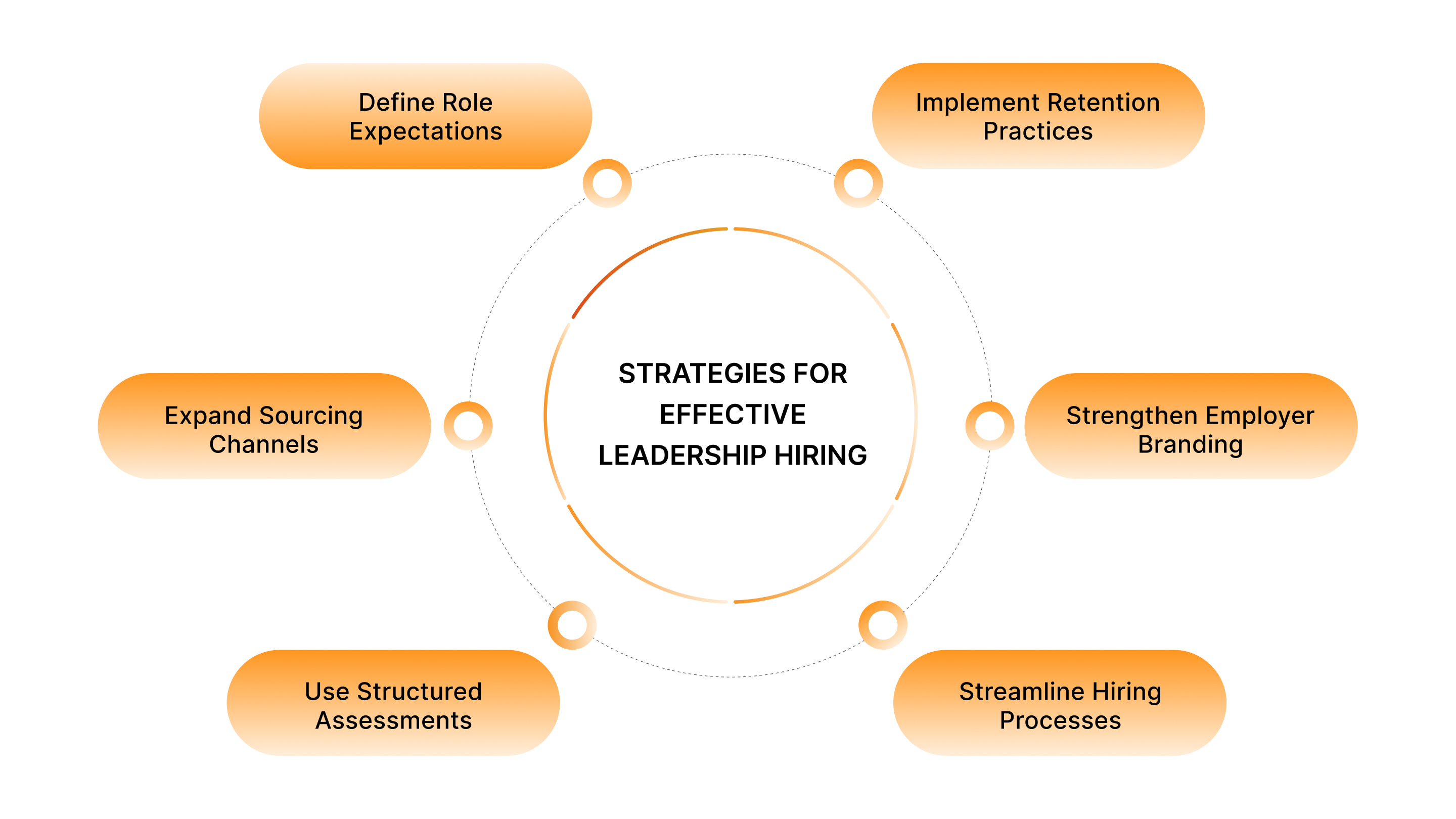
Successful leadership recruitment relies on proactive planning, structured processes, and strategic support. Below are some practices that can help organisations secure high‑performing leaders who contribute meaningfully from day one.
1. Define Clear Role Expectations
Organisations should create comprehensive job descriptions that clearly detail responsibilities, KPIs, and cultural expectations. Clear role definitions help candidates understand the position fully and reduce the likelihood of early attrition.
In Indian hubs like Hyderabad and Pune, companies that clearly communicate strategic priorities and leadership expectations see better alignment and candidate retention.
2. Expand Talent Sourcing Channels
Organisations can explore multiple channels, including professional networks, industry forums, and executive search partnerships. This approach broadens the candidate pool and improves the chances of finding suitable leaders.
For example, tech companies in Bengaluru often benefit by engaging specialised IT executive recruiters, while manufacturing firms in Pune may rely more on industry associations and alumni networks.
3. Use Structured Assessment and Evaluation
Using structured interviews and competency-based frameworks allows organisations to ensure a balanced assessment of technical skills, leadership capability, and cultural fit.
This approach is crucial in sectors like BFSI and engineering in Delhi NCR and Chennai, where compliance and operational expertise carry equal importance alongside leadership skills.
4. Streamline Hiring Processes
Speed in leadership hiring plays a vital role in securing top talent. By reducing bottlenecks, consolidating interview rounds, and setting clear timelines, organisations can prevent losing candidates to competitors.
In multi-location operations across Mumbai, Delhi NCR, and Chennai, a structured recruitment timeline helps ensure candidates remain engaged and committed throughout the process.
5. Strengthen Employer Branding and Candidate Engagement
Leadership candidates often assess potential employers as much as employers evaluate them. Sharing organisational vision, growth opportunities, success stories, and cultural initiatives helps organisations attract and retain high-calibre leaders.
Personalised communication and regular updates during the hiring process increase the likelihood of acceptance and long-term commitment.
6. Implement Retention and Onboarding Practices
Retention strategies should begin from the recruitment stage. Effective onboarding, mentorship, performance feedback, and engagement initiatives help ensure leaders integrate well and remain motivated.
Clear pathways for growth and recognition reduce attrition risks and strengthen organisational stability.

How V3 Staffing Can Make Leadership Hiring Easier?
Partnering with a specialised recruitment provider like V3 Staffing helps organisations overcome common leadership hiring challenges efficiently. V3 Staffing combines India-focused expertise with scalable recruitment models tailored to metropolitan hubs.
Here’s how we can support you:
- Permanent Recruitment: V3 Staffing identifies and recruits full-time leaders who align with your organisation’s strategic goals. Their domain-experienced recruiters ensure the right talent is placed in key positions across Indian metropolitan cities.
- Temporary & Contract Staffing: For project-based or interim leadership needs, V3 Staffing provides flexible staffing solutions. Leaders can be deployed quickly, helping organisations manage peak demand periods without compromising quality.
- IT Staffing: Specialised IT leadership roles are filled through V3 Staffing’s curated talent pool. Candidates are assessed for both technical expertise and managerial capabilities, ensuring alignment with the company vision.
- Recruitment Process Outsourcing (RPO): V3 Staffing manages the end-to-end recruitment process, embedded within your team. This approach accelerates hiring timelines, maintains transparency, and ensures SLA-driven delivery for leadership positions.
- Executive Search: For CXO, VP, and Director-level roles, V3 Staffing conducts targeted searches. They combine discreet headhunting with competency-based evaluation to secure leaders who can drive organisational growth and strategic initiatives.
By combining these services, V3 Staffing simplifies leadership hiring, ensuring faster decisions, higher-quality hires, and a seamless experience for both organisations and candidates.
Conclusion
Leadership hiring remains one of the most complex yet critical processes for organisations seeking sustainable growth. Challenges such as talent shortages, cultural misfit, misaligned expectations, ineffective assessments, and retention issues can significantly impact organisational success.
However, by defining clear role requirements, implementing rigorous evaluation methods, expanding sourcing strategies, and focusing on cultural alignment, organisations can improve hiring outcomes. For organisations looking to overcome challenges in leadership hiring, V3 Staffing offers tailored solutions to meet evolving workforce demands with speed, accuracy, and professionalism.
Contact us today to explore how V3 Staffing can support your leadership hiring needs and strengthen your organisational talent ecosystem.
FAQs
Q. Why is there often a lack of timely internal talent for leadership positions?
A. Internal talent gaps occur when succession planning is weak, employees lack the required skills, or high-potential candidates are already engaged in critical roles. This makes it difficult to fill leadership positions quickly without external recruitment.
Q. How does maintaining confidentiality impact leadership hiring?
A. Confidentiality is crucial to protect sensitive company information and avoid disrupting team dynamics. However, strict secrecy can limit candidate sourcing, slow communication, and reduce transparency, making the hiring process longer and more complex.
Q. Why is improper delegation in writing job descriptions problematic for leadership roles?
A. If job descriptions are poorly delegated, they may lack clarity or fail to reflect the strategic responsibilities of leadership roles. This can result in attracting unqualified candidates, misaligned expectations, and longer recruitment cycles.
Q. What causes delays in external candidate availability for executive roles?
A. External candidate delays often arise due to notice periods, ongoing commitments, competing offers, or relocation considerations. These factors extend the hiring timeline and require careful planning to align candidate availability with organisational needs.
Q. How do unrealistic job specifications contribute to leadership recruitment failures?
A. Overly stringent or unrealistic job requirements deter qualified candidates, create mismatched expectations, and prolong the search. This leads to recruitment failures, as suitable leaders may be overlooked or unwilling to pursue unattainable criteria.
