

.svg)
.svg)
Finding the right talent for your team can feel like a constant uphill battle. As a Talent Acquisition Head, HR Director, or Delivery Manager, you often face the pressure of filling crucial roles quickly while ensuring candidates meet the precise skills and cultural fit your company requires. This gap can slow down hiring cycles, increase workload for your internal teams, and create uncertainty in achieving business goals.
You need a strategy that goes beyond standard recruiting methods to reach these candidates, spark their interest, and engage them in meaningful conversations. Research shows that 94% of candidates are more likely to apply for a role when an organisation clearly communicates its employer brand.
Connecting with passive candidates requires patience, personalised outreach, and a deep understanding of what motivates them, so you can attract the professionals who will genuinely strengthen your team and drive business outcomes.
In this blog, we’ll explore practical and actionable strategies for identifying, engaging, and successfully hiring passive candidates.
At a Glance:
- Passive candidates are professionals not actively looking for new roles but can bring critical skills, leadership experience, and long-term retention potential.
- Success in recruiting them relies on a structured process of defining profiles, building a strong employer brand, personalised outreach, and multi-channel engagement.
- Challenges include limited availability, higher competition, reluctance to switch, longer hiring cycles, and regional talent constraints.
- Utilizing specialised recruitment approaches ensures access to the right talent, improves quality-of-hire, and streamlines engagement across key locations and roles.
What is a Passive Candidate?
A passive candidate is a professional who is currently employed and not actively searching for a new job. However, this does not mean they are closed to opportunities. They may consider a role if it aligns strongly with their career goals, compensation expectations, or long-term growth plans.
Passive candidates often represent a larger portion of the talent pool than active job seekers, especially for mid‑ to senior‑level roles across sectors such as IT, engineering, and BFSI.
Passive Candidate vs. Active Candidate
Understanding the difference between passive and active candidates helps recruiters shape the right outreach strategy and manage expectations during the hiring process.
AspectPassive CandidateActive CandidateResponsiveness to job adsLowHighDecision-making approachCareful and long-term focusedOften time-sensitiveMotivation to switchCareer growth, role impact, organisation fitImmediate need for employment or changeRecruitment timelineLonger, relationship-drivenShorter and transactionalRisk of counteroffersHigherLower
While active candidates are easier to engage quickly, passive candidates often bring deeper experience, proven performance, and niche skills that are difficult to source through conventional hiring channels.

Why Should You Hire Passive Candidates?

Recruiting passive candidates offers several advantages over traditional hiring methods. While active candidates are easier to contact, they often represent a smaller talent pool and may lack the specialised skills your organisation needs for strategic roles.
Here's why they matter:
- Access to top talent: Passive candidates frequently hold critical skills or leadership experience that active candidates may not possess. Hiring from this group can provide your organisation with a competitive edge in both technical and managerial roles.
- Improved quality-of-hire: Because passive candidates are often employed and proven in their current roles, they tend to have a track record of success, reducing hiring risk.
- Lower attrition potential: Passive candidates choose new roles carefully, which often leads to higher long-term retention if the fit is right.
- Strategic workforce planning: Engaging passive candidates helps companies proactively fill talent gaps, ensuring a pipeline of skilled professionals for critical positions.
In India, where businesses often operate across multiple hubs such as Bengaluru, Hyderabad, and Delhi NCR, hiring passive candidates can help bridge regional talent gaps and ensure specialised skills are available where they are most needed.
Also Read: Benefits of Staffing: Process and Advantages in 2026
How to Find Passive Candidates?
Finding passive candidates requires a focused and research-driven approach, as these professionals are not actively applying for roles. The aim is to identify where high-quality talent spends time and how they engage with industry content.
- Professional networking platforms: LinkedIn remains the primary channel for identifying passive talent across the world. Advanced search filters help narrow candidates by skills, industry, and location.
- Employee referrals: Internal teams often have access to strong passive talent within their professional networks. Referrals usually result in higher-quality profiles and better cultural alignment.
- Industry events and meetups: Conferences, webinars, and local tech or industry meetups in hubs like Chennai and Delhi NCR offer direct access to experienced professionals who may not be actively job hunting.
- Talent communities and forums: Niche online communities, GitHub, and professional forums help identify specialists, particularly for IT, engineering, and product roles.
- Internal talent databases: Past applicants, silver-medallist candidates, and previous contractors can be revisited for new opportunities, reducing sourcing time.
- Targeted market mapping: Analysing competitor organisations and similar business models helps identify where relevant passive talent is currently employed.
For organisations hiring across multiple locations, working with a recruitment partner like V3 Staffing can help map these talent sources more effectively and maintain consistent engagement with passive candidates over time.
How to Recruit Passive Candidates: Step-by-Step Process
Recruiting passive candidates is a structured, multi-step process that requires preparation, personalised engagement, and strategic follow-up.
Here is a step-by-step approach that organisations can adopt:
1. Define Your Ideal Candidate Profile
Before any outreach begins, clarity on the exact talent requirement is essential. Reputation influences passive candidates, and vague or misaligned outreach often disengages them.
A strong candidate profile should outline:
- Role-specific requirements: Core skills, experience level, and functional expertise needed for the role
- Industry exposure: Background in sectors such as IT, BFSI, engineering, automotive, or shared services.
- Career trajectory: Indicators of steady growth, leadership exposure, or niche expertise.
- Location considerations: Preference or flexibility to work from offices in cities like Bengaluru, Hyderabad, or Mumbai.
This level of definition helps recruiters approach only relevant professionals, improving response rates and saving time across the hiring cycle.
2. Build a Strong Employer Brand
Reputation influences passive candidates more than urgency. They assess whether a company aligns with their long-term career goals before considering any discussion.
To strengthen employer branding:
- Present realistic growth opportunities: Highlight role progression, leadership exposure, and stability.
- Show regional presence: Communicate teams, projects, and leadership presence across India’s key business hubs.
- Maintain consistency: Ensure that messaging across LinkedIn, company websites, and recruiter communication is aligned.
A well-articulated employer brand helps build trust and positions the organisation as a serious option, even for candidates who are not actively exploring change.
3. Use Data-Driven Sourcing Tools
Effective passive hiring relies on data-backed sourcing rather than manual searches. Technology identifies patterns, skills, and availability across large talent pools.
Data-driven sourcing typically includes:
- Professional platforms: Advanced searches on LinkedIn and other role-specific platforms.
- Internal databases: Analysing previous applicants and silver-medalist candidates.
- Market insights: Salary benchmarks and skill availability data to guide realistic outreach
Using structured data helps recruiters reduce guesswork and improve precision in candidate selection.
4. Personalise Outreach and Communication
Generic messages rarely work with passive candidates. Outreach must reflect a genuine interest in the individual’s background and achievements.
Effective personalisation involves:
- Contextual messaging: Reference current roles, achievements, or domain expertise
- Role relevance: Explain why the opportunity aligns with their experience and career direction
- Clear intent: Keep communication direct, professional, and transparent
Personalisation increases response rates and sets the tone for a constructive dialogue.
5. Evaluate Fit Thoroughly
Passive candidates expect a structured and transparent evaluation process. Any ambiguity can result in disengagement, especially for senior or niche roles.
A thorough evaluation should cover:
- Skill alignment: Depth of expertise relevant to current and future role requirements.
- Cultural compatibility: Alignment with leadership style, team structure, and organisational values.
- Career motivation: Understanding why the candidate would consider a move at this stage.
A thorough evaluation builds confidence on both sides and supports better hiring decisions.
6. Offer and Onboarding
For passive candidates, the offer stage often determines whether months of engagement convert into a successful hire.
Key considerations include:
- Clarity in the offer: Transparent role scope, compensation structure, and growth expectations.
- Flexibility: Addressing location preferences or transition timelines, especially across India’s metro hubs.
- Structured onboarding: Early engagement before joining to maintain interest and reduce drop-offs.
A well-managed offer and onboarding process improves acceptance rates and supports smoother transitions.
Also Read: 10 Recruitment Strategies for Hiring Great Employees
Organisations operating in Indian business hubs benefit from applying these steps systematically to reach candidates who might otherwise remain out of reach.
Challenges of Recruiting Passive Candidates
Recruiting passive candidates can yield outstanding results, but it comes with challenges that require careful attention.
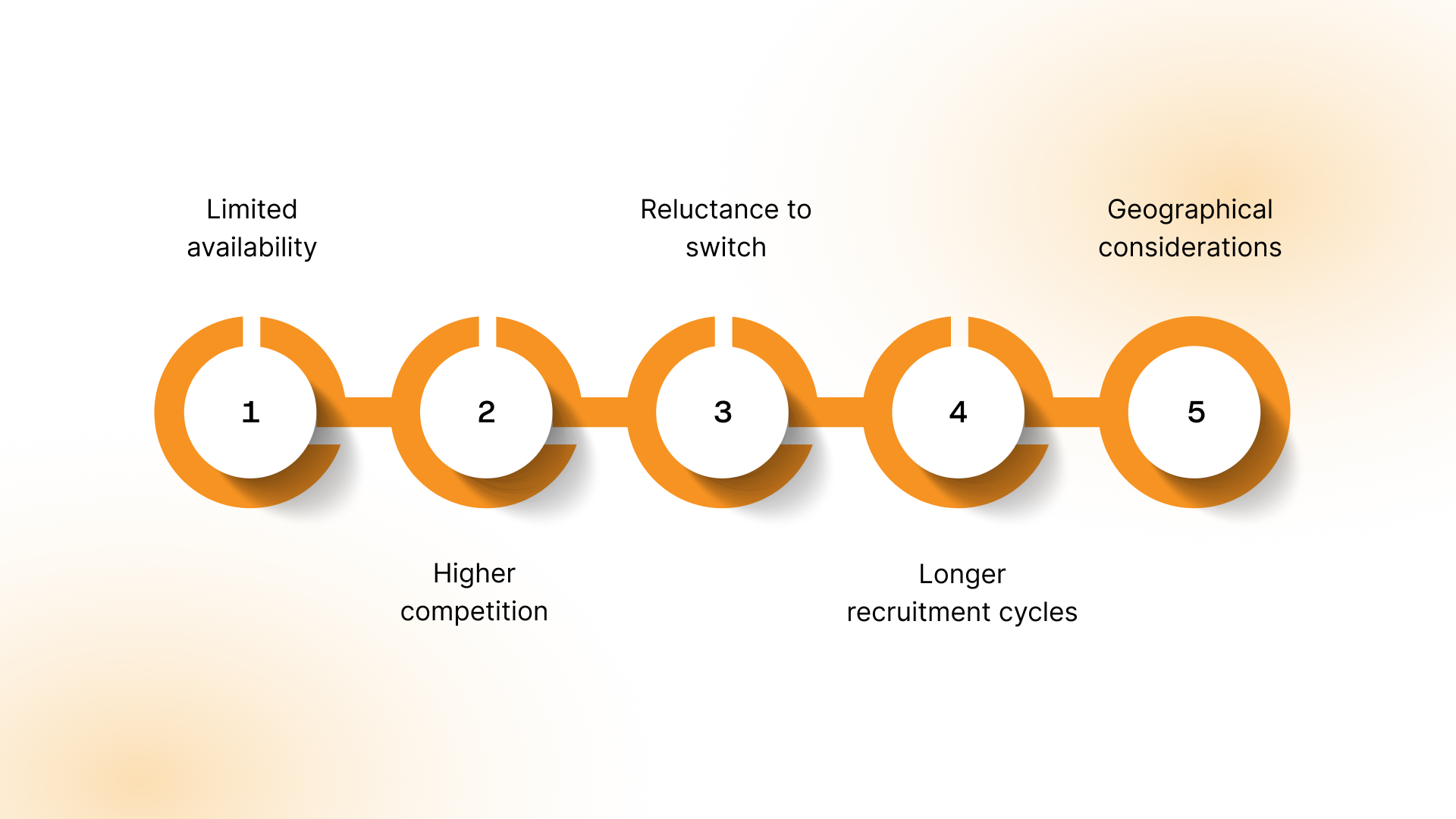
Common challenges include:
- Limited availability: Passive candidates are often employed and may have limited time to engage in recruitment conversations. Scheduling interviews across different Indian cities like Hyderabad, Pune, or Chennai can require flexibility and coordination.
- Higher competition: Skilled passive candidates are in demand, with multiple organisations vying for the same talent.
- Reluctance to switch: Many passive candidates consider new roles only if they closely align with career goals, so recruiters must offer compelling reasons to engage.
- Longer recruitment cycles: The process of relationship-building, outreach, and conversion often takes longer than hiring active candidates.
- Geographical considerations: India’s regional talent clusters mean that sourcing candidates in one hub may not translate to availability in another. Effective local knowledge and networks are critical to overcoming this challenge.
Understanding these challenges allows recruiters to plan strategies that address obstacles proactively, ensuring a smoother hiring journey.

How V3 Staffing Can Help You Attract Top Passive Talent?
V3 Staffing offers tailored solutions for organisations looking to hire in India’s core hubs, ensuring that companies can access the right talent at the right time.
Here’s how we can assist you:
- Permanent Recruitment: V3 Staffing identifies and engages passive candidates for mid to senior-level roles by using industry-specific sourcing strategies rather than relying on job applications alone.
- Temporary & Contract Staffing: For organisations requiring skilled professionals for short-term projects or peak workloads, V3 Staffing sources passive candidates who prefer contract-based or interim roles.
- IT Staffing: V3 Staffing engages passive IT professionals such as cloud engineers, DevOps specialists, data scientists, and software architects through targeted outreach and technical screening.
- Recruitment Process Outsourcing (RPO): Through RPO, V3 Staffing embeds dedicated recruiters within client teams to build long-term pipelines of passive candidates across functions and locations.
- Executive Search: V3 Staffing conducts discreet, research-driven searches for CXO, VP, and Director-level roles by approaching senior leaders who are not actively exploring opportunities.
By combining domain expertise, regional reach, and scalable recruitment models, V3 Staffing enables organisations to attract passive candidates efficiently, reduce time-to-hire, and improve quality-of-hire.
Conclusion
Passive candidates represent a significant, often untapped portion of the workforce. Engaging them effectively requires understanding their motivations, strategically sourcing, personalised communication, and careful evaluation. By building a strong employer brand, investing in personalised outreach, engaging multi‑channel sourcing, and fostering long‑term relationships, your recruitment strategy will reach deeper into the talent market.
Utilizing expert recruitment partners like V3 Staffing can make this process more efficient, ensuring organisations attract, engage, and convert passive candidates across key hubs such as Bengaluru, Hyderabad, Chennai, Pune, and Delhi NCR.
Contact us today to explore how V3 Staffing can support your talent acquisition goals.