

.svg)
.svg)
Seasonal mass hiring is a critical requirement for organisations that experience significant workforce demand spikes during festive periods, sales cycles, or project launches. In India, this is most visible in hubs such as Mumbai, Bengaluru, Delhi NCR, Hyderabad, and Chennai, where retail, e-commerce, logistics, and shared services scale rapidly to handle peak traffic.
Properly executed seasonal recruiting can make the difference between meeting customer expectations and facing operational bottlenecks.
For example, in 2025, India’s festive season was estimated to generate over 216,000 temporary jobs, marking a 15–20% year‑on‑year rise in hiring activity. This shows the scale and opportunity of this hiring format.
In this blog, we will discuss the strategies that drive predictable and cost‑effective seasonal recruitment outcomes for hiring teams and HR leaders.
Key Takeaways
- Seasonal mass hiring requires effective planning, forecasting, and efficient recruitment channels.
- Utilise traditional job boards, social media, and talent pools to source high‑quality candidates quickly.
- Use technology solutions like ATS and mobile platforms to streamline the hiring process and ensure compliance.
- Clear communication and engagement strategies help reduce turnover and improve candidate retention during seasonal roles.
- Post-season evaluation of time-to-hire, cost-per-hire, offer acceptance rate, early attrition, and seasonal productivity helps businesses refine high-volume hiring strategies for future seasons.
What Makes Seasonal Mass Hiring Different from Standard Hiring?
Seasonal mass hiring is not simply hiring “more people.” It involves recruiting a large cohort of employees within tight timeframes, often for roles with limited duration and high turnover.
Core Characteristics of Seasonal Mass Hiring
Why These Differences Matter
Seasonal hires must reach productivity quickly. The recruiting processes must prioritise speed without compromising on safety, compliance, or basic role fit. Unlike standard hiring, where quality metrics unfold over months, seasonal hiring success is judged almost immediately.
Also Read: Types of Staffing and Their Differences
With a clear understanding of the differences, the next step is accurately forecasting your hiring needs to ensure you’re prepared for peak seasons.

How to Forecast Your Hiring Needs for Seasonal Peaks
Accurate forecasting is the foundation of effective seasonal mass hiring. Without it, organisations risk under‑ or over‑staffing, both of which have direct cost implications.
Analysing Demand Data
Start by reviewing historical business data. Look at:
- Sales peak during previous seasons
- Service demand surges month‑by‑month
- Projected business growth cycles
In India, sectors such as retail, logistics, and hospitality rely heavily on seasonal labour to meet festival‑related demand surges.
By quantifying historical demand and aligning it with workforce performance metrics, organisations can estimate the required headcount and the skill sets needed to meet operational targets.
Demand Forecasting Framework
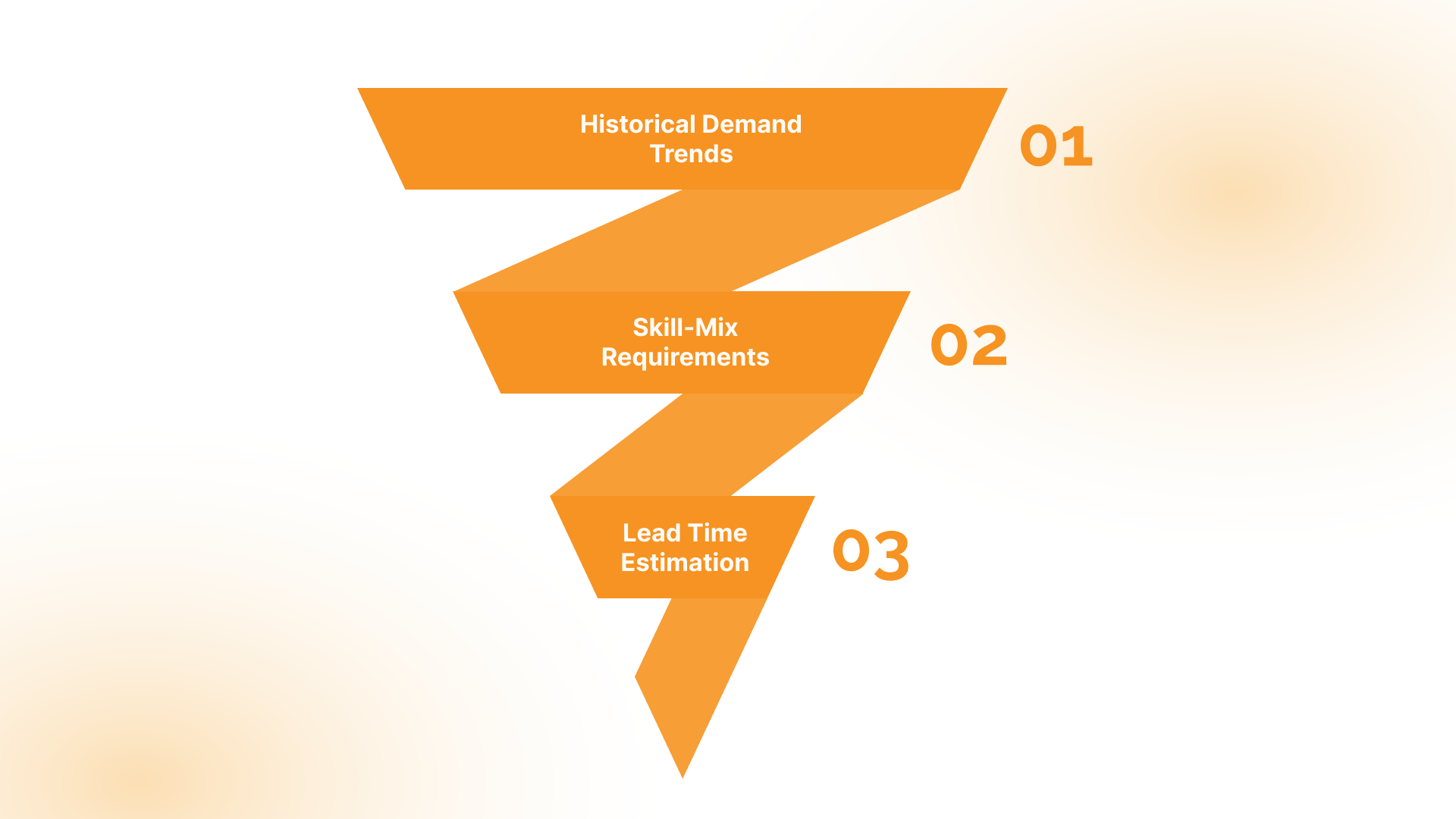
Demand forecasting helps enterprises plan hiring volumes ahead of operational peaks. By aligning historical patterns, role requirements, and onboarding timelines, organisations can prevent last-minute workforce shortages and training delays.
1. Historical Demand Trends
- Analyse past sales or service volume by month/quarter.
- Identify recurring demand spikes and how long they last.
2. Skill-Mix Requirements
- Categorise roles by skill level, role complexity, and training time.
- Match hiring volumes to required skill coverage instead of general headcount targets.
3. Lead Time Estimation
- Calculate the time from application to first productive day, including onboarding and training.
- Work backwards from the peak go-live date to set hiring launch timelines.
Scenario Planning Matrix
To address demand uncertainty, a scenario planning matrix can be used to model best-case, base-case, and worst-case hiring needs before finalising workforce numbers.
Prioritise planning two to three months ahead of the expected seasonal peak to account for sourcing, screening, and onboarding.
Need to scale your workforce quickly for peak seasons? Partner with V3 Staffing to hire engineering, product, data, cloud, AI/ML, and cybersecurity talent with speed, quality, and compliance built into every hire.
Also Read: Challenges in Leadership Hiring: Common Issues and Solutions
Once you have your forecast, it’s time to choose the right recruitment channels to reach your ideal candidates.
What Are the Most Effective Recruitment Channels for Seasonal Mass Hiring?
Selecting the right recruitment channels is critical in seasonal mass hiring because it directly shapes the size, quality, and speed of the talent pipeline.

High‑volume roles demand a broad reach to attract a large candidate pool, while still enabling targeted engagement to reduce time‑to‑hire and improve fit.
Below are the channels most effective in seasonal mass hiring, along with specific tactics to maximise outcomes.
1. Traditional Job Boards for Broad Reach
Online job boards remain foundational for seasonal recruiting because they expose roles to a wide base of active job seekers across geographies and skill levels. Platforms such as Indeed, Naukri, and LinkedIn allow employers to post multiple openings quickly and scale visibility without extensive setup time.
Best Practices
- Targeted Role Templates: Specify clear seasonal details such as start and end dates, shift flexibility, required skills, and pay ranges. This reduces irrelevant applications and improves match rates.
- Job Board Distribution Networks: Use tools or ATS integrations that broadcast listings to several boards simultaneously, increasing visibility without extra manual work.
Value Tip: Track which boards deliver the highest-quality applicants by measuring both application volume and interview conversion rates.
2. Social Media Outreach to Capture Diverse Applicants
Modern seasonal hiring benefits from social media. These platforms provide high visibility and enable geographically targeted outreach to potential applicants who may not be actively searching on job boards.
Effective Use Cases
- Paid Ads Targeted by Location: Focus ads on cities or regions where you need to hire the most, such as Hyderabad, Bengaluru, Chennai, Pune, Delhi NCR, and Mumbai for Indian operations.
- Community Groups: Post in local Facebook groups, WhatsApp employment circles, and community forums to attract referrals and local applicants.
- Content Variation: Use carousel posts, lead ads, and short videos that describe the roles to increase engagement.
3. Talent Pools and Alumni Networks for Faster Onboarding
A key advantage of seasonal hiring is the ability to retain and re-engage previous seasonal workers.
These candidates are already familiar with organisational processes, culture, and basic job expectations, which significantly reduces onboarding time and improves retention.
How to Activate This Channel
- Re‑engagement Campaigns: Send personalised outreach to prior seasonal employees with fast‑track application options.
- Talent Pool Segmentation: Tag candidates by skills, performance rating, and availability to quickly identify high‑fit candidates when new seasonal roles open.
Result: Organisations that maintain talent pools consistently fill positions faster and with better performance outcomes than those relying solely on new applicant flows.
4. Partnerships with Recruitment Agencies and RPO Providers
Recruitment partners and RPO (Recruitment Process Outsourcing) providers offer scale, specialised expertise, and pre‑existing talent networks that internal teams may not have.
For organisations hiring across multiple cities or countries, such as India, the UAE, and the USA, these partners provide local market intelligence and compliance support that accelerates hiring cycles.
Benefits of Working with Agencies
- Access to Regional and National Talent Pipelines: Agencies already maintain lists of candidates actively looking for seasonal work.
- Pre‑Screened Candidate Lists: Screening and initial assessment are handled before profiles reach internal teams.
- Compliance and Documentation Support: Agencies help ensure contracts, work permits, and payroll requirements are consistently managed.
Actionable Tip: When engaging a partner, define clear metrics such as time-to-fill, offer acceptance, and onboarding timelines. Integrating agency reporting with your ATS gives you real‑time visibility into the pipeline.
5. Referral and Employee Networks (Complementary Channel)
Although not typically a standalone solution for large volumes, employee referrals are often cited as a top source for bulk recruitment. Many employers are seeing significantly higher conversion and retention rates from referred candidates.
Referral Strategies That Deliver
- Incentivise Referrals: Reward internal employees for referring seasonal candidates with additional leave or monetary bonuses.
- Double‑Tap Networks: Encourage past seasonal workers to refer peers who might be available for the next cycle.
Channel Efficiency Comparison:
To understand which sourcing methods deliver better results at scale, a Channel Efficiency Comparison helps evaluate quality, speed, and cost across hiring channels.
Also Read: Best Recruitment Agencies in India 2025
To make your hiring process more efficient, adopting the right technology solutions can drastically reduce time and effort
How to Design a Seasonal Recruitment Process That Scales
A scalable seasonal recruitment process is built to absorb hiring spikes without breaking timelines, quality standards, or compliance requirements. This means planning workforce demand early, standardizing role definitions, and setting clear approval and screening workflows before volumes increase.
Step 1: Role Definition and Categorisation
Define roles by:
- Job tasks and responsibilities
- Expected productivity levels
- Required skills and experience
Segment roles based on training needs and onboarding complexity. Prioritise hires with shorter learning curves to improve time‑to‑productivity.
Step 2: Screening and Shortlisting
Use clear screening criteria to filter applications against:
- Availability windows
- Basic eligibility requirements
- Location proximity
Structured screening templates reduce subjective variability and speed up review cycles.
Step 3: Interview Scheduling and Communication
Batch interview scheduling helps manage large candidate pools. Dedicated recruitment windows and structured scripts maintain consistency across interviewers.
Tips for efficient screening cycles:
- Group candidates by role track
- Use automated messaging for confirmations
- Monitor pipeline status daily
Step 4: Offers, Acceptance, and Onboarding
Standardised offer templates communicate terms clearly, including:
- Role duration and start dates
- Assignment expectations
- Benefits and incentive details
Short‑cycle onboarding modules ensure hires are ready for their first productive day, often within hours rather than days.
Struggling with high‑volume seasonal hiring? Let V3 Staffing handle the entire recruitment process, from sourcing to onboarding, with SLA‑driven results that meet your deadlines efficiently.
Technology Solutions That Accelerate Seasonal Hiring
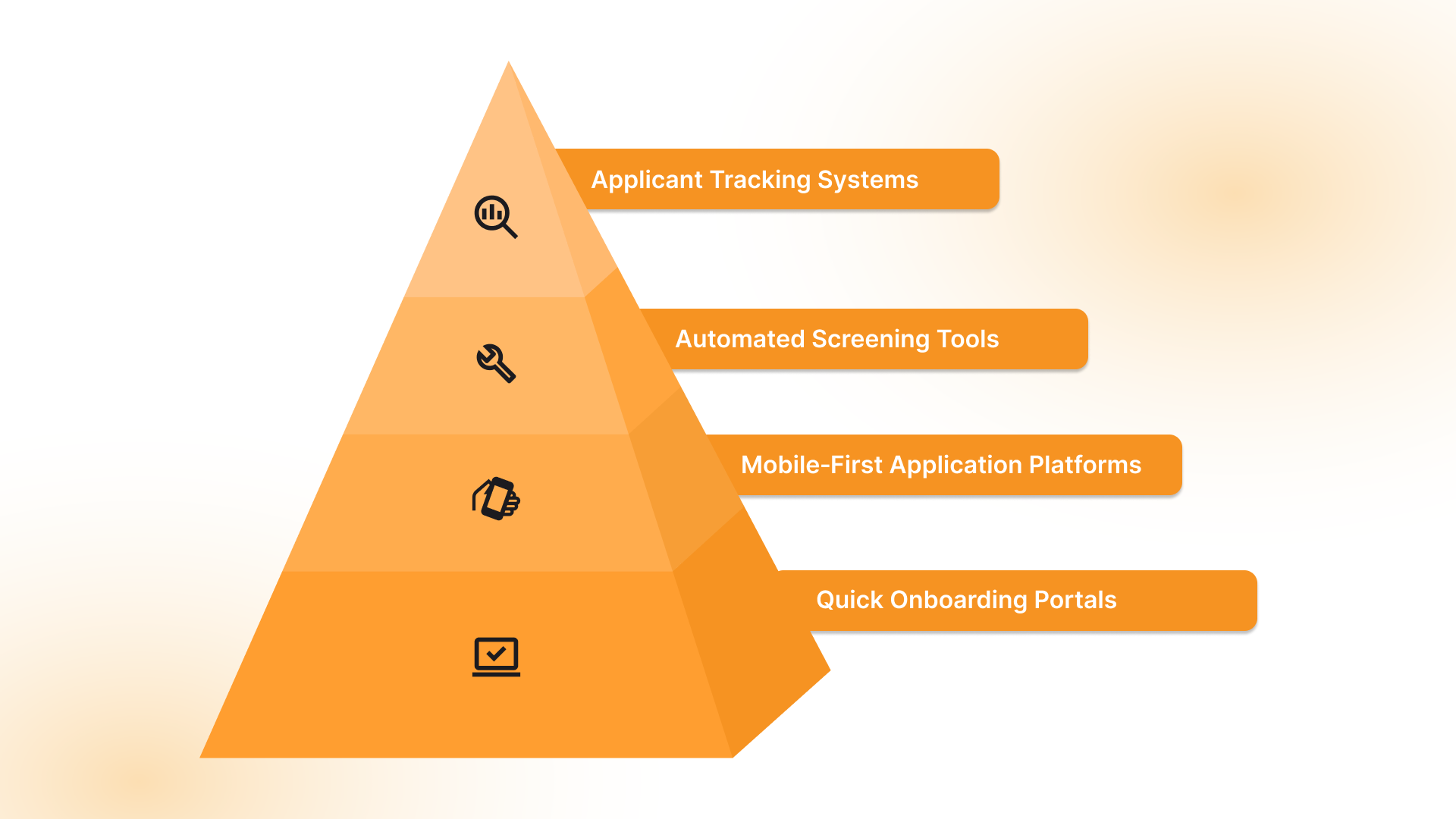
When hiring at scale, recruitment technology is essential to process large volumes of candidates effectively, minimise manual tasks, and provide visibility across fast‑moving pipelines.
1. Applicant Tracking Systems (ATS)
An ATS centralises job postings, candidate profiles, and communication in one place. It eliminates manual tracking errors and reduces administrative overhead.
Modern ATS tools also offer features such as bulk resume parsing, automated interview scheduling, and pipeline analytics, all essential for seasonal hiring cycles.
Key ATS capabilities for seasonal hiring:
- Centralised candidate database
- Bulk communication templates
- Job posting syndication to multiple boards
- Real‑time pipeline dashboards
- Built‑in compliance logging for audit trails
Impact
Teams using specialised ATS solutions for high‑volume roles often significantly reduce screening time and improve recruiter productivity.
2. Automated Screening Tools
Automated screening uses rule‑based filters or AI to shortlist candidates based on predefined criteria such as skills, availability, and location.
This drastically reduces the hours recruiters spend evaluating resumes manually. Tools can also rank candidates by fit, allowing teams to efficiently prioritise follow‑ups.
Use cases
- Screening large applicant pools
- Auto‑ranking based on job parameters
- Early elimination of unqualified applications
3. Mobile‑First Application Platforms
With many seasonal applicants using smartphones to apply, optimising the mobile application experience is critical. A mobile‑friendly interface increases completion rates and reduces drop‑offs. This is a key point since many job seekers abandon lengthy or unfriendly applications.
Best practices
- Short, structured form fields
- One‑click apply options via social or email accounts
- Clear, visible job details without excessive scrolling
4. Quick Onboarding Portals
Onboarding portals that automate documentation, compliance checks, and tax form completion help seasonal hires become productive faster.
These systems can issue contracts, collect identity proof,s and manage basic training content, freeing HR to focus on high‑touch activities such as initial check‑ins and role orientation.
Advantages
- Faster readiness for the first productive day
- Reduced administrative workload
- Standardised compliance tracking
Also Read: Global Capability Centre Challenges in India (With Solutions)
Legal, Compliance, and Workforce Administration Considerations
Seasonal hiring in India must adhere to statutory regulations, wage laws, and contractual standards to ensure legal protection for both employers and employees. Compliance is critical to avoid legal risks, maintain operational consistency, and promote workforce trust.
Contract Clarity
Every seasonal hire in India must have a clear written agreement that outlines:
- Assignment Duration: Specific start and end dates to avoid ambiguity regarding employment timelines.
- Compensation Terms: Salary structure, bonus details, and other allowances as per Indian Labour Law.
- Termination Clauses: Grounds for early termination and notice periods.
- Statutory Obligations: Compliance with the Payment of Gratuity Act, Provident Fund (PF) contributions, and other statutory benefits where applicable.
Clear contracts prevent misunderstandings and legal disputes during temporary assignments, ensuring a smooth hiring process.
Wage and Labour Law Adherence
In India, compliance with minimum wage standards, the Shops and Establishments Act, and other state-specific regulations is crucial to avoid penalties and ensure fair treatment of workers.
Key focus areas for Indian employers:
- Minimum Wage Compliance: Ensure wages meet or exceed the prescribed state and central minimum wages.
- Overtime Regulations: Ensure overtime pay complies with the Factories Act and the Shops and Establishments Act, which regulate working hours and overtime pay for workers.
- Work Hours Tracking: Accurately track working hours to comply with legal limits on weekly hours and daily shifts.
Payroll Accuracy
A strong payroll system is essential for handling the frequent turnover typical in seasonal hiring. Ensuring accurate, timely payments reduces disputes and improves worker morale.
In India, payroll systems must also account for PF, ESI, and Gratuity contributions, where applicable, especially for longer seasonal contracts.
Best Practice
Automate payroll integration with your ATS or workforce management system to ensure accurate tracking of worked hours, statutory deductions, and timely disbursements. This practice will improve operational efficiency and reduce the risk of errors.
Once the season concludes, it’s important to evaluate the process and implement improvements for the future.
Post‑Season Evaluation and Continuous Improvement
Seasonal hiring does not conclude when the peak period ends. A structured post‑season review enables organisations to refine future practices and improve outcomes over time.
Key Metrics to Review
A focused evaluation on core metrics uncovers both strengths and bottlenecks in the process:
- Time‑to‑Hire: Duration from requisition to offer acceptance
- Offer Acceptance Rate: Percent of issued offers accepted
- Onboarding Completion Rate: Percentage completing onboarding steps
- Early Turnover Rate: Attrition within initial work weeks
- Performance of Seasonal Workers: Output levels against expected targets
Tracking these indicators makes it easier to identify delays and capability gaps. At V3 Staffing, our average 10-day time-to-hire helps organisations compress recruitment cycles, improve offer acceptance, and maintain continuity during seasonal surges.
Structured Reviews With Hiring Managers
Hold concise debrief sessions immediately after the season to:
- Assess what worked well
- Identify bottlenecks in the process
- Evaluate sourcing channels and cost effectiveness
These reviews should conclude with documented action items and clear accountability for owners for improvements.
Continuous Improvement Practices
- Create a central knowledge repository of lessons learned
- Update process checklists and recruitment templates
- Adjust forecasting models based on actual seasonal data
Embedding these steps into organisational workflows positions teams to improve steadily with each seasonal cycle.

Why V3 Staffing is Your Ideal Partner for Seasonal Mass Hiring
V3 Staffing is your trusted partner for fast, scalable seasonal recruitment. With deep industry expertise and a flexible approach, V3 ensures you have the right talent, quickly and compliantly, during your peak hiring periods.
Key services offered by us:
V3 Staffing streamlines permanent recruitment for seasonal roles, delivering high-quality candidates swiftly. Whether for temporary or transitioning positions, V3 ensures they align with your company’s needs and culture.
V3 provides flexible contract staffing solutions that enable you to scale your workforce for short-term or project-based roles. With a vast talent pool, V3 meets seasonal demands without compromising on quality or speed.
When technical expertise is needed, V3 delivers top-tier IT professionals, from cloud engineers to data scientists. Their IT staffing solutions ensure you get the right tech talent, fast, for seasonal projects or surges.
V3’s RPO service manages the entire recruitment lifecycle, from sourcing to onboarding, providing SLA-driven results. This allows businesses to scale recruitment quickly while focusing on core business operations during peak seasons.
V3 specialises in filling senior leadership roles (CXOs, VPs, Directors) during seasonal periods. Their targeted approach ensures your leadership team is equipped to manage the challenges of seasonal growth.
Conclusion
Seasonal mass hiring requires careful planning and efficient execution. To manage large volumes of candidates within a short timeframe, businesses must implement structured recruitment processes, clear communication, and ensure legal compliance.
Using the right channels and technology can significantly reduce hiring time and improve candidate quality. Organisations that approach seasonal hiring strategically can meet their staffing needs quickly while maintaining high operational efficiency.
For businesses looking to streamline seasonal recruitment and secure the right talent at the right time, V3 Staffing offers customised solutions tailored to your specific needs. Partner with us to ensure an efficient hiring process that scales with your business and supports your seasonal objectives.