

.svg)
.svg)
Global Capability Centres (GCCs) have emerged as one of India’s most influential employment engines, reshaping how global companies manage innovation, technology, and business operations. These centres, set up by multinational organisations to run strategic and high-value functions, have steadily evolved from cost-focused delivery units to hubs of advanced capability.
Today, GCC contributes meaningfully to India’s knowledge economy while providing structured career paths for professionals across Hyderabad, Bengaluru, Chennai, Pune, Delhi NCR, and Mumbai. Currently, GCCs employ nearly 2.16 million professionals in India, and the number is expected to rise to 2.8 million by 2030.
This shift has created a vibrant employment ecosystem, making GCC employment in India a significant part of the country’s economic and professional growth story.
At a Glance:
- GCCs in India have grown into strategic hubs, offering careers in technology, analytics, R&D, and leadership.
- Indian talent is preferred for expertise, adaptability, and cost-effective scalability, driving demand across major cities.
- Digital skills, flexible work models, and the move into Tier-II cities actively shape employment trends.
- Companies are expanding opportunities beyond metro cities, offering flexible work models and diverse career paths across domains.
Why Employers in GCC Increasingly Prefer Indian Talent?
Employers in GCCs are turning to India for skilled professionals due to a combination of cost advantages, talent availability, and operational flexibility. Key reasons include:
- Vast and Diverse Talent Pool: India offers a large pool of professionals across IT, finance, engineering, and analytics. This diversity allows GCCs to hire for both specialised and high-value roles quickly.
- Cost-Effective Hiring: Recruiting in India allows companies to manage operational costs without compromising on quality, helping GCCs maintain competitive efficiency.
- Strong Technical Expertise: Indian professionals often possess advanced digital and technical skills, including cloud computing, data analytics, AI, and cybersecurity, meeting the high-value demands of GCCs.
- Cultural Adaptability and English Proficiency: Indian talent demonstrates strong communication skills and adaptability, aligning well with global work practices and collaboration requirements.
- Scalable and Flexible Workforce: Companies can rapidly scale teams through contract staffing or RPO models, ensuring a quick response to project demands and business growth.
In the following section, let’s explore the employment trends driving growth and shaping the GCC landscape across India.
Also Read: India and GCC: Strengthening Economic and Strategic Ties

Key Employment Trends Shaping India’s GCC Market

India’s GCC sector is evolving rapidly as businesses shift priorities, adopt new technologies, and seek specialised talent. Professionals and organisations need to understand these trends to engage effectively in this growing market.
Here, we’ll explore the major trends currently shaping hiring, structure, and workforce strategy in India’s GCC ecosystem.
1. Rapid Growth and Expanding Workforce
The demand for talent in India’s GCCs continues to grow as more global companies establish and expand operations in the country. GCCs are expanding beyond metro cities into Tier-II locations, tapping a broader talent pool.
- Rising headcount requirements: Companies are hiring across IT, finance, HR, and analytics to manage larger projects and growing operations.
- Focus on scalable hiring: GCCs adopt structured hiring frameworks to quickly onboard talent without compromising quality.
- Growing Economic Impact: The Indian GCC market is projected to reach $99–$105 billion by 2030, signalling a long-term commitment to growth.
As the workforce expands, India solidifies its position as a strategic hub for global talent delivery.
2. Shift to Strategic and High-Value Roles
GCCs increasingly take on strategic responsibilities rather than just transactional work. Employees now take on decision-making, analytics, and innovation roles, directly influencing business outcomes.
- Rise of Mid-Senior Roles: The share of mid-senior level roles in GCCs has grown to 77%, up from lower levels in previous years, highlighting a clear shift toward experienced talent.
- Taking Ownership: Indian GCCs now handle end-to-end product development, analytics, and R&D, actively supporting their parent organisations.
- Leadership Opportunities: Roles such as CTO, CIO, and other senior leadership positions are increasingly hosted within Indian GCCs, reflecting trust and localisation of decision-making.
This shift not only improves career prospects but also positions GCCs as centres of innovation within multinational organisations.
3. Demand for Advanced Digital Skills
As businesses embrace digital transformation, GCCs need professionals skilled in cloud computing, AI, machine learning, data analytics, and cybersecurity. GCCs actively build these capabilities in India.
- Premium on Specialised Skills: GCCs pay 12–20% more for AI, data science, and related roles compared to traditional IT services.
- Upskilling Initiatives: Many GCCs run reskilling and training programmes in AI/ML, prompt engineering, cloud, and data analytics, often partnering with educational institutions or online platforms.
- Strategic Talent Acquisition: Companies deliberately hire talent with “ready-now” digital skills to lead innovation projects, instead of relying on on-the-job training for basics.
This focus on digital skills keeps India’s GCC talent competitive in a rapidly transforming global market.
4. Geographic Diversification Beyond Metros
While cities like Bengaluru, Hyderabad, and Pune remain key hubs, GCCs explore Tier-II cities to access talent and optimise costs, creating opportunities beyond traditional metros.
- New Talent Hubs: GCCs are setting up operations in cities like Ahmedabad, Indore, Nagpur, and others, not just in the classic metros.
- Cost and Talent Advantages: Lower costs and untapped talent make these cities ideal for GCCs, helping them operate more flexibly and efficiently.
- Flexible Workforce Models: GCCs increasingly use contract and gig-based hiring to tap local talent effectively.
Geographic diversification allows GCCs to access new talent pools while supporting balanced regional employment growth.
5. Adoption of Flexible Work Models
Flexible work arrangements are now a standard expectation in India’s GCCs. Companies widely implement hybrid and remote options to attract and retain top talent.
- Growing Contractual Workforce: Contractual and gig-based workers are expected to make up 25% of the GCC workforce by 2026.
- Hybrid Work Models: Many GCCs offer hybrid or remote-working arrangements to attract talent and manage costs efficiently.
- Balanced Talent Strategy: GCCs blend permanent teams with contractors and gig workers, providing flexibility while maintaining core full-time talent for strategic work.
Flexible work models enhance employee satisfaction and make GCCs more attractive to skilled professionals.
6. Evolving Compensation and Benefits
To stay competitive, GCCs offer compensation packages beyond basic salary, including performance incentives, learning opportunities, and wellness benefits.
- Higher Pay for Digital Talent: Employees in digital roles (AI, analytics, cloud) earn substantially more than traditional IT service roles.
- Long-Term Incentives: Many GCCs provide stock-based rewards, including ESOPs and RSUs, aligning employee goals with organisational growth.
- Performance-Linked Rewards: Compensation structures are increasingly variable, with higher bonus payouts and data-driven performance rewards.
These practices reflect that financial and non-financial benefits play a key role in attracting and retaining talent.
7. Future-Proofing Through Upskilling and DEI Initiatives
GCCs invest in upskilling employees and promote diversity, equity, and inclusion (DEI) to prepare for future challenges and global competitiveness.
- Continuous Learning: Most GCCs run structured reskilling programmes in next-gen technologies (AI, cloud, cybersecurity) so employees stay ahead.
- Diversity & Inclusion Efforts: GCCs increasingly focus on building diverse teams in gender and geography to bring varied perspectives and drive innovation.
- Partnerships with Academia: Many GCCs collaborate with universities and ed-tech platforms to design industry-aligned training and ensure pipelines of future-ready talent.
By prioritising upskilling and DEI, GCCs can build a resilient workforce ready for evolving business needs.
In the next section, let’s discuss the diverse career opportunities available for Indian professionals.
Also Read: 7 Major Growth Trends Defining India’s GCC Report
Opportunities for Indian Talent in GCCs

The evolving GCC landscape in India is creating diverse career paths for professionals across experience levels and domains. Below are some of the key opportunities for Indian talent in this dynamic ecosystem.
1. Early-Career Roles
GCCs actively hire fresh graduates and professionals with 1–5 years of experience.
- Structured Career Path: Entry-level roles often include mentorship and clear growth plans, helping young professionals gain a strong foundation.
- Competitive Compensation: GCCs typically offer better starting packages than traditional service firms, making them highly attractive to fresh talent.
- Global Exposure: Even early roles often involve contributing to projects with international impact, giving professionals valuable learning opportunities.
These roles excite young professionals while providing a strong foundation for building long-term careers within GCCs and other global business functions.
2. Product, R&D, and Technical Roles
Advanced technical skills are in high demand as GCCs take on strategic initiatives.
- Innovative Projects: Roles in cloud, AI, data science, and engineering architecture allow professionals to develop and deliver cutting-edge products.
- Global Collaboration: Professionals often collaborate with international teams, gaining exposure to global best practices.
- Skill Development: These roles encourage continuous learning and upskilling in emerging technologies.
These high-skill roles let professionals contribute directly to global product and service innovation while gaining international exposure.
3. Leadership and Strategy Roles
Mid- and senior-level professionals can transition into strategic and managerial positions.
- Decision-Making Influence: Leaders contribute directly to business strategy and global operations.
- Cross-Functional Experience: Opportunities exist across functions such as finance, operations, and product management.
- Career Progression: Clear pathways exist for growth into senior leadership roles within India and internationally.
These roles empower experienced professionals to influence organisational strategy while growing their leadership credentials.
4. Cross-Functional and Innovation Functions
As GCCs evolve, non-technical domains are also expanding, giving opportunities to professionals in HR, marketing, procurement, and sustainability to engage in high-value work.
- Human Resources and Talent Management: Professionals manage talent acquisition, employee engagement, and learning initiatives across GCCs, shaping the workforce for the future.
- Innovation and CoEs (Centers of Excellence): GCCs are establishing CoEs for emerging technologies, allowing professionals to participate in cutting-edge product development and innovation initiatives.
- Sustainability and Business Functions: Functions like procurement, operations, and sustainability play a strategic role, with professionals driving global efficiency and compliance initiatives.
These roles allow professionals to diversify their career paths and participate actively in the innovation-driven culture of modern GCCs.
These opportunities are exciting, but job seekers also face certain challenges when pursuing GCC roles in India.
Challenges for Indian Jobseekers in GCC
While GCCs offer strong career potential, job seekers must navigate several challenges. Understanding these complexities helps professionals prepare more effectively.
- Intense Competition: With GCCs expanding rapidly, the number of applicants for specialised and high-value roles is rising, so candidates must differentiate themselves through skills and experience.
- Skill Gaps: Advanced digital skills, niche technical expertise, and strategic thinking are in high demand. Jobseekers may need targeted upskilling to meet evolving role requirements.
- Geographic Constraints: While major hubs like Hyderabad, Bengaluru, Chennai, Pune, Delhi NCR, and Mumbai attract most GCC roles, opportunities in Tier-II cities are limited, requiring flexibility and potential relocation.
- Complex Recruitment Processes: Multi-stage interviews, technical assessments, and competency evaluations can lengthen hiring cycles, requiring patience and preparation.
- Retention Pressure: High expectations from GCCs regarding performance and continuous learning can be challenging for candidates unaccustomed to fast-paced, metrics-driven environments.
Addressing these challenges becomes smoother when guided by an experienced recruitment partner equipped to support diverse GCC hiring needs.

How V3 Staffing Helps Indian Talent Secure GCC Opportunities?
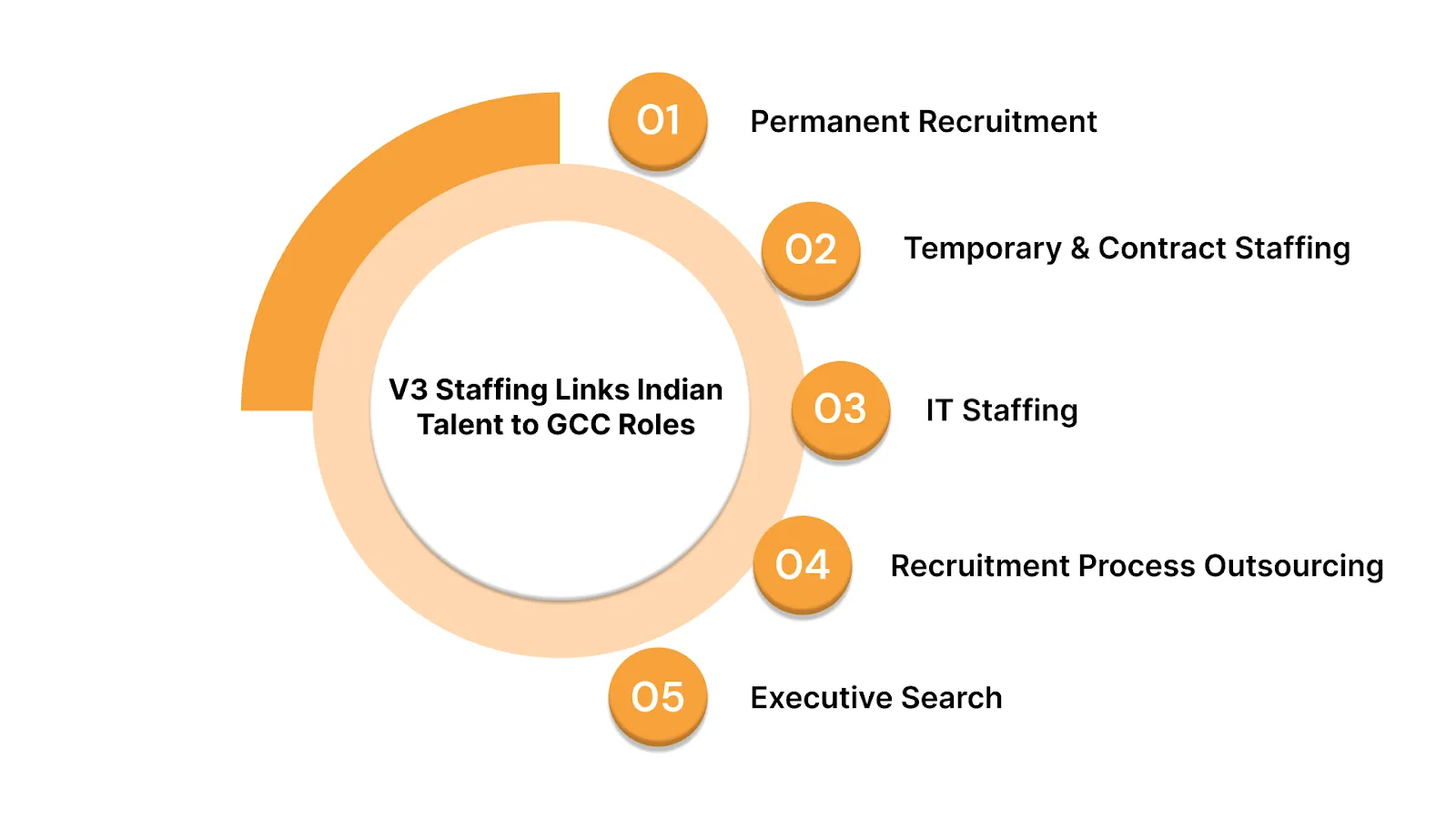
V3 Staffing acts as a trusted partner for professionals looking to access GCC roles in India. Their solutions are designed to connect talent with the right opportunities while ensuring a smooth, transparent hiring process.
Here’s how we can assist you:
- Permanent Recruitment: V3 Staffing connects mid- to senior-level professionals with full-time GCC roles, matching candidates’ expertise to suitable positions through targeted screening.
- Temporary & Contract Staffing: V3 staffing offers flexible staffing for project-based or interim roles, providing candidates with diverse experience and employers with efficient coverage.
- IT Staffing: V3 Staffing connects specialised IT professionals, cloud, DevOps, data science, software, QA, to GCC opportunities where their skills add strategic value.
- Recruitment Process Outsourcing (RPO): Manages end-to-end hiring by embedding with client teams, ensuring a smooth candidate experience and faster, scalable recruitment.
- Executive Search: Targets senior roles (CXO, VP, Director) with competency-based evaluations and strategic headhunting to match top talent with leadership positions.
V3 Staffing provides structured support for professionals seeking GCC opportunities in India, aligning roles with skills and career goals.
Conclusion
GCCs in India continue to create some of the country’s most promising professional pathways, supported by innovation-focused work, strong compensation structures, and growing demand for advanced skills. Professionals seeking long-term growth will benefit from building relevant skills, strengthening domain knowledge, and preparing for structured hiring processes.
GCCs offer a strong platform for those aiming to join future-ready teams and take part in global transformation initiatives. With the right preparation and a clear understanding of evolving skill needs, job seekers can position themselves advantageously within this sector.
V3 Staffing supports professionals seeking GCC opportunities by providing industry-aligned guidance, role-specific preparation, and access to openings across India’s leading talent hubs. To explore GCC roles that align with your expertise and career goals, reach out to us today for guidance across India’s leading GCC hubs.